

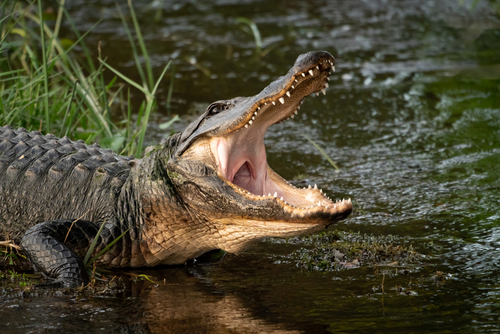
A deadly spike in alligator attacks is shaking Florida families, and experts say almost all of it comes down to how people are using the water.
Story Snapshot
- A 31-year-old woman was killed by a large alligator while swimming in a shallow Florida river.
- Florida has recorded only 33 fatal unprovoked alligator attacks since 1948, but recent years show a clear rise in bites.
- University of Florida research finds about 96% of attacks involve risky human behavior in alligator waters.
- State wildlife officers cite drought, low water, and mating season for making big alligators more territorial and dangerous.
Florida’s deadly weekend that shocked the country
Florida Fish and Wildlife Conservation Commission officers say a 31-year-old Orlando woman died after a brutal alligator attack while swimming in the Econlockhatchee River near Seminole County’s Barr Street Trailhead. She had been hiking with her boyfriend and best friend and stepped into about three feet of water to cool off when a large alligator grabbed her arms and would not let go. Her companions fought to free her and called 911, but she died on the way to the hospital from massive blood loss.
State investigators later captured and killed two large alligators in the area, one about 13 feet long and another about 12 feet, and sent tissue samples to a lab to confirm which animal was responsible. Officials classify the episode as an “unprovoked” attack, meaning the alligator struck first and the victim was not harassing or feeding the animal. Yet officers stressed that every freshwater body in Florida can hold alligators and that stepping into wild water, even a shallow creek, always carries real risk.
Are alligator attacks really rising – and how rare are deaths?
Florida has tracked unprovoked alligator bites since 1948 and recorded around 500 such attacks through early 2026, with 32 confirmed fatal incidents before this latest Seminole County death. That works out to roughly seven to ten unprovoked bites per year on average, with only a small fraction leading to death. But recent numbers show a jump: reports note 23 unprovoked bites in 2023, the highest total in more than a decade and a clear uptick compared with the long-term baseline.
Historical research on alligator encounters backs up that pattern but also keeps it in perspective. One detailed review found hundreds of recorded bites nationwide since 1948, but only a few dozen deaths, most in Florida, and most attacks involved men in their thirties who were in or very near the water when bitten. Another study of American alligator bites in Florida concluded that while the number of bites has increased gradually since the 1970s, the overall risk of any one person being bitten has not gone up, suggesting more people are using alligator habitat, not that the animals have suddenly turned on humans.
What experts say is really driving the danger
Florida wildlife officers are pointing to both nature and human choices. Investigators on the Seminole County case say low water levels from a statewide drought and the end of mating season may have made big male alligators more territorial and primed to defend shrinking space. When water drops, animals and people crowd into the same narrow channels, increasing the odds that a territorial twelve- or thirteen-foot alligator will treat a swimmer like an intruder instead of a neighbor.
At the same time, University of Florida researchers are blunt: they find that about 96% of alligator bite incidents involve human risk-taking or inattention, such as swimming or wading in known alligator waters, walking pets at the water’s edge, or ignoring posted warnings. Their work shows that low-risk activities, like staying on land or using fenced or clearly marked swimming areas, rarely lead to attacks. In short, the gators are doing what gators have always done, but more people are drifting into their world and acting like the rules of wild country no longer apply.
Common-sense safety, not more federal control
The Florida Fish and Wildlife Conservation Commission has responded by doubling down on simple, local safety rules instead of calling for sweeping federal crackdowns. Through its Statewide Nuisance Alligator Program, the agency uses contracted trappers to remove specific animals that pose a clear threat to people, pets, or property, based on citizen complaints, rather than treating every large alligator as a criminal. Officials urge residents to swim only in designated daytime areas, keep pets well away from the shoreline, avoid fishing right at the water’s edge, and never feed wild alligators.
Father of Florida woman killed in alligator attack honors daughter: She loved people, nature, adventure https://t.co/XhAvuluy4p
— FOX 35 Orlando (@fox35orlando) July 3, 2026
These guidelines fit a broader lesson that many conservative Floridians already know: respect nature’s power, take responsibility for your own choices, and resist the urge to demand more distant bureaucracy every time a rare tragedy hits the news. Researchers note that most serious and repeated attacks come from alligators over eight feet long and that larger animals are more likely to cause fatal injuries, which is why targeted removal of nuisance beasts, not blanket bans on recreation, makes practical sense. Families who love the outdoors can keep enjoying Florida’s rivers and lakes by following clear rules, staying alert, and teaching their kids that wild waters are not theme-park rides.
Sources:
youtube.com, foxnews.com, wsvn.com, palmbeachpost.com, clickorlando.com, wifitalents.com, nbcnews.com, facebook.com, wildlife.onlinelibrary.wiley.com