
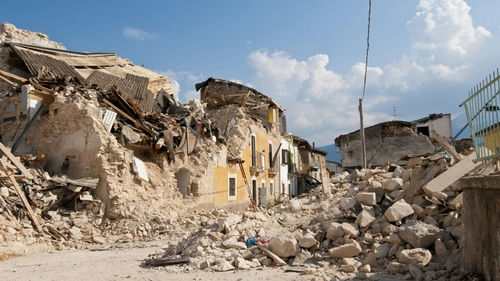
As hundreds of coffins line Venezuela’s La Guaira port, grieving families walk past rows of bodies with little help, starkly exposing how a secretive socialist regime turns a natural disaster into human chaos.
Story Snapshot
- Hundreds of bodies lie in a makeshift morgue at La Guaira port as loved ones try to identify them.
- Conflicting death tolls and vague “thousands missing” claims from Venezuela’s government deepen public mistrust.
- Breakdown of basic services and communication leaves families desperate for news about missing relatives.
- Global disaster victim identification standards show how science and transparency could bring order and dignity.
Morgue at the Port: Grief Meets Government Confusion
At La Guaira port, rows of coffins and body bags now sit where cargo containers once stood, turning a key trade hub into a temporary morgue. Venezuelan authorities admit at least 1,450 people are dead and more than 3,100 injured after twin earthquakes rocked the country in late June. Some reports place the toll even higher, near 1,943 deaths, showing clear confusion inside the regime’s own numbers. Families walk among the dead, searching for faces, jewelry, or clothing that look familiar.
Relatives are not just grieving; they are doing the work the state should organize. Many must rely on quick visual checks because proper forensic tools are limited or overwhelmed. Where bodies are badly damaged or decomposed, families are told they must wait for DNA tests or dental checks, but those systems are slow and sometimes missing. Meanwhile, more than 43,000 people are listed as missing, a figure drawn from humanitarian tracking and United Nations reporting, far above vague official claims of “thousands.”
Missing by the Tens of Thousands, Data by the Handful
Humanitarian groups and international rescue teams say tens of thousands remain under collapsed buildings or simply unaccounted for, confirming this is a mass casualty event on a national scale. A compiled missing persons list now carries more than 43,251 names, giving families at least something to point to, yet the government still refuses to release a precise figure and sticks to broad language. That gap between hard lists and political slogans fuels deep mistrust among citizens who already endured years of economic and health care collapse under socialist rule.
Conflicting numbers have become their own kind of cruelty. Rights groups, United Nations actors, and local organizations show different death counts, ranging from around 1,430 to nearly 2,000, while United Nations estimates of more than 50,000 missing clash with the government’s non-specific “thousands.” For families waiting at the port, these arguments are not abstract. Every confusing number means another delay in knowing if a loved one has died, survived, or is still lost in the ruins. Trust erodes when leaders will not plainly say how many of their own citizens are missing.
Broken Systems: When Authoritarian Control Meets a Natural Disaster
Basic services around La Guaira have largely collapsed. Aid groups and reporters describe power outages, scarce clean water, and communications networks that barely function. Without stable phone or internet, families from the interior cannot call morgues, send photos, or receive alerts when new bodies are logged. Many learn news only if they can physically travel to the port, a trip that costs money and time they often do not have in a country already battered by inflation and shortages.
Earthquake victims fill Venezuela port morgue
Hundreds of coffins lined La Guaira port as families identified victims.
The temporary morgue was set up after the deadly earthquakes struck five days earlier.
NASA says more than 58,000 buildings were damaged or destroyed. pic.twitter.com/EF29ww8SQs
— HG Policy (@hgpolicy) July 1, 2026
The Venezuelan government has placed La Guaira under tight military control, limiting free movement and possibly restricting how much access independent aid organizations have to morgue records and identification procedures. That kind of top-down grip fits a wider pattern seen in earlier years, when authorities were accused of hiding health data and denying humanitarian crises. When a regime with that record controls the gates to the morgue, families have reason to fear that politics, not simple truth, will decide what information gets out about the dead.
How Science and Transparency Could Restore Dignity
International standards for disaster victim identification offer a clear, workable path that contrasts sharply with the current confusion. Interpol describes a four-phase system using scene examination, post-mortem data, ante-mortem family information, and final reconciliation to link each body to a specific missing person. Reliable methods include fingerprints, dental records, and DNA, supported by personal items like jewelry or tattoos. In past earthquakes worldwide, countries that followed these steps were able to give families firm answers and proper death certificates in an organized way.
In Venezuela today, aid groups are calling for mobile clinics to collect DNA from relatives of the missing, unified databases to merge government and United Nations data, and open audits of morgue records. These steps would not erase the tragedy, but they would push back against chaos and secrecy. For American readers who value limited government, rule of law, and respect for the dead, the lesson is clear. When a state hides numbers and locks doors during a disaster, everyday citizens pay the price in fear and doubt. When science, transparency, and accountable leadership guide the response, families gain the truth they deserve, and dignity is restored even in the darkest hours.
Sources:
youtube.com, facebook.com, rescue.org, internationalmedicalcorps.org, teamrubiconusa.org, time.com, pmc.ncbi.nlm.nih.gov, barrons.com, learningfromearthquakes.org, icrc.org, police.govt.nz