
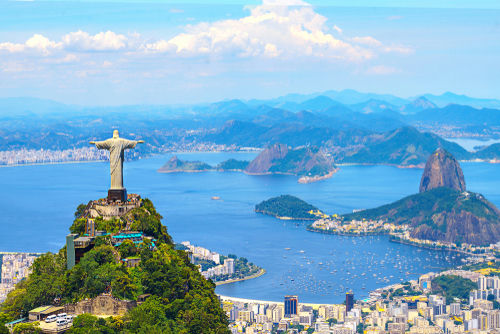
The words “SOS Venezuela” blazing across Rio’s Christ the Redeemer show how deeply the Venezuela quake crisis is shaking the world.
Story Snapshot
- “SOS Venezuela” was projected onto the Christ the Redeemer statue in Rio de Janeiro, seen widely during a public event.
- Brazilian organizers used the world-famous monument to honor victims of Venezuela’s June 24 earthquakes and call for help.
- The June 24 quakes were among Venezuela’s strongest in more than a century, killing thousands and leaving many more injured or missing.
- Medical groups and charities warn of a growing humanitarian crisis, with crowded shelters, damaged hospitals, and families sleeping in the streets.
Christ the Redeemer Lights Up With “SOS Venezuela”
Associated Press video shows the message “SOS Venezuela” projected directly onto the Christ the Redeemer statue high above Rio de Janeiro, clearly visible against the night sky. Reuters footage and related reports confirm that images on the monument were part of a special tribute to victims of the June 24 earthquakes that struck Venezuela, not a random light show. The projection took place during a large public celebration, ensuring that both locals and foreign visitors saw the plea for help.
Coverage describes the event as a visual call for solidarity with Venezuelans reeling from the disaster. Organizers have not been clearly named in the initial reports, but the choice of Christ the Redeemer was deliberate. The statue is one of the world’s most recognized Christian landmarks and a top symbol of Rio and Brazil. Using that symbol for “SOS Venezuela” turned a local Brazilian gathering into a stage for a regional emergency, pushing the crisis into global view.
Quakes Turn Venezuela’s Weak System Into a Full-Blown Crisis
On June 24, two strong earthquakes struck Venezuela, including magnitudes reported around 7.2 and 7.5, hitting the capital Caracas and nearby areas. International reports describe widespread building collapse, crushed vehicles, and entire blocks reduced to rubble. The StEER Network and other technical groups note severe ground failure and landslides, which make rescue work even slower and more dangerous. For a country already hurt by years of economic decline and political turmoil, this level of damage pushes many communities past the breaking point.
Official and aid-group death tolls vary, but they all point to heavy loss of life. Reuters early coverage cited at least dozens dead and hundreds injured on day one. Later updates and humanitarian status reports speak of death counts in the thousands and more than 11,000 injured, with tens of thousands displaced. A website set up by opposition figures to track missing people listed thousands unaccounted for soon after the quakes, hinting at many victims still under debris. This scale matches what global relief agencies classify as a major humanitarian emergency, needing fast outside help.
Hospitals, Shelters, and Everyday Families Under Strain
Doctors and aid workers warn that the disaster is now shifting from a rescue phase to a health and survival crisis. Reports shared by medical groups say thousands of survivors live in crowded, makeshift shelters with poor sanitation. Social media posts and fundraising pages describe elderly people, children, and single mothers sleeping in parks and open plazas because homes are unsafe or destroyed. Damaged hospitals, limited clean water, and disrupted power increase the risk of disease outbreaks and make routine care difficult.
'SOS Venezuela' projected on Christ the Redeemer Statue in Rio https://t.co/3px3Wdc8pW #News
— The Right News, Right Now. (@BradPorcellato) July 3, 2026
Groups like SOS Children’s Villages detail the special danger for children who lost parents, homes, or schools. International experts compare this to other large disasters where weak governments struggle to manage logistics, construction standards are poor, and corruption or mismanagement slows aid. Some Venezuelan leaders defend their response and reject claims of undercounted deaths or bad housing policy, but outside analyses still highlight deep structural problems. For regular Venezuelan families, the debate changes little; they need safe shelter, clear information, and reliable help now.
Why a Giant “SOS” Matters—and What It Says About Today’s Politics
Humanitarian researchers note that campaigns using simple visual symbols—like “SOS” projections on famous landmarks—are increasingly common after disasters. They argue that these symbols do more than call for charity; they often frame natural events as political crises tied to bad governance and global power games. In Venezuela’s case, the earthquakes hit a country already struggling with economic collapse, shortages, and contested leadership, so outside messages naturally mix sympathy with criticism. That can make disaster aid debates part of wider fights over socialism, corruption, and international control.
For many conservative Americans, there is a clear lesson here. When state systems are bloated, corrupt, or hostile to free markets, they fail the people most when disaster comes. Venezuela’s long embrace of heavy-handed government control and socialist policy left its economy weak and its infrastructure fragile, according to multiple policy studies. Then, when the earth shook, citizens paid the price while leaders argued over blame and spin. The “SOS Venezuela” on Christ the Redeemer is not just a cry about an earthquake; it is a warning about what happens when governments chase ideology over basic competence and accountability.
Sources:
youtube.com, yahoo.com, reutersconnect.com, facebook.com, world.new7wonders.com, miyamotointernational.com, gfz.de, eos.org, csis.org, apnews.com, pmc.ncbi.nlm.nih.gov, reliefweb.int