
Ukraine’s largest long-range drone blitz in months slammed deep inside Russia, igniting fuel sites and rattling St. Petersburg as Moscow scrambles to contain the damage and the message.
Story Highlights
- Ukraine launched scores of long-range drones striking energy and military-linked sites in and around St. Petersburg [1][6].
- President Volodymyr Zelenskyy highlighted a hit on a major oil terminal over 1,000 kilometers from Ukraine [5].
- Russian authorities acknowledged disruptions including brief airport suspensions and network outages [1][6].
- The strikes fit a pattern of targeting dual-use logistics that fuel Russia’s war machine [7].
Ukraine Expands Deep-Strike Campaign Into Russian Heartland
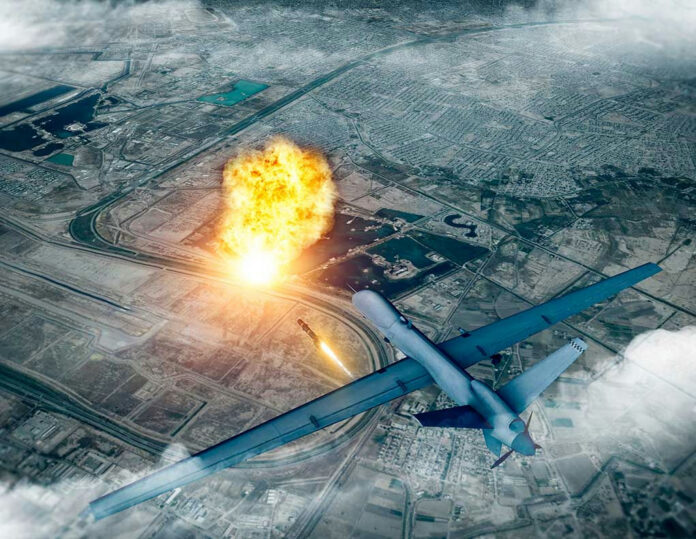
Ukrainian forces executed a widespread drone operation hitting multiple targets across Russia’s northwest, with particular focus on the St. Petersburg region. Reporting from independent outlets stated that dozens of drones penetrated Russian air defenses and reached key sites as Russia opened a marquee economic forum in the city [1][6]. President Volodymyr Zelenskyy shared footage and emphasized that long-range capabilities are being used to pressure Russia’s capacity to wage war, underscoring a strategic shift toward sustained deep strikes [6].
Russian authorities and local channels described impacts on infrastructure, temporary flight suspensions at St. Petersburg’s airport, and communications interruptions following the attacks [1][6]. Visual evidence from news coverage showed large fires and heavy smoke rising from affected locations. While battlefield damage assessments remain contested, the timing and reach signaled that Ukraine can challenge Moscow’s sense of sanctuary far from the front lines, a psychological and logistical blow during a high-profile event for the Kremlin [1][6].
Oil Terminals, Naval Facilities, And Arms Plants As War-Support Targets
Coverage highlighted hits on an oil terminal in St. Petersburg and reported strikes near naval and defense-industrial nodes, including sites tied to weapons production in other regions previously targeted by Ukraine [5][7]. Video reports indicated significant flames at fuel storage that support Russia’s military logistics, which aligns with a broader trend: states target dual-use infrastructure—fuel depots, airbases, and defense plants—because they sustain frontline operations even when located deep in rear areas [7]. These targets complicate legal and ethical debates due to their civilian and military overlap.
Ukraine’s messaging framed the operation as part of a long-range pressure strategy designed to degrade Russia’s war economy and constrain attack capacity against Ukrainian cities [6]. Prior reporting on similar campaigns documented Ukraine striking airfields and industrial facilities used to produce or store drones and munitions, reflecting a consistent pattern of seeking to impose costs on Russia’s ability to project force [7]. This approach relies on affordable, attritable platforms to force Moscow to disperse defenses and spend more on protection instead of offense.
Moscow Calls It Escalation As Disruption Undercuts Putin’s Optics
Russian officials cast the strikes as unlawful attacks on infrastructure, stressing public-safety risks and temporary service disruptions inside a major population center [1]. Their response followed a familiar narrative: label long-range hits as terrorism while downplaying military relevance. Yet the operational facts reported—oil terminal fires, visible damage, and precautionary flight halts—point to concrete logistical stress. The disruption on the eve of a high-visibility forum undermined Kremlin claims of normalcy and deterrence depth around Russia’s second-largest city [1][6].
For American readers tracking stability and costs, the episode reinforces several realities. First, Russia’s war machine depends on vast networks of fuel and industry that are now within Ukraine’s reach. Second, long-range drone warfare rewards innovation and nimbleness over bloated spending, a reminder that security is not secured by bureaucracy but by results-driven strategy. Third, deterrence works when aggressors pay a price where it hurts—logistics, revenue, and prestige—without dragging the United States into another blank-check commitment.
Conservative Lens: Strength Through Clarity, Limits, And Deterrence
The United States benefits when European conflicts are contained, aggressors face material costs, and American taxpayers avoid open-ended funding pipelines. Ukraine’s deep strikes demonstrate that targeted pressure on war-sustaining assets can change the calculus without massive escalations by outside powers [6][7]. Washington’s role should emphasize accountability, strict oversight for any aid, and a laser focus on deterrence—not mission creep, not nation-building, and not globalist blank checks that fuel debt and inflation at home.
🇺🇦 The First Order Consequence:
Ukraine’s military planners and strike units executed an overnight drone campaign into Russia, including a naval weapons depot near St. Petersburg, a Siberian oil refinery, and a port in occupied Mariupol, on June 5, 2026, the reported final day… https://t.co/63Xdm1kxMK
— U.S.A.I. 🇺🇸 (@researchUSAI) June 6, 2026
The constitutional bottom line is prudence: defend freedom, maintain strength, and resist entanglements that expand federal overreach and drain families already hit by high prices. Ukraine is proving that determined nations can blunt invaders by striking supply lines and industry, forcing hard choices on Moscow [5][6][7]. That outcome serves American interests when paired with clear limits, measurable objectives, and respect for taxpayers—strong borders at home, strong deterrence abroad, and zero tolerance for waste.
Sources:
[1] Web – Mass Ukrainian Drone Strikes Target Russian Military Facilities
[5] YouTube – Ukrainian drones strike St. Petersburg on Putin’s “Davos” opening day
[6] Web – Ukrainian drones strike a St. Petersburg oil terminal ahead of Putin …
[7] Web – Ukraine Attacks Energy, Military Sites In St. Petersburg Ahead Of …