
American forces shot down a wave of Iranian ballistic missiles and attack drones targeting U.S. allies Kuwait and Bahrain, as well as civilian shipping in the Strait of Hormuz — and Iran is trying to spin the outcome as a victory.
Story Snapshot
- U.S. Central Command intercepted Iranian ballistic missiles and one-way attack drones launched toward Kuwait, Bahrain, and the Strait of Hormuz.
- Gulf states including Kuwait and Bahrain also intercepted hundreds of Iranian projectiles and issued a joint condemnation of Iran’s attacks.
- Iran falsely claimed it struck an American military vessel in the Sea of Oman — a claim the U.S. flatly denied.
- U.S. forces followed up with retaliatory strikes on Iranian military sites, including on Qeshm Island, signaling that aggression carries a price.
Iran Launches Missiles and Drones at Gulf Allies
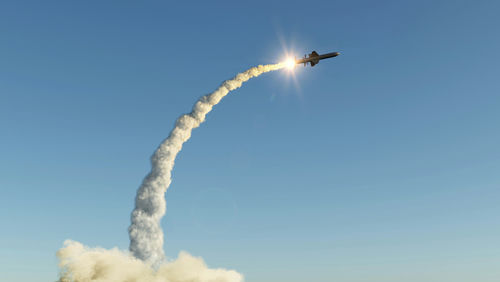
Iran launched ballistic missiles and one-way attack drones targeting Kuwait and Bahrain, two Gulf nations that host American military personnel and assets. U.S. Central Command (CENTCOM) reported that six Iranian missiles were intercepted and a seventh failed to reach its intended target. American air defenses also shot down four Iranian attack drones aimed at the Strait of Hormuz, one of the world’s most critical maritime chokepoints through which roughly 20 percent of global oil supply flows.
Gulf states did not sit on the sidelines. Kuwait and Bahrain each deployed their own air defense systems, intercepting additional Iranian projectiles and joining a joint regional condemnation of Tehran’s aggression. Several Gulf nations together reported intercepting hundreds of Iranian missiles and drones over a 24-hour period, a staggering volume that underscores just how reckless and deliberate Iran’s military campaign has become. No American casualties were reported in the initial exchanges.
Iran’s False Claims Exposed by CENTCOM
Iran attempted to control the narrative by claiming it had successfully struck an American military vessel in the Sea of Oman. The United States denied that claim outright. CENTCOM also directly rebutted Iran’s assertion that Kuwait International Airport was damaged by an American interceptor missile, posting publicly that the claim was “Totally FALSE” and stating that Iran itself struck the civilian airport with drones in what CENTCOM called a deliberate, calculated, and unjustified attack. Iran deliberately targeting civilian infrastructure is not a defensive act — it is terrorism by another name.
Iran also claimed its missile and drone launches were warning shots rather than offensive strikes — a characterization CENTCOM rejected. The pattern here is familiar: Iran fires weapons, suffers a defensive response, then attempts to reframe the exchange to minimize its own culpability. The record, however, shows Iranian projectiles aimed at civilian airports, allied military bases, and international shipping lanes. These are not the actions of a country seeking de-escalation.
U.S. Retaliates With Strikes on Iranian Military Sites
Following the Iranian attacks, U.S. forces launched retaliatory strikes targeting Iranian military positions, including sites on Qeshm Island. The operation demonstrated that the Trump administration is not willing to absorb Iranian aggression without consequence. Analysts at the Jewish Institute for National Security of America noted that U.S., Israeli, and allied forces have successfully intercepted more than 90 percent of Iranian missiles and drones launched in recent exchanges, a testament to the strength of American-led air defense coordination in the region.
U. S. forces intercepting those Iranian missiles and drones then striking Qeshm Island shows the resolve needed to protect the West from invaders.
— Silas Vorn (@ShphrdsVllyHmsd) June 3, 2026
The broader picture is one of Iranian desperation meeting American resolve. Tehran has spent years building up its drone and missile arsenal as its primary tool of regional coercion. When that arsenal is repeatedly defeated in the open sky and met with immediate retaliation, the strategic calculus changes. CENTCOM also reported that American forces separately shot down three Iranian attack drones that were launched toward civilian vessels transiting regional waters — a reminder that Iran’s aggression threatens global commerce and innocent lives, not just military targets. The Trump administration’s willingness to respond with force, rather than strongly-worded letters, is precisely what the Gulf region has needed.
Sources:
[1] Web – U.S. forces shot down Iranian missiles and drones aimed toward Gulf …
[2] YouTube – US Shoots Down Iran’s Warship Strike Claim; Gulf Tensions Soar
[3] YouTube – ON CAM: Iranian Ballistic Fury Hits ‘AMERICAN BASES’
[4] Web – Gulf states intercept hundreds of Iranian missiles and drones, issue …
[5] Web – U.S. Shot Down Iranian Missiles and Drones Aimed at American …
[6] YouTube – Iranian drone attacks on Kuwait and Bahrain after US attacks on Iran
[7] Web – US secures Israel-Lebanon ceasefire in major diplomatic breakthrough
[8] Web – Iran war live: US forces down Iranian missiles targeting Kuwait and …
[9] Web – Did Iran Use a Chinese Missile to Shoot Down the ‘Dude 44’ F-15E?
[10] YouTube – US shoots down Iranian drones launched toward Strait of Hormuz
[11] YouTube – BREAKING: US downed six Iranian missiles overnight
[14] Web – US Forces Intercept Iranian Missiles and Drones as Tensions Persist …
[15] Web – U.S. forces intercept Iranian missiles, drones in self-defense
[16] Web – More Than 90% of Iranian Missiles Intercepted, but a … – JINSA
[17] YouTube – US Forces Intercept Iranian Missiles, Drones
[18] YouTube – Iran Targets US Military Bases With Missiles & Drones