
Berlin police are probing whether a substation fire was arson or an accident, underscoring fresh risks to Europe’s power grid.
Story Highlights
- Police are investigating arson versus a technical fault after a Berlin substation fire.
- The blaze began at a nearby construction site and spread to part of the substation, officials said.
- Authorities reported no power supply disruption from this incident.
- Germany has faced other suspected sabotage attempts on its grid this month.
Police Confirm Two-Track Probe Into Cause
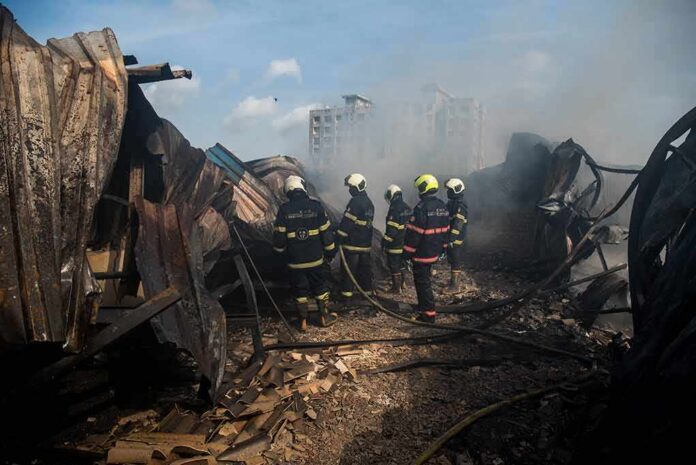
Berlin police said they are examining whether the fire that hit a construction site and part of a substation in the Moabit and Tiergarten area was caused by arson or by a technical fault. Officers stated the scene showed damage to both areas, and that they are working with the grid operator on the cause. Police also said the power supply was not affected, which helped contain local impact and allowed investigators to secure the site for evidence work.
Emergency responders were alerted in the early hours on Monday. A fire department spokesman, cited in local coverage, said the blaze began at a construction site on Bissingzeile in central Berlin and then spread to a nearby substation. That sequence lines up with police descriptions of damage at both locations. Officials did not name any suspects. They also did not share forensic findings yet, which means the final cause has not been determined at this stage.
What Investigators Are Weighing Technically
Investigators often weigh two broad paths in substation incidents: outside interference or equipment failure. Prior engineering reviews show that cable faults, moisture in high voltage parts, and arcing can start intense fires that look deliberate to a layperson. For example, a forensic case study tied a substation fire to a cable splice failure, not sabotage. Another review found moisture intrusion caused a bushing failure and fire at a major site. These cases guide today’s technical checks.
Police and utility engineers will likely examine relay logs, thermal damage patterns, and cable routes to test the accidental-fault theory. They may also seek camera footage, perimeter access records, and witness timelines to test the arson theory. This Berlin event’s lack of supply disruption suggests protection systems and redundancy worked as designed, which can preserve evidence and speed analysis. Officials have not released those records publicly, which is common in critical infrastructure probes.
Recent Pattern of Grid Threats in Germany
This incident comes as Germany reports fresh attempts to hit power infrastructure. In recent days, police and grid operators described suspected sabotage at other sites, and said grid stability held. Those cases triggered wider security checks and terrorism probes, according to named officials and company statements. The broader pattern raises vigilance, even when a single event, like the Berlin fire, could still prove to be a technical fault after testing and lab work conclude.
Berlin police said on X that they are seeking to establish whether a fire affecting a construction site and a substation in the Moabit district was accidental or arson.https://t.co/t98Fw0XasU
— The Star (@staronline) September 7, 2026
Berlin previously faced a major arson attack in January that cut power to tens of thousands of customers for days, according to European analysis and press accounts. That earlier case is separate from this week’s fire, but it explains why police quickly test for arson when power assets burn. Today’s investigators will balance speed with accuracy. A wrong call on cause can mislead the public. A sound finding, backed by evidence, helps harden sites and keep the lights on.
Sources:
straitstimes.com, trtworld.com, reuters.com, teslarati.com, abcnews.com