

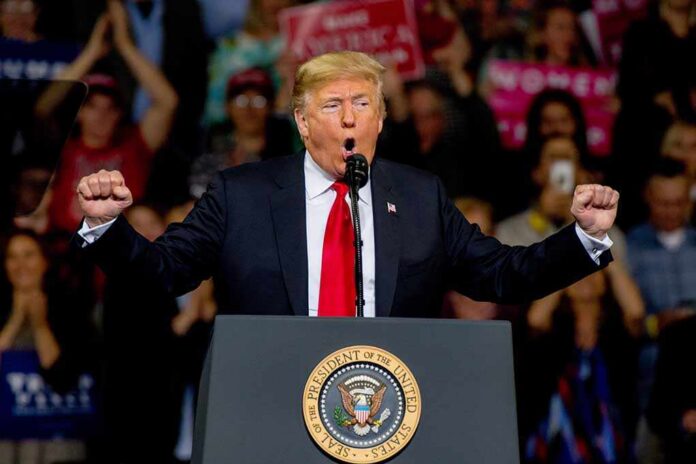
President Trump launched a national fraud-tip program that pays citizens—yes, even reporters—for leads that help recover stolen taxpayer money.
Story Highlights
- White House unveiled a $25 million Fraud Whistleblower Incentive Program to fight waste and abuse.
- Tipsters can receive up to $30,000 under published program rules if a tip leads to a conviction or major action.
- Trump said successful tipsters could earn a 1% “commission,” without a cap, including journalists who qualify.
- Historic False Claims Act recoveries show whistleblowers can help return billions to taxpayers.
Trump Opens Fraud Bounty To The Public, Including Journalists
President Trump and Vice President JD Vance announced a national push to crowdsource fraud detection across federal programs. The White House described a $25 million Fraud Whistleblower Incentive Program run with the Department of Justice. The plan invites any citizen to submit original tips on fraud, waste, and abuse. Trump told reporters they could take part, subject to their own rules. He framed the effort as paying a “1% commission” for successful tips that help recover stolen funds.
Coverage of the event shows Trump pressing the urgency of the problem and inviting the press and public to help police it. He stated that “there’s no limit” to what a tipster could earn if the government recovers a large sum from a credible lead. This plain-spoken pitch put fraud hunters on notice and opened the door to nontraditional whistleblowers. It signaled a get-tough stance on abuse of taxpayer dollars and asked Americans to help hold fraudsters to account.
Published Award Caps Versus Trump’s 1% Commission Rhetoric
The formal program description reported by several outlets says awards will be “up to $30,000” when tips lead to convictions or significant enforcement actions. That ceiling differs from Trump’s 1% “no limit” framing, which implies a share of total recovery. One report cited a White House official noting the $30,000 cap, even as Trump publicly promoted a commission model. This creates a tension the administration will need to reconcile in the program’s final rules.
Responsible coverage should separate the policy record from event remarks. On paper, the Department of Justice-linked program pays defined awards up to $30,000 for qualifying information. On camera, Trump emphasized a 1% commission and invited journalists to join, subject to law and employer policies. Both messages aim to boost tips. But the cap-versus-commission gap is real and will shape public expectations and future case payouts if not clarified soon.
Why Incentives Matter: Proven Whistleblower Models Recover Billions
Federal history shows cash incentives drive results. Under the civil False Claims Act, private whistleblowers have helped the government recover more than $85 billion since Congress strengthened the law in 1986. The Department of Justice reported $6.8 billion in settlements and judgments in fiscal year 2025 alone. That track record supports the Trump team’s bet that more eyes and simple rewards can surface fraud schemes that bureaucracies miss.
President Trump announced a new federal fraud whistleblower incentive program that he says will pay Americans, including journalists, a 1% commission for reporting fraud and corruption involving taxpayer dollars. pic.twitter.com/qLkkDPqNF0
— KennedyOnassis (@KennedyOnasis35) October 21, 2026
For taxpayers squeezed by inflation, high energy costs, and years of waste, this program sends a clear signal. Washington will pay for good information that stops theft. Conservatives value accountability and limited government. Stopping fraud protects Social Security, veteran care, and border security funds from being siphoned by scammers. If the cap-versus-commission issue is resolved in favor of stronger incentives, recoveries could scale as more citizens step up to report abuse.
Next Steps: Clear Rules, Fast Payouts, Measurable Wins
The administration’s next move should be clear, public guidance that aligns presidential remarks and agency rules. Citizens need to know exactly how to submit tips, what qualifies, how awards are calculated, and when payments are made. A transparent portal, published timelines, and regular recovery reports will build trust. Early cases should highlight real savings and real awards. Quick, visible wins will encourage more tips and deter would-be fraudsters eyeing federal programs.
Sources:
yahoo.com, inquirer.com, washingtonexaminer.com, spectrumlocalnews.com, atlantablackstar.com