
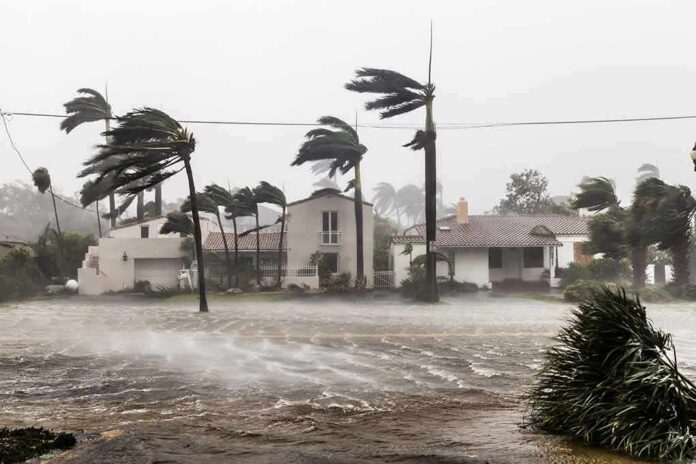
President Trump approved a major disaster declaration for parts of Florida after late-October storms and flooding, unlocking federal help for families and communities.
Story Highlights
- President Trump authorized federal disaster aid for Florida’s late-October storms and floods.
- Six counties qualify for individual assistance: Brevard, Indian River, Martin, Okeechobee, Palm Beach, and St. Lucie.
- Federal Emergency Management Agency reported nearly $400 million for 144 Florida recovery projects.
- The declaration operates under the Stafford Act and supplements state and local recovery.
What President Trump Approved For Florida Flood Recovery
Federal Emergency Management Agency officials said President Trump approved a major disaster declaration for Florida on November 24, 2026. The action covers severe storms and flooding that began October 31 and are listed as “continuing” in the notice. The decision makes federal help available to people in six counties for housing, repairs, and other needs. It also supports cost-sharing for public work to clear debris and fix damaged infrastructure under federal rules.
The Federal Emergency Management Agency announcement named Brevard, Indian River, Martin, Okeechobee, Palm Beach, and St. Lucie counties for individual help. Residents in those counties can apply for aid to address uninsured losses tied to the storms and floods. The federal help supplements work already underway by Florida and local governments. Federal teams also coordinate with the state on public assistance, hazard mitigation, and other eligible categories listed in the declaration.
How The Money Flows And What It Can Cover
The Federal Emergency Management Agency said nearly $400 million is being awarded to Florida for 144 projects aimed at recovery and resilience. That figure reflects a broad recovery push and shows that funds are moving into concrete work. The agency did not tie that total to the six-county individual aid approval on November 24. It instead shows the scale of current federal support for Florida’s disaster needs across projects and communities this year.
Under the Stafford Act, federal assistance generally pays a share of approved costs and requires state and local partners to carry the rest. That design keeps control close to communities while giving needed lift for large repairs. The public notice for Florida explains what categories qualify and which applicants are eligible. This helps counties and cities submit correct paperwork and start work on emergency fixes, debris removal, and permanent repairs without wasting time.
Who Qualifies Now And What May Expand Next
People living in the six named counties can seek help for temporary housing, basic home repairs, and other disaster needs caused by the storms. Local governments and certain nonprofits can pursue projects to repair roads, bridges, utilities, and public buildings damaged by flooding. The Federal Emergency Management Agency can amend declarations as damage data is confirmed, but the current notice lists six counties for individual help. Officials did not publish dollar amounts for individual households in this specific action.
Flooding and severe storms that “ravaged” Florida prompted President Donald Trump to announce and sign a major disaster declaration, approving FEMA and emergency relief funding for the state.https://t.co/EeQax7t8tZ
— CBS 6 Albany – WRGB (@CBS6Albany) November 27, 2026
Florida has had multiple disaster actions this fall, including an earlier major disaster for Hurricane Isaias with an October incident window. The November 24 declaration addresses a separate storm period starting October 31. Keeping those events distinct matters for tracking what help applies where and when. Residents should match their losses to the correct incident dates and county listing when they apply so their claims move without delays or mix-ups.