
U.S. Treasury says it has mapped nearly $15 billion flowing through Iran’s shadow banking and has now sanctioned the networks moving it.
Story Highlights
- Treasury identified about $14.7 billion in activity potentially tied to Iran’s shadow banking from 2025 to August 2026.
- Operation Economic Outcast sanctioned over two dozen exchange houses, front firms, and personnel supporting Iran’s networks.
- Prior actions traced money flows aiding Iran’s defense ministry and Islamic Revolutionary Guard Corps.
- Officials describe shell companies moving billions for sanctioned Iranian banks across multiple jurisdictions.
Treasury Maps the Money and Moves to Cut It Off
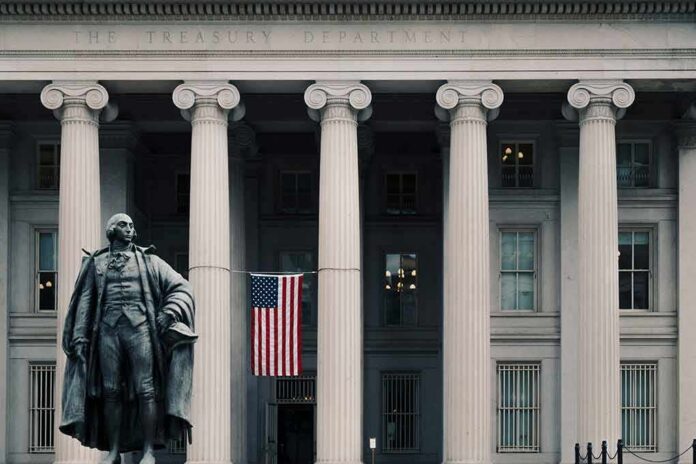
The Department of the Treasury’s Financial Crimes Enforcement Network reported approximately $14.7 billion in financial activity from January 2025 through August 2026 that it says is potentially linked to Iranian shadow banking. The Office of Foreign Assets Control announced a coordinated action, called Operation Economic Outcast, that sanctioned more than two dozen Iranian exchange houses, front companies, and key personnel. Officials describe these steps as part of a push to block Iran’s last major financial pipelines beyond formal banking channels.
FinCEN’s figure reflects reported transactions flagged as potentially connected, not court-tested cases, but it marks the government’s most detailed view of Iran’s workarounds to date. Treasury’s actions aim to make those workarounds too risky and costly to use. The strategy pressures middlemen abroad, dries up access to dollars and other hard currencies, and warns banks that shell layers and trade finance tricks will face quick sanctions exposure.
How Iran’s “Shadow Banking” Works, According to Prior Actions
Past Treasury designations outline a playbook: Tehran-based exchange houses and foreign cover firms move money for sanctioned actors. A 2024 action identified Omid Sepah and Hekmat Iranian as businesses tied to Bank Sepah that used front companies to transact for the Ministry of Defense and Armed Forces Logistics, while also citing transfers by Nourian Exchange in Chinese yuan, United States dollars, and United Arab Emirates dirhams. Later rounds said similar houses moved billions annually for sanctioned Iranian banks through layered shells.
These networks support oil sales, commodity trade, and procurement. They rely on trusted brokers, multiple jurisdictions, and payment rerouting to mask origin and purpose. The pattern is a cat-and-mouse game. Iran seeks foreign currency lifelines and access to suppliers. Treasury maps and designates the pipelines when identified. FinCEN previously estimated about $9 billion of potentially related activity in 2024, showing growth into 2025–2026 and the need for ongoing enforcement pressure.
What Operation Economic Outcast Targets Now
Operation Economic Outcast names exchange houses, front firms, and individuals that Treasury says sit at key pressure points. The designations freeze any assets under United States jurisdiction and bar United States persons from dealing with them. They also send a loud signal to foreign banks and brokers who fear losing dollar access. By focusing on the entities that process, net, and settle payments for sanctioned bodies, Treasury seeks to raise costs and choke the last clear routes for Iran’s regime-linked finance.
Officials tie these actions to earlier campaigns against networks serving Iran’s defense industries and the Islamic Revolutionary Guard Corps. A 2026 release described exchange houses moving billions each year for sanctioned Iranian banks by passing funds through layers of shell companies. A May 2026 action said one house facilitated hundreds of millions in foreign transactions for sanctioned persons. These details show repeated structures, common hubs, and a global footprint that Treasury is now trying to dismantle node by node.
Why This Matters for Security, Sanctions, and American Strength
Cutting off Iran’s shadow banking protects American troops, allies, and interests by starving sanctioned actors of cash. It supports President Trump’s promise to confront terror sponsors and to hold financial middlemen to account. It also defends the integrity of the dollar system. When exchange houses and shells move billions for a sanctioned regime, they undermine fair trade and the rule of law. Clear steps against those paths back the strong, law-and-order approach many Americans demand.
Banks and businesses now have new names to screen and stronger reasons to step back from risky partners. That makes it harder for Iran to hide behind shells or offshore fronts. The government cautions that the $14.7 billion figure reflects potentially linked transactions, but the pattern across multiple enforcement rounds shows an entrenched system that Washington intends to break apart with speed and precision. The message is simple: pick the United States market and lawful trade, or pick Iran’s shadow system and face severe costs.
Sources:
redstate.com, home.treasury.gov