
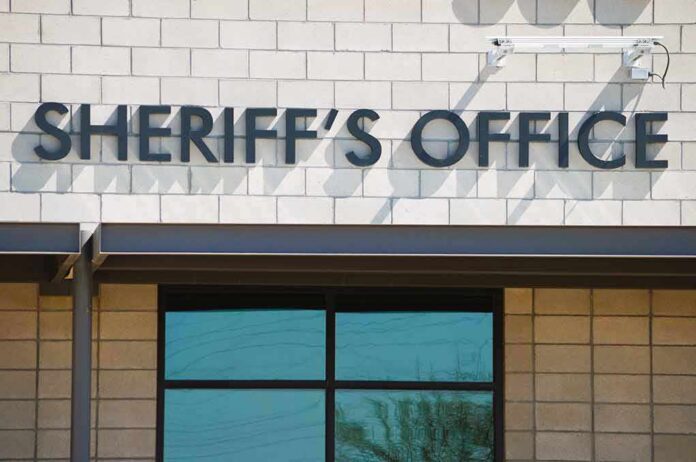
An audit says Riverside County taxpayers covered $3.19 million for Sheriff Chad Bianco’s security while he campaigned, including luxury travel and meals tied to political events.
Story Snapshot
- A county audit tallied $3,193,331.18 for Bianco’s protective detail over 12 months, mostly salaries.
- Travel records linked to campaign stops showed Ritz-Carlton rooms, airfare, cars, and high-end meals.
- The auditor said his office knew of no reimbursements from Bianco or his campaign at review time.
- A county supervisor asked prosecutors to review possible campaign finance violations; the case was sent to the state attorney general.
What the audit actually found about the $3.19 million
The Riverside County Auditor-Controller reviewed October 2025 through October 2026 and reported $3,193,331.18 in total costs for Sheriff Bianco’s protective detail. The report said about $3.16 million went to salaries and benefits for 21 staff. The rest, roughly $32,000, came from purchasing cards and reimbursements. The distinction matters. Critics often cite the full total. But the direct dispute centers on travel and event-related charges, not the entire annual payroll for the security team.
The audit listed trips and invoices linked to campaign activity. Reported examples included three rooms at the Ritz-Carlton in St. Louis for a podcast appearance, airfare, rental cars, and resort and valet fees. It also tied expenses to gubernatorial debates in Fresno and San Francisco, a March 14 rally, a Washington, D.C., trip for six staff, and election night security. The auditor said his office was unaware of any reimbursements by Bianco or his campaign when the review closed.
How the dispute became a legal question, not just a headline
Riverside County Supervisor Jose Medina requested the audit and then asked prosecutors to review possible campaign finance or public spending violations. The Riverside County District Attorney’s Office forwarded that request to the California Attorney General’s Office. That move raised the stakes, but did not resolve the law. At this stage, there is no formal legal finding that the spending broke a statute. Any conclusion will depend on state law and county policy.
Past cases show how the line can be drawn. New York City’s Conflicts of Interest Board found that taxpayers could not cover out-of-city campaign travel for then-Mayor Bill de Blasio’s police detail and ordered repayment and penalties. That decision separated core protection from campaign travel costs and required the campaign to pay the incremental travel bills. The Riverside review highlights the same problem: how to split necessary security from campaign activity and who pays the travel share.
Bianco’s security argument and the gap in the record
Undersheriff Don Sharp and Bianco’s office said the sheriff has faced real death threats since the COVID mandate fights and needs full-time protection. They said arrests and prosecutions followed some threats, and the department does not split travel by “official” or “campaign” because the team is always guarding the sheriff. That defense explains why protection continued on political trips. It does not, by itself, answer who must pay for airfare, hotel rooms, cars, and meals tied to campaign events.
IE NEWSWIRE: LET'S GET THE BIANCO SECURITY SPENDING QUESTIONS RESOLVED
This morning I sent the following email to Sheriff Chad Bianco, Undersheriff Don Sharp, all five Riverside County supervisors, County administration, Auditor-Controller Ben Benoit, District Attorney Michael… pic.twitter.com/t4rtbirWka— Roy Bleckert (@RoyBleckert) November 22, 2026
The public record, as reported, does not yet show a full, item-by-item split of each trip’s purpose or a final reimbursement decision. The audit period closed with no reimbursements known to the auditor, but that does not prove they were never made later. County policies and any state guidance on allocating mixed travel will likely decide what must be repaid. Until then, headlines that use the full $3.19 million risk confusing payroll with the smaller pool of disputed travel charges.
Why this matters to taxpayers and the rule of law
Taxpayers fund core security. Campaigns fund politics. When those worlds meet, clear rules protect both safety and the public purse. The audit’s examples of Ritz-Carlton rooms, resort fees, airfare, and rental cars tied to campaign stops will strike many families as out of touch with fiscal restraint. A tight policy—bill the campaign for the travel share, keep the detail for safety—respects law and order while stopping backdoor subsidies for politics.
What to watch next in California’s review
Watch for three things. First, any statement from the California Attorney General on whether campaign finance or misuse of funds laws apply here. Second, a county plan to separate and recover campaign-related travel costs going forward, with simple, written rules. Third, any proof of later reimbursements. Those steps would guard taxpayers, support legitimate security, and set a fair standard that outlasts one campaign and one sheriff.
Sources:
sacbee.com, fresnobee.com, kesq.com, dailybulletin.com, bestlocalmediahouse.com