

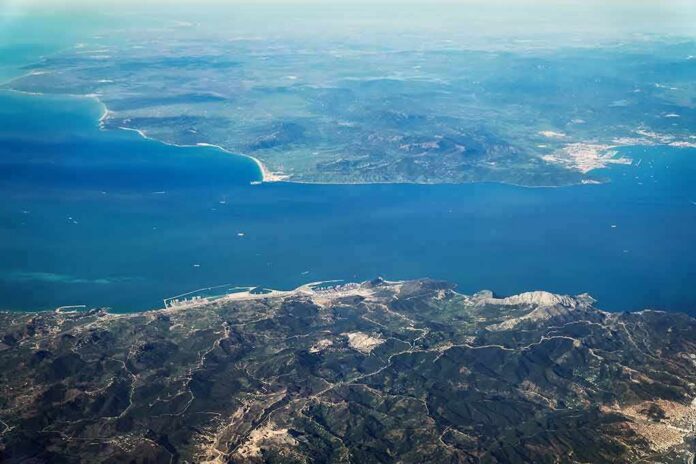
Fierce battles near the Bab al-Mandab Strait show Yemen’s government forces counterattacking to blunt Houthi gains along a vital global shipping lane.
Story Highlights
- Government-aligned units are clashing with the Houthis near the Red Sea corridor and Dhubab.
- Reports say Houthi advances threaten control of the Bab al-Mandab Strait, a key chokepoint.
- Yemeni forces claim counterstrikes and efforts to retake high ground by the coast.
- Control of this narrow waterway affects energy prices, shipping routes, and U.S. interests.
Government Forces Clash With Houthis Near Strategic Strait
Yemen’s government-aligned forces fought Houthi units near the Bab al-Mandab Strait as combat spread along the Red Sea coast. Reports from the ground said the Houthis pushed south along the shoreline and toward Dhubab, a small town that sits on the approach to the waterway. Government units mounted counterattacks to slow the advance and hold key positions on the coastal corridor. The fighting centers on supply routes, high ground, and access points that control movement along the narrow strait.
Reuters reported that Houthi fighters expanded their reach on the coast, increasing their ability to pressure the Bab al-Mandab, which links the Red Sea to world trade through the Suez Canal. A separate Reuters account said regional partners are weighing options to reverse recent Houthi gains and ease the chokehold risk at the strait. On the ground, Yemeni commanders described reinforcements, artillery duels, and maneuver warfare across rugged terrain that overlooks the shipping lane.
Counterattacks Aim to Retake High Ground and Coastal Nodes
Government forces said they struck Houthi positions in the coastal city of Mokha and fought to retake strategic ridgelines that overlook the sea approaches. These ridges and coastal towns anchor control of roads that run to the strait. Holding them matters for surveillance, missile threats, and denial of fire positions. Reports described seesaw combat around villages, road junctions, and mountain ranges that can dominate artillery arcs and drone launch sites along the Red Sea littoral.
Al Jazeera reported that government-aligned forces were reinforcing positions in western Yemen to support counterattacks near the corridor to the Bab al-Mandab. The same coverage referenced Yemeni sources who said Houthis had reached Dhubab, underscoring the speed of coastal advances and the urgency for government units to regroup and contest ground. That push and response reflect Yemen’s long war pattern: rapid claims of gains, quick counter-moves, and a race to hold terrain that shapes access to the sea.
Why Bab al-Mandab Matters to America, Trade, and Energy Prices
The Bab al-Mandab Strait is one of the world’s most important chokepoints. It funnels ships between Asia and Europe and connects to the Suez Canal. Analysts estimate a large share of global seaborne trade and vital energy shipments pass through this narrow gap each day. When a hostile force can pressure that lane, shippers reroute, insurance rises, and delivery times stretch. That can raise costs for fuel, goods, and farm inputs that American families rely on.
Yemeni forces announced the recapture of the Bab al-Mandab Strait after liberating Dhubab district from Houthi forces following clashes.#Yemen #BabAlMandab #Dhubab #Houthis #YemeniArmy #Breaking pic.twitter.com/Ba80pqCKmQ
— Arab Daily Scoop (@Arabdailyscoop) October 5, 2026
Reuters reporting warned that Houthi gains along the coast could give Tehran added leverage over two key oil corridors, compounding global risk if pressure persists at both Bab al-Mandab and the Strait of Hormuz. For U.S. readers, this is not a distant fight. A squeeze on the Red Sea route can ripple into higher pump prices, pricier groceries, and slower supply chains. That is why partners are discussing steps to restore safe passage and stabilize the coastal front.
What Comes Next on the Coast and at Sea
Battlefield control can change day to day. Government units said they are counterattacking and retaking slices of key terrain, while Houthi forces seek to lock in their coastal push. The near-term military task is clear: hold Dhubab and the ridges, keep roads open to friendly ports, and deny the enemy launch sites that threaten ships. The strategic task is to reduce risk for the shipping lane so trade keeps moving without detours and added costs.
Sources:
youtube.com, reuters.com, aljazeera.com, en.wikipedia.org, jpost.com, geopoliticalmonitor.com