

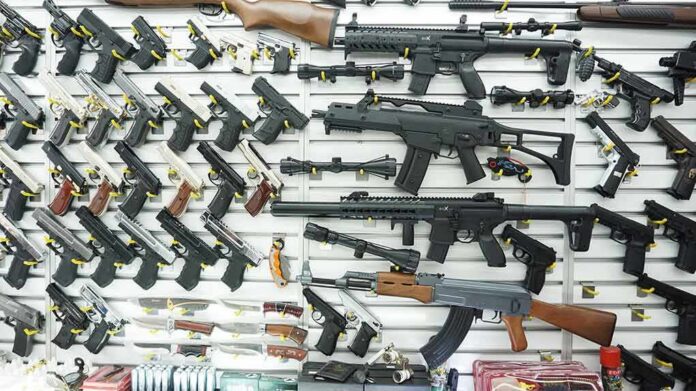
Twenty-five states just told the Supreme Court that Maine’s 72-hour gun wait tramples the Second Amendment and must end now.
Story Highlights
- A 25-state coalition urged the Supreme Court to review Maine’s 72-hour delay on firearm transfers.
- Maine’s law blocks delivery for three days even after a clean background check.
- The First Circuit upheld the law as a “modest delay,” creating a clear split with other courts.
- Gun-rights groups filed briefs and petitions backing review in Beckwith v. Frey.
State Coalition Pushes Supreme Court Review
Montana’s attorney general led 24 other states and the Arizona Legislature in asking the Supreme Court to take Beckwith v. Frey. Their brief argues Maine’s 72-hour waiting law blocks timely access to arms, a core part of the right to keep and bear arms. The coalition says the delay applies even when a buyer passes the background check at once, turning a right into a government-imposed timeout. The states want a clear nationwide rule on waiting periods.
Maine enacted the delay in 2024. The statute bars a seller from delivering a firearm sooner than 72 hours after a sale agreement. The delay runs concurrent with any background check timing, so an instant approval still ends with a three-day hold. The text is simple and sweeping: “A seller may not knowingly deliver a firearm… sooner than 72 hours after the agreement.” That bright-line rule reaches almost every commercial sale in the state.
Court Split Sets the Stage for High Court Action
The United States Court of Appeals for the First Circuit upheld Maine’s law on appeal from a district court injunction. The panel called the wait a “modest delay” and allowed enforcement. That ruling conflicts with how other courts have viewed similar delays. The split is now open and clear, with different circuits treating acquisition delays in very different ways after recent Second Amendment decisions. That conflict is a classic reason for the Supreme Court to step in.
The Beckwith petition tells the justices the law forces nearly everyone to wait three days before they may keep and bear a purchased firearm. Petitioners include gun owners and dealers who say they comply with the law yet still must withhold delivery. Their filing asks the Court to decide whether the Second Amendment protects timely acquisition, not just possession and carry. The petition stresses that instant checks make blanket waiting periods unnecessary and unconstitutional.
Real-World Stakes For Families and Self-Defense
Supporters of review point to people in danger who cannot afford a delay. The case record includes a stalking victim who passed her check, paid, and went home unarmed because of the mandatory wait. That story shows the cost is not theoretical. When seconds count, a three-day hold shifts power from the vulnerable to their abusers. That flips the purpose of the right, which is to let law-abiding people defend life and home without red tape roadblocks.
Gun-rights groups have lined up behind the challenge. The National Rifle Association and the Second Amendment Foundation filed briefs urging the Supreme Court to hear the case. They argue waiting periods fall within the text of the Second Amendment and lack support in American history and tradition. Their filings ask the Court to apply its recent method and strike laws that add new, general delays on lawful buyers who already passed federal checks.
Why This Fight Matters Under President Trump
Conservatives see these waits as the old playbook of control by delay. The federal instant check system already screens buyers. Maine’s rule adds time, not safety. That means a single mom in danger waits. A veteran in a rural area waits. Criminals, who ignore gun laws, do not wait. The 25-state brief signals that many leaders agree: blanket cooling-off rules burden rights, hit families first, and invite more state-level overreach nationwide if left standing.
What Comes Next at the High Court
The Supreme Court now has a clean vehicle in Beckwith to answer a narrow but vital question: does the right to keep and bear arms include prompt access to arms after a lawful check, or may states impose arbitrary timeouts? With circuits divided and lives at stake, the justices could grant review and set a national standard this term. If they do, Mainers would be first to benefit, and similar laws elsewhere would face fast scrutiny.
Sources:
supremecourt.gov, usacarry.com, newsmax.com, nraila.org, ammoland.com, caselaw.findlaw.com, legislature.maine.gov, news.bloomberglaw.com