
Witnesses say Tennessee used multiple needles for nearly an hour before two lethal drug doses failed to kill Christa Pike, exposing a protocol gap that left the state with no next step.
Story Highlights
- Witnesses reported prolonged needle attempts and Pike breathing after two drug doses.
- Attorneys said Pike was later hospitalized, intubated, and unconscious with arm injuries.
- Officials said they followed the state’s execution protocol and paused future executions.
- The protocol allows a second set of syringes but gives no clear step if that also fails.
What Witnesses And Records Say Happened In The Chamber
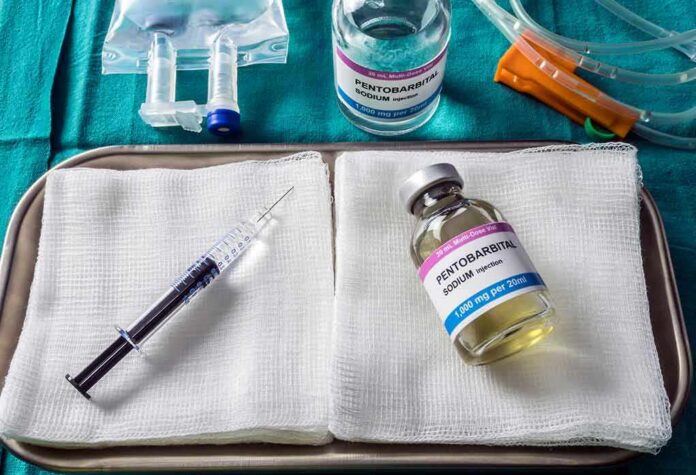
Reporters present on Sept. 30 said staff struggled to start an intravenous line for a long stretch before giving two syringes of pentobarbital. After both doses, witnesses still saw and heard Pike breathing and even snoring. Officials ended the process without a death. That timeline matches the accounts that the team made multiple needle attempts and then hit a dead end when the protocol offered no further options after a second set of drugs.
Pike’s lawyers said the team tried at least seven needle sticks in her left arm over about an hour, then administered the drugs without a working line. They said her veins were known to be small and hard to access, which raised the risk of a miss. A forensic pathologist told media that the drugs likely went into tissue instead of a vein, which would blunt the effect and leave the person breathing instead of going into deep sedation and cardiac arrest.
The State’s Response And The Immediate Fallout
The Tennessee Department of Correction said it followed every step in the lawful protocol and that the drug has been consistently effective in past executions. After the failed attempt, the agency transported Pike to an off-site hospital. Governor Bill Lee announced a pause on executions and ordered an outside review of the procedure. He also said Tennesseans expect the state to carry out sentences in a legal, constitutional, and effective way that does not leave this kind of breakdown.
Public reporting on the protocol says the state uses pentobarbital in two syringes, and allows a second set if the inmate is not deceased. The same reporting notes the document does not describe what to do if the person remains alive after the second set. That silence matters because witnesses said Pike was still breathing after the second round, and the state then stopped. The gap added confusion in the room and for the public afterward.
What We Know About Pike’s Condition Afterward
Pike’s attorneys said she was intubated, on a ventilator, and unconscious after leaving the prison. They reported both arms were swollen, burned, and blistered, which is consistent with tissue injury from drug infiltration. These are the lawyers’ statements, but they match witness reports that the drugs did not end her life in the chamber. Officials have not released full medical records. The governor’s ordered review may seek hospital documentation to verify what the drugs did inside her body.
Christa Pike was placed on a ventilator and remained unconscious in a hospital in the hours after her failed execution in Tennessee, her attorneys said in a court filing Friday.https://t.co/NppWJY1fyn
— Times Free Press (@TimesFreePress) October 3, 2026
Conservatives can agree on this bottom line: when the state enforces the law, it must do it cleanly, transparently, and within the Constitution. A protocol that stalls after two syringes and leaves no next step invites chaos. The review should release the execution log, intravenous placement notes, and staff incident reports, so citizens can see what failed and why. If the protocol is sound, proof will show it. If not, Tennessee should fix it fast and in the open.
Sources:
cnn.com, cbsnews.com, pbs.org, wsmv.com