
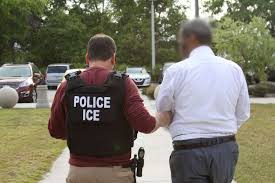
Harris County officials are launching a review of how local law enforcement agencies work with federal immigration authorities, a move aimed at clarifying policies amid what county leaders describe as mounting confusion in immigrant communities.
County Review Targets Law Enforcement Protocols
Harris County Judge Lina Hidalgo announced Thursday that commissioners discussed a proposal to study immigration-related policies across multiple county law enforcement agencies. The initiative, brought forward by Commissioner Rodney Ellis, would examine how agencies currently handle interactions with U.S. Immigration and Customs Enforcement. Hidalgo emphasized the review would not immediately change existing policies but instead evaluate current practices. The announcement followed a Harris County Commissioners Court meeting where officials addressed concerns about coordination between local and federal authorities.
Community Impact Drives Decision
County officials cited growing uncertainty within immigrant communities as a primary driver for the policy examination. Hidalgo stated that clearer guidelines could help address what she characterized as fear and confusion among residents. The review would look at multiple law enforcement agencies operating within Harris County to determine how each currently manages federal immigration enforcement requests. Officials have not announced a timeline for completing the study or implementing any potential policy changes that might result from the findings.
Broader Context
The Harris County initiative comes as local governments nationwide grapple with balancing federal immigration enforcement priorities against community concerns. Immigration and Customs Enforcement relies on cooperation from local agencies for certain operations, though the extent of that cooperation varies significantly by jurisdiction. Some counties have adopted sanctuary policies limiting assistance to federal immigration authorities, while others maintain full cooperation. Harris County’s review represents an attempt to formalize and clarify existing practices rather than adopt sweeping changes. The study’s findings could influence how the county’s various law enforcement bodies approach future federal requests for assistance with immigration matters.