

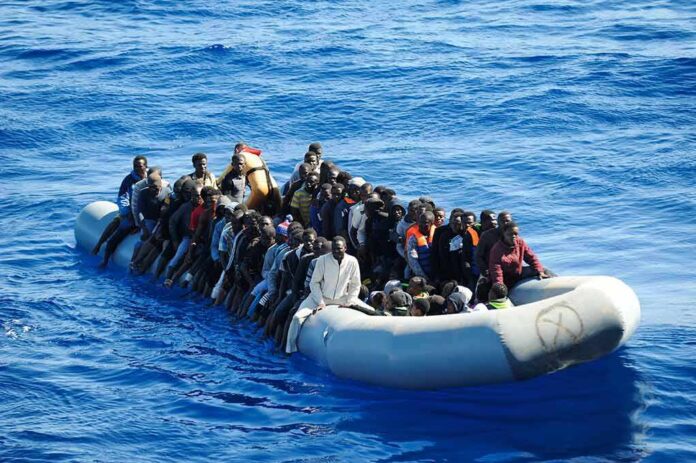
A deadly Atlantic route is pulling Senegal’s youth toward Europe as boats sink and bodies vanish at sea, even as crossings surge.
Story Highlights
- International monitors report thousands of arrivals to Spain’s Canary Islands alongside hundreds of deaths.
- Young Senegalese cite bleak job prospects and falling fishing incomes as reasons to leave.
- Route enforcement shifted departures south, but the journey became deadlier.
- The crisis shows how weak economies abroad can drive risky migration that strains Western borders.
Documented Spike in Crossings and Fatalities
International Organization for Migration data show a sharp rise in Atlantic crossings to Spain’s Canary Islands. From January to June 2024, 19,257 migrants reached the islands by boat, up 167 percent from the same period in 2023. During those six months, 25 shipwrecks caused 324 deaths or disappearances on the route. These numbers confirm both the scale and danger. They also show that many people take this risk despite knowing the odds can be fatal.
The risk did not fade in 2025. International Organization for Migration reporting linked the West African Atlantic route to 54 shipwrecks that year, with 1,214 migrants dead or missing and 17,788 arrivals to the Canary Islands. That pattern supports a clear point. The route remains deadly even when arrivals fluctuate. The group also reports that changes in patrols and crackdowns moved departure points farther south along the coast, not off the map.
Senegal’s Youth Pressures and Coastal Hardship
Associated Press reporting underscores why so many young people leave Senegal. About three out of four people there are under 35. Many of them are unemployed or work off the books without steady pay. Those facts help explain why families sell goods and borrow money to send sons on boats. When local jobs are scarce and food costs rise, some see no other path to support parents, wives, and children back home.
On the coast, traditional fishing communities feel the squeeze. Reporting has described towns where small-scale fishers bring in fewer catches and struggle to feed their families. Locals blame industrial fleets that crowd out their small canoes and push prices down. When boats sit idle, debt climbs and hope fades. Journalists heard the same refrain in several villages: “There is no future here,” so men risk the Atlantic in search of steady work in Europe.
Route Shifts, Not Solutions, and What That Means for Borders
International Organization for Migration updates say tougher checks in Morocco, Mauritania, and Senegal helped push smugglers to other launch points along the West African coast. Departures dispersed toward The Gambia, Guinea, and Guinea-Bissau. That shift did not cure the root cause. It only moved the problem and made the journey longer and deadlier for those on flimsy boats. The pressure to move did not stop because the need for income did not stop.
For American readers, this distant route still matters. European islands face sudden arrivals that strain shelters, police, and hospitals. When Europe buckles, it presses Washington to do more on aid and migration diplomacy. It also reminds us why strong borders, clear rules, and tough action on smuggling save lives. Secure borders and orderly systems protect citizens and migrants alike. Open-ended policies invite more risk, more crime, and more tragedy at sea.
What the Data Prove—and What They Do Not
The evidence pinpoints real numbers: arrivals, shipwrecks, and the ages of Senegal’s population. It also captures on-the-ground voices about lost jobs and poor fishing. But the data do not prove that every migrant leaves for the same reason. The figures track boats and bodies, not each person’s full story. Even so, the record is strong enough to show that weak work prospects and strained coastal livelihoods drive many to go anyway, despite clear danger.
Record 1,971 Migrants Arrive on Spain's El Hierro Island in a Single Day
MADRID: A record 1,971 migrants arrived on Spain's island of El Hierro on Tuesday, the highest single-day total in Spanish maritime rescue records, according to figures compiled by Spanish news agency EFE.… pic.twitter.com/R6xzxzjdEi
— Voice of Germany (@NewsVOG) November 26, 2026
That mix of facts supports common-sense steps. European and African partners can target smugglers and rescue faster when boats fail. They can also support honest work in places that send the most people. More legal, orderly paths reduce the pull of criminal networks. Better fishing rules and fair trade help families stay put. Tough border control and smart aid can work together. The goal is simple: fewer funerals, fewer missing sons, and fewer communities bled dry by false promises at sea.
Sources:
youtube.com, slguardian.org, iom.int, csmonitor.com, dtm.iom.int