

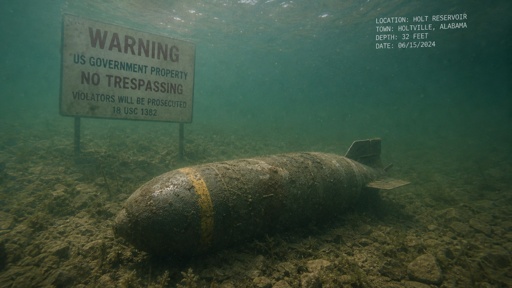
A quietly planted grenade-type bomb at the base of an Alabama drinking‑water dam is a chilling reminder of how fragile America’s critical infrastructure really is.
Underwater Bomb Discovered At Alabama Drinking-Water Dam
Routine inspection dives at the Converse Reservoir dam in Mobile County, Alabama, turned into a security scare when divers spotted what looked like an explosive device near the dam’s base. The reservoir, also known as Big Creek Lake, is the primary drinking water source for the city of Mobile and nearby communities. Officials later described the device as a “grenade-type IED,” a small but potentially damaging improvised explosive that demanded an immediate bomb-squad response.
Law enforcement and bomb technicians moved quickly once the divers reported the suspicious object. A regional bomb squad or explosive ordnance disposal unit assessed the device underwater, confirmed it was indeed an explosive, and removed it from the dam area. Specialists then rendered it safe, reportedly through controlled detonation at a secure location away from the reservoir itself. Authorities stressed that no injuries occurred and no contamination of the drinking-water supply was detected.
NEW🚨: A grenade-type IED was found underwater at the Converse Reservoir dam in Mobile, AL — federally designated critical infrastructure that supplies drinking water to hundreds of thousands.
Divers found it during routine maintenance, not a tip. No suspect or motive has been… pic.twitter.com/snoEKQFJTV
— Melissa Hallman (@dotconnectinga) May 14, 2026
Officials Reassure Public While Questions About Security Mount
Mobile Area Water & Sewer System, which operates the dam and reservoir, joined local law enforcement in emphasizing that there was no immediate threat to the structural integrity of the dam or to water service. Residents did not see boil-water advisories or service interruptions, and officials framed the incident as an isolated device discovered during routine work. For families who depend on the system, that reassurance matters, but it does not erase the unsettling fact that a bomb reached critical infrastructure.
Converse Reservoir is not a recreational lake; public access is restricted specifically to protect water quality and security. That makes the presence of a grenade-type IED more troubling, because the suspect or suspects likely had to defeat access controls or exploit insider knowledge to get close to the dam. Federal guidelines have long treated dams and drinking-water systems as critical infrastructure, and agencies like DHS and EPA have pressed utilities to strengthen surveillance, barriers, and emergency planning since 9/11.
Broader Pattern Of Vulnerabilities At Critical Infrastructure Sites
Across the country, authorities periodically find grenades, improvised devices, or old military ordnance in rivers, lakes, and other public areas. Many of these discoveries are linked to construction work, magnet fishing, or historical dumping rather than organized terrorism. Even so, every device triggers full-scale law-enforcement and bomb-squad responses, because the cost of underestimating a threat to critical infrastructure can be catastrophic. A single explosive in the wrong spot could damage key structures or spread fear through a community.
The Alabama incident stands out because the device was underwater at a dam that supplies drinking water to hundreds of thousands of people. Experts note that physical threats to water infrastructure now exist alongside cyber threats aimed at treatment systems and controls. Water-security specialists have long pushed for layered security that includes restricted zones, patrols, cameras, underwater inspections, and emergency drills. The fact that a routine dive inspection caught this device suggests those practices work—but also that any lapse could have left the bomb undiscovered much longer.
Impact On Trust, Policy, And The Push For Stronger Protection
For residents of Mobile, learning that a bomb sat at the base of their drinking-water dam is bound to raise questions about how many other vulnerabilities exist nationwide. Even though operational risk ended up being limited, the psychological impact is real: families want to know who placed the device, how security will tighten, and whether officials will be fully transparent. Local and federal investigators now face pressure to identify suspects and determine whether the device was a prank, a test, or an attempted attack.
🚨WHY DID SOMEONE PLANT AN UNDERWATER BOMB ON THIS CRITICAL PUBLIC STRUCTURE?
Divers surveying Converse Reservoir dam in Mobile for routine maintenance discovered a grenade-type improvised explosive device underwater.
A multi-agency team including the FBI Bomb Squad and local… pic.twitter.com/Ulu3qU3hWA
— NewsForce (@Newsforce) May 14, 2026
Utilities and governments may respond by expanding patrols, investing in underwater surveillance tools, and updating risk assessments to account for subsurface explosives. Those measures carry costs, but they also reflect a basic expectation from Americans who value limited government yet insist that core responsibilities—like protecting drinking water and critical infrastructure—be carried out competently. This case will likely become a reference point in industry trainings and conferences about dam security and response planning in the years ahead.
Sources:
ToreSaysPlus channel statistics on TGStat
Bomb discovered at base of dam holding city’s drinking water supply – DailyMail.com