
The federal auto-safety watchdog opened a sweeping audit just as Tesla’s steering-wheel-free Cybercabs started giving paid rides in Austin, setting up a high-stakes test against Waymo’s slower, sensor-heavy path.
Story Highlights
- Tesla began commercial Cybercab rides in Austin as a camera-first robotaxi rollout.
- Federal regulators launched an audit covering about 1,000 Cybercabs.
- The agency ordered Tesla to explain its self-certification by September 30.
- Waymo touts strong safety data while scaling within tighter service zones.
Tesla’s Austin Launch Kicks Off a New Phase in the Robotaxi Race
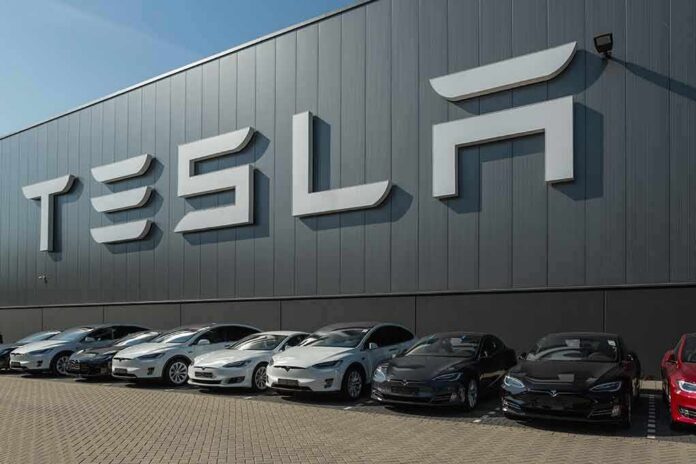
The National Highway Traffic Safety Administration said Tesla began commercial deployment of its Cybercab in Austin on September 3, 2026, marking the start of paid rides in a real city, not a lab. The two-seat vehicle has no steering wheel or pedals. Tesla says cameras and software can handle city driving. The launch brings Tesla’s faster, scale-first strategy into public view. It also sets a clear contrast with Waymo, which has spent years refining limited driverless zones.
The National Highway Traffic Safety Administration opened an audit query days later to review how Tesla certified the Cybercab to meet federal standards, covering about 1,000 vehicles. Regulators want the technical basis for compliance in a car with no manual controls. The agency also sent a formal request for detailed answers by September 30, signaling active oversight but not a verdict on compliance yet. This is a process check, not a recall, and rides in Austin continue during the review.
What the Federal Review Means and Does Not Mean
The National Highway Traffic Safety Administration’s audit focuses on Tesla’s self-certification paperwork and the data behind it, which is how all automakers show compliance with federal rules. The agency’s questions seek clarity on which standards apply to a car without a steering wheel and how Tesla meets crash, visibility, and control rules. The audit does not claim Tesla failed. It is an examination that often follows novel designs. No enforcement action has been taken at this time.
For conservative readers, the stakes are simple. Innovation should move faster than red tape, but the rules must still be clear and even-handed. The audit will test whether federal regulators can adapt standards without choking progress. President Trump’s administration wants American companies to lead the future of transportation. A fair, prompt review preserves safety while letting U.S. firms, not foreign rivals, set the pace on autonomous tech.
Waymo’s Cautious Path and Its Safety Claims
Waymo uses laser sensors, radar, and cameras, and expands city by city with strict operating zones. Waymo officials have cited much lower serious-injury crash rates than human drivers in matched areas, based on its own and independent summaries of data. Supporters say this slower roll builds trust with clear evidence. The method trades speed for redundancy and tightly controlled maps. The trade-off is less coverage and higher costs, which can slow wide access and affordable pricing.
Industry studies and blog posts argue over sensors. Laser systems measure distance directly, while cameras rely on learning and inference from images. Tesla rejects laser sensors, betting that vision alone can scale faster and cheaper. Waymo champions redundant sensing as safer in edge cases. Both sides aim to beat human crash rates across millions of miles. The real measure will be performance at scale, on regular city streets, with everyday riders.
Two Models, One Goal: Safer, Cheaper Rides for the Public
Tesla’s approach seeks fast reach by using cameras and mass-market hardware already in production. That can lower costs and spread service to more cities if it proves safe. Waymo’s approach seeks fewer incidents by limiting service to mapped zones with heavy sensors and tight controls. That can deliver strong safety in smaller areas but can take longer to reach broad coverage. Both claim a public benefit, but they differ on how to get there and how fast.
For families and commuters, the win is clear: safer roads, faster trips, and lower costs. For taxpayers, the concern is also clear: no bloat, no endless permits, and no unelected boards blocking useful tech. The next few months will matter. The National Highway Traffic Safety Administration’s audit will decide if Tesla’s paperwork meets the letter of the law. Waymo will push more miles and more studies. Voters should watch who delivers safe rides at the best price, without growing government control.
Sources:
wardsauto.com, reuters.com, businessinsider.com, static.nhtsa.gov, qz.com