
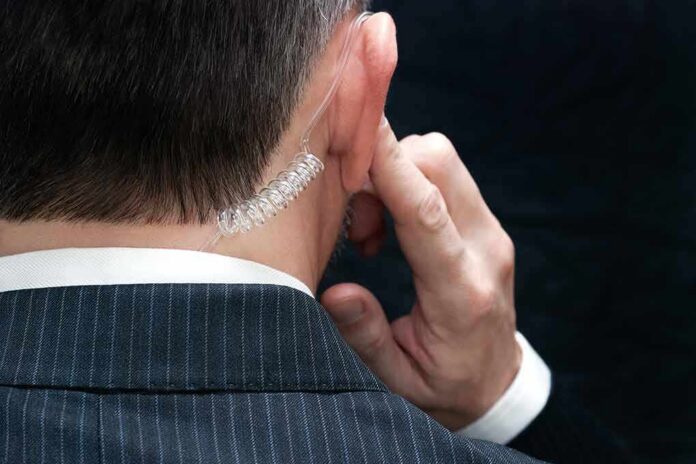
Newly released federal records show more than 100 radio warnings about a suspicious man never reached Secret Service agents before the shots at Butler, laying bare a preventable communications failure that put President Trump and attendees at risk.
Story Highlights
- A watchdog says local police made 102 radio calls about a suspicious man before shots, but Secret Service did not receive them.
- An FBI interview report describes alerts about a man with bags, a gray Demolition Ranch shirt, and interest in a sniper post.
- The Secret Service’s own report admits vital threat details were not broadcast to all federal personnel on site.
- Congressional probes found radios went uncollected and communications were split across separate centers.
Records Document Missed Warnings Before Shots
A Department of Homeland Security watchdog found local officers sent 102 radio transmissions about a suspicious man before the attack, but the Secret Service never received them. The report says the agency failed to stand up a joint communications room, leaving federal teams blind to local alerts. In the same hour, the Secret Service communications hub logged only a handful of calls and texts. Those gaps left protectors without shared awareness when seconds mattered most.
A Federal Bureau of Investigation interview summary adds detail to what locals were flagging. The document, released through public records litigation, says radios carried warnings about an unknown male acting oddly. The man had bags, wore a gray Demolition Ranch shirt, and was seen looking toward a law enforcement sniper position. That description should have triggered a focused response if it reached the right ears in time. The redactions limit names and times, but the core facts are clear.
Secret Service Acknowledges Communication Breakdown
The United States Secret Service’s own post-incident review admits federal personnel did not get a broadcast description of the assailant or of a suspicious person on the nearby roof. The report also notes that some local agencies assumed their radio traffic flowed straight to the Secret Service, when it did not. That split created silos. It delayed warnings that should have moved officers, snipers, and evacuation teams into action together at once across the site.
Associated Press coverage of that review quoted the key finding plainly: the failure to broadcast the assailant’s description, or vital local information about a suspicious individual on the AGR roof, “inhibited the collective awareness” of Secret Service personnel. That is not quibbling over jargon. It is an admission that basic radio discipline broke down. In a protective mission, shared awareness is life or death. Without it, good people face danger they cannot see in time to act.
Congressional Findings Point to Preventable Errors
A House task force and Senate inquiries found more preventable failures. A Butler County emergency services commander reminded Secret Service counter-sniper teams to collect designated radios. Reports say those radios were not picked up. The House team also said it did not find evidence that a gun warning reached the protective detail before the first shots. Together, those findings track with the watchdog’s report: warnings existed locally, but they did not reach the agents who needed them.
Senate reporting the next year used tougher words, citing “multiple, unacceptable failures” in Secret Service planning and response. That conclusion reinforces the pattern across agencies and outlets. The core problem was not a lack of local eyes. The core problem was a lack of shared, working channels and procedures to move warnings from locals to federal protectors fast. Discipline and accountability flow from that point. So do fixes that can save lives at the next rally.
What This Means For Safety, Accountability, and Fixes
This record undermines the idea that nothing could be done. Warnings were made. They did not flow. That is a system failure, not fate. Patriots expect better. President Trump is now in the White House, and his administration can demand a single, unified communications plan at every event. That plan must include one joint room, shared radio nets, and enforced radio pickup by every team. That is basic tradecraft, and it is nonnegotiable after Butler.
WATCH: No Elitist Media evening newscast covered the explosive new details on the 2024 assassination attempt against President Trump in Butler, PA. NBC's @TODAYshow did cover it.
STEPHANIE GOSK: This morning, a clearer picture is emerging of the young gunman who nearly… pic.twitter.com/qeC9NrFRAp
— Jorge Bonilla (@BonillaJL) September 17, 2026
Clear next steps are on the table. Investigators and the public should press for a full, time-stamped radio and dispatch log from all agencies on site. The Department of Homeland Security inspector general’s appendices, the Secret Service Mission Assurance files, and sworn testimony from command staff can lock down the timeline. That proof will show exactly who heard what and when. Sunlight pushes reform. It also honors the victims and every family who expects government to do its most basic job — protect life.
Sources:
youtube.com, washingtontimes.com, judicialwatch.org, ap.org, cnn.com, bbc.com