
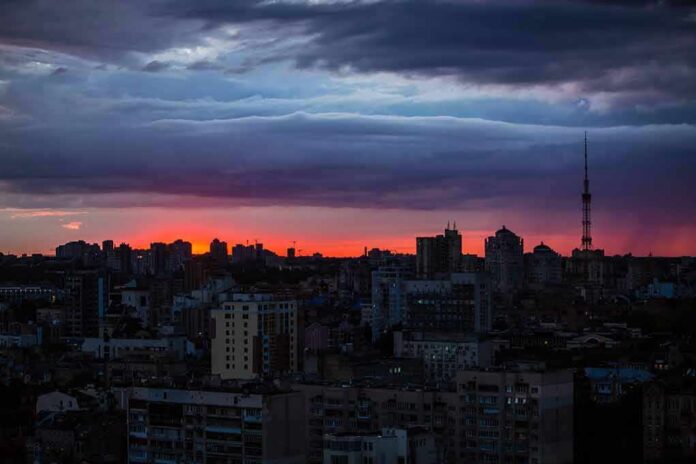
Cuba’s entire national power grid crashed again on Friday, plunging roughly 9 million people into darkness in a blackout that marks at least the seventh islandwide failure of 2026 under a communist system that keeps blaming everyone but itself.
Quick Take
- Cuba’s Ministry of Energy and Mines confirmed a “total collapse” of the national grid on Friday, September 18, cutting power to the entire island.
- This is the sixth or seventh nationwide blackout in 2026 alone, following collapses in March, July, and August.
- Cuban officials again pointed to the U.S. fuel restrictions instead of acknowledging decades of neglected, Soviet-era power plants.
- Independent experts say chronic underinvestment, not sanctions, is the primary driver of the island’s collapsing infrastructure.
Grid Failure Leaves Millions in the Dark
Cuba’s Ministry of Energy and Mines announced on social media Friday that the country’s power grid suffered a “total collapse,” triggering a nationwide blackout across the island of about 9 million people. The state utility, Union Electrica, said the cause was under investigation and that crews had begun “activating service-restoration protocols”. No timeline for full recovery was given.
The Cuban government has offered no clear explanation for why its own state-run grid operator cannot keep the lights on for months at a stretch. Xinhua reported the utility simply said procedures to restore power were “underway,” language nearly identical to statements issued after five previous collapses this year. Cubans are used to hearing it.
A Familiar Pattern of Collapse
Friday’s blackout was not a one-time accident. The grid collapsed nationwide in March, twice within a single week, leaving roughly 10 million people without power. It failed again in July, then again in August during the very process of restoring service from an earlier outage. Each time, officials promised repairs. Each time, the system broke down again within weeks.
Just one week before Friday’s failure, Cuba’s utility had already warned residents to expect a 2,000-megawatt shortfall during peak hours, with barely 1,330 megawatts available against 3,300 megawatts of demand. That is not a grid under temporary stress. That is a system that has been running on fumes for years, kept alive by patchwork fixes on plants built before most Cubans alive today were born.
Havana Blames Washington, Not Its Own Mismanagement
The Cuban government’s go-to excuse is the fuel restrictions the Trump administration imposed on the island starting in January 2026. Havana calls it a “genocidal” blockade and insists it is starving the grid of the oil needed to run power plants. Al Jazeera reported the regime “blames Washington” every time the lights go out.
Independent analysts see it differently. They point to decades of underinvestment in power plants that are now failing faster than they can be repaired, regardless of fuel supply. A 2026 report from the Cuba Study Group described the crisis as “chronic, system-wide, and increasingly destabilizing,” driven by deteriorating generation equipment built up over decades of communist central planning.
Decades of Underinvestment Behind the Crisis
Cuba’s power problems trace back long before any recent U.S. policy. The island’s thermal plants are aging, poorly maintained, and prone to malfunction, a reality even sympathetic outlets acknowledge. Sixty-plus years of a state-run economy left the country without the capital or expertise to modernize its own energy system, a failure no outside pressure campaign created.
CUBA’S POWER GRID COLLAPSES, LEAVING MILLIONS WITHOUT ELECTRICITY
Cuba’s power grid has collapsed -leaving millions of people across the island without electricity in a nationwide blackout which have become increasingly common over the past two years.
They have worsened since…— Worldwide News Network (@WorldwideNNX) September 19, 2026
Conservatives watching this unfold see a familiar lesson. A government that controls every plant, every price, and every import license still cannot deliver the most basic promise of modern life: reliable electricity. Blaming Washington is easier than admitting that central planning, not sanctions, built a grid that collapses on a near-monthly basis.
What Comes Next for the Island
Restoration after past collapses has been slow and uneven, with Havana often getting power back first while rural provinces wait days longer. There is no indication this outage will be different. Cuban officials have promised an investigation into Friday’s cause, the same pledge made after nearly every collapse this year, with no lasting fix yet delivered.
President Trump’s fuel policy remains a pressure point in the standoff, and Havana shows no sign of accepting U.S. terms for relief. Until Cuba’s leaders invest in their own infrastructure instead of luxury hotels for tourists, millions of ordinary Cubans will keep living blackout to blackout, no matter who supplies the oil.
Sources:
foxnews.com, globalbankingandfinance.com, wftv.com, apnews.com, reuters.com, english.news.cn, ground.news, riotimesonline.com, aljazeera.com