

Israel’s strike on a heavy machinery yard in southern Lebanon has reopened a grim debate over civilian harm, military claims, and the price of a weak ceasefire.
Quick Take
- Israel said the Msayleh strike hit machinery stored for Hezbollah reconstruction work.[1][4]
- Multiple reports said the site sold heavy machinery and was not shown to hold weapons.[1][2][3]
- Human Rights Watch said it found no military targets at or around the site.[3]
- The strike killed one civilian and injured seven others, deepening outrage over the ceasefire fight.[1][2][3]
What Israel Said About the Target
Israeli military officials said the pre-dawn strikes in Msayleh hit a place where machinery was stored to rebuild Hezbollah infrastructure.[1][4] That claim matters because it is the core of Israel’s justification. If the site held equipment meant for future military use, Israel would argue it was a lawful target. If it was only a commercial yard, the strike looks far harder to defend.
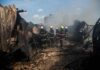
AP News, Al Jazeera, and NPR all described the site as a heavy machinery location that destroyed many vehicles.[1][2][4] Their reports did not show public proof that the equipment was tied to Hezbollah operations. Instead, they repeated Israel’s explanation as a stated claim. That leaves readers with the same basic split seen in many Lebanon strikes: one side says security, the other says civilian damage.
Why Rights Groups Say the Strike Crossed the Line
Human Rights Watch later investigated the Msayleh strike and said it found no evidence of military targets at or around the site.[3] The group said the area contained bulldozers, excavators, and other heavy machinery linked to reconstruction work. It also said the idea of some future use does not make a site a lawful military target. That conclusion gave Israel’s critics a strong new talking point.
The civilian toll made the dispute even sharper. Reporters said one person was killed and seven others were wounded, including people near a passing vehicle.[1][2][3] Lebanese officials condemned the attack as harm to civilian infrastructure, not a strike on a battlefield asset.[1][2] For many readers, that difference is the key issue. A precise strike on military gear is one thing. Hitting bystanders near a business is another.
What This Means for the Ceasefire Fight
The Msayleh strike also fits a wider pattern of attacks on reconstruction equipment in southern Lebanon.[3][11] Human Rights Watch said it examined four attacks on machinery and related civilian sites, and it said those strikes destroyed more than 360 heavy machines.[3] That pattern makes the issue larger than one village. It points to a broader fight over whether post-ceasefire strikes are being used to slow rebuilding.
That broader context explains why the story keeps drawing anger. Israeli leaders say Hezbollah is trying to rebuild after battlefield losses.[1][4] Critics say repeated strikes on heavy machinery punish civilians who are trying to repair homes and roads.[3][11] Without public strike files, ownership records, or forensic proof from Israel, the debate will stay locked between competing claims. For now, the record shows a destroyed machinery site, a dead civilian, and no public evidence that settles the question.
Sources:
[2] Web – Lebanon: Israel Unlawfully Destroying Reconstruction Equipment
[3] Web – Intensive Israeli air strikes kill one, injure seven in southern …
[4] YouTube – Israel Strikes Southern Lebanon, Damages Civilian Infrastructure
[11] Web – Israel strikes south Lebanon, killing 1 and wounding 7 | AP News