

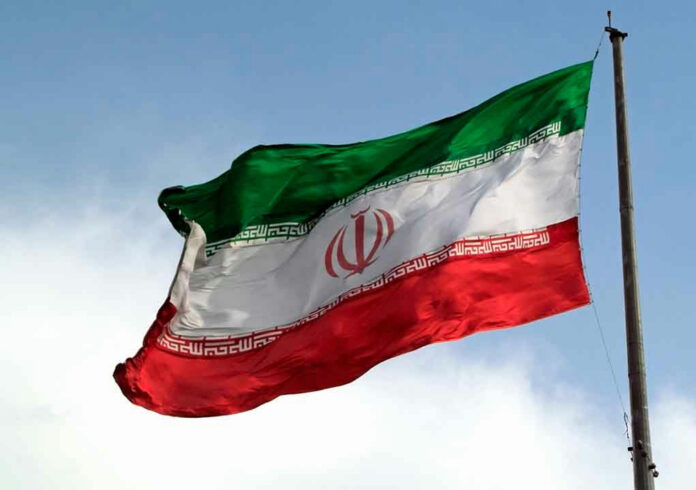
Iran’s regime just executed a young aerospace engineer on espionage claims it refuses to prove publicly—an example of how authoritarian governments use “national security” to erase due process when tensions spike.
Execution of a Graduate Student Highlights Iran’s Wartime Crackdown
Iranian authorities hanged Erfan Shakourzadeh, a 29-year-old postgraduate aerospace engineering student at Iran University of Science and Technology, according to reports citing Iran’s judiciary-linked media. The Islamic Revolutionary Guard Corps arrested him in February 2025 and accused him of passing “classified scientific information” connected to satellite technology to Israel’s Mossad and the U.S. Central Intelligence Agency. State media said the execution took place at dawn at Ghezel Hesar Prison.
Reports indicated Shakourzadeh was transferred from Tehran’s Evin Prison to Ghezel Hesar in early May 2026, shortly before the hanging. Iranian judiciary media described alleged contacts with Mossad twice and the CIA once, and claimed the case involved details such as workplace access, duties, and other sensitive material. Those specifics were asserted by Iranian outlets, but the public record presented to outside observers did not include verifiable evidence or independently reviewable documentation of the charges.
Confessions Promised, Evidence Withheld: Why Verification Is Difficult
Iran’s judiciary media said “confessions” would be broadcast on state television, a familiar tactic in authoritarian systems that treat televised admissions as substitutes for transparent court procedures. Multiple reports also stressed that Iranian authorities did not publicly provide supporting evidence for the accusations. That leaves outside analysts unable to assess guilt or innocence using normal standards such as open hearings, defense access to evidence, or independent review—basic due process safeguards Americans tend to take for granted.
Rights groups and Iran-focused watchdog organizations alleged Shakourzadeh spent roughly eight to nine months in solitary confinement and was tortured to extract a confession. Those claims cannot be independently verified from the available reporting, but they align with a pattern long alleged by human-rights monitors in Iran, especially in national security cases handled through the IRGC-j القضiciary pipeline. The case also drew attention because Shakourzadeh was described as an “elite student,” intensifying fears inside Iran’s STEM community.
Wider Context: Espionage Executions Rise During Regional Conflict
The execution occurred amid heightened conflict involving Iran, the United States, and Israel beginning in late February 2026, according to the provided reporting. In that environment, Tehran has repeatedly portrayed alleged spy cases as victories against foreign intelligence services and as deterrents to would-be collaborators. The research summary described Shakourzadeh as the fifth such execution since the onset of that late-February war period, suggesting a stepped-up tempo in capital cases tied to espionage claims.
What This Signals About Regime Power—and Why Americans Should Care
Iran’s system concentrates power in security services and courts that operate with limited transparency, especially when leaders invoke wartime necessity. When a government can execute a citizen while withholding publicly reviewable evidence, the result is not merely a foreign-policy headline—it is a reminder of what unchecked state power looks like in practice. For Americans debating constitutional rights at home, Iran’s example underscores why due process, open courts, and limits on government authority matter.
Iran hangs man accused of passing info to CIA, Mossadhttps://t.co/g8JDS0ZQiv
— Insider Paper (@TheInsiderPaper) May 11, 2026
At the same time, the available reporting leaves key questions unanswered, including what evidence, if any, was tested in a transparent legal setting and whether the promised state TV “confession” was broadcast as described. What is clear is that Iran is using espionage cases as public messaging while operating behind a closed system—an approach that chills dissent and can push talented students and scientists to keep their heads down or leave the country, weakening civil society and reinforcing the regime’s grip.
Sources:
Man Executed For Allegedly Sharing Information With Mossad And The CIA
Iran hangs grad student accused of spying for CIA, Mossad
Kurosh Keyvani executed for alleged Mossad spying (video)
Iran Executes Man Accused Of Spying For CIA, Mossad