

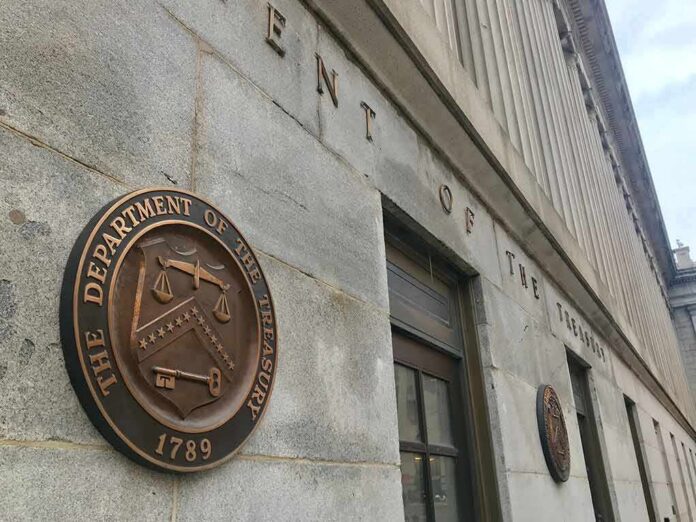
A Wall Street Journal report alleges Treasury Secretary Scott Bessent berated a top deputy in a January meeting, fueling claims of sharp internal friction inside President Trump’s economic team.
Story Highlights
- The Wall Street Journal cites interviews with over 30 officials about Bessent’s clashes and staff turnover.
- A January showdown with Undersecretary John Hurley reportedly featured shouting and profanity over a fraud probe.
- Other reports say Bessent denied a claim that he threw a briefing book, underscoring disputed details.
- Bessent publicly downplayed the drama as normal policy debate, even joking about a past feud.
What The Journal Reported About Treasury Turmoil
The Wall Street Journal reported that more than 30 current and former officials and associates described a tense Treasury led by Scott Bessent, marked by clashes, outbursts, and unusual turnover in senior ranks. The coverage says the behavior was a factor in multiple exits and that Bessent’s hard-driving style set the tone. The Journal’s account centers on internal management strain, not policy results. The report relies mainly on unnamed sources, which leaves room for dispute over tone and context.
One detailed episode involves a January meeting at Treasury. Reports say Bessent confronted John Hurley, then undersecretary for terrorism and financial intelligence, over what he saw as slow action on a fraud probe that President Trump wanted advanced. Accounts describe raised voices and profanity directed at Hurley in front of staff, suggesting friction at the top level of the department. The Journal’s framing links that style to staff departures, though it does not publish internal personnel records tying exits to those incidents.
Disputed Claims And What Bessent Says
Some of the most dramatic allegations are not uncontested. Summaries of the Journal’s reporting say Bessent denied a claim that he threw his daily briefing book against a wall in anger over how it was organized. Bessent has also played down reported internal fights in public remarks. He told a Senate panel that teams can “squabble in the locker room and go out in the field,” and he joked about a past flare-up, saying he actually threatened to “kick his ass,” not punch him.
Television interviews captured the same theme. Bessent said clashes among Treasury chiefs go back to Alexander Hamilton, arguing that robust argument is part of tough policymaking, not proof of chaos. That message aims to recast the narrative: heated meetings happen, but the team still executes President Trump’s agenda. His pushback does not directly refute every claim, yet it challenges the idea that tense moments equal dysfunction across the board.
Why This Matters For Policy, Markets, And Voters
Senior Treasury focus and discipline matter when inflation, energy costs, and global risks are high. If leaders drive staff hard to deliver on fraud probes, tax enforcement fixes, or sanctions, that can serve the public—so long as lines are clear and lawful. The Journal’s staff-turnover thesis, if accurate, could slow results and burden taxpayers. The denial of some claims, and the reliance on unnamed sources, means readers should separate verified facts from dramatic retellings.
🚨 Treasury Secretary Scott Bessent is publicly praising Elon Musk — despite their reported clash inside the Trump administration last year.
In a Saturday interview, Bessent called himself a “superfan” of Musk, said he strongly supports what Musk tried to do in government, and… https://t.co/NbxocAqQ2r
— BasicProtein (@BasicProtein26) October 3, 2026
For conservative readers, two points stand out. First, President Trump expects action, not delay, on issues like fraud and border-related schemes. The reported January scene reflects that urgency, even if the tone was hot. Second, media outlets often lean on anonymous voices to paint a picture of “chaos.” That can become a tool against a disruptive agenda that targets waste, illegal activity, and entrenched bureaucracy. Scrutiny is fair, but facts—not gossip—should guide judgment.
What To Watch Next
Watch for on-the-record statements from John Hurley or other named officials who were present during key moments. Clear accounts could confirm, clarify, or rebut the loudest claims. Look for any formal responses from Treasury about turnover data and whether exits tied to management or to policy disagreements. Track hearings where lawmakers ask for specifics, and note whether Bessent provides timelines and documents to show progress on fraud probes and other priorities.
Sources:
mediaite.com, rawstory.com, wsj.com, hindustantimes.com, cnn.com