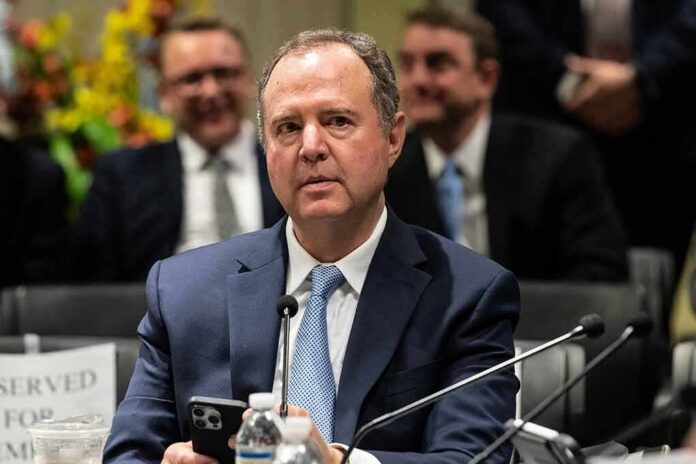
A Texas U.S. attorney accused Senator Adam Schiff of “weaponizing Congress” and warned that Americans cannot be targeted for supporting President Trump.
Story Snapshot
- U.S. Attorney Aaron Reitz said senators cannot target citizens for associating with President Trump.
- Reitz sent a preservation letter over a probe of donors to a proposed White House ballroom, citing constitutional limits.
- Schiff’s record shows aggressive Trump-focused inquiries, including moves tied to Special Counsel Jack Smith.
- Legal critics called Reitz’s threats “meritless,” underscoring a sharp partisan divide.
Reitz’s Charge: Stop Targeting People for Backing the President
U.S. Attorney Aaron Reitz said Americans have a First Amendment right to support President Trump without fear of punishment by powerful senators. In a public statement, Reitz told Senator Adam Schiff to stop “weaponizing Congress,” linking the charge to years of Russia-collusion claims that turned out to lack proof of a criminal conspiracy. He framed the issue as basic free association: you can back the president, donate, or help, without a Senate hit list or political payback.
Reitz’s remarks came as he pushed back on a Senate inquiry into private donors tied to a proposed White House ballroom project. He sent a preservation letter to Senator Richard Blumenthal, warning that any probe must serve a real legislative purpose, not punish citizens for political ties. He argued Congress cannot run fishing trips aimed at chilling support for a sitting president. Reporting added that the Department of Justice leadership publicly backed Reitz’s stance, raising the dispute’s profile.
The Legal Line: Oversight Has Limits, Even for Senators
Congress holds a broad power to investigate, but courts require a valid legislative purpose. That rule exists to prevent harassment or exposure for its own sake. The Library of Congress explains that oversight is implied by Article I, but it is not a blank check. When probes appear aimed at punishing people for their views or associations, they risk crossing constitutional lines, including First Amendment protections for speech and association.
Reitz anchored his warning in that framework. He did not say Congress cannot ask questions. He said senators cannot target citizens simply because they support President Trump. That message resonates with many conservatives who have watched selective leaks, sweeping subpoenas, and public shaming used to chill speech. The standard is simple: write laws, check waste and abuse, and review agencies—do not punish political opponents by dragging private supporters into the spotlight.
Schiff’s Record: Aggressive Inquiries That Fueled the Debate
Senator Schiff has a long record of Trump-centered investigations. He pressed for releases tied to Special Counsel Jack Smith and pushed for more scrutiny of the classified documents fight at Mar-a-Lago. He also urged the Senate Judiciary Committee to subpoena the unreleased second volume of Smith’s report. Schiff’s office framed these moves as constitutional oversight. But to many Americans, the pace, tone, and targets looked like politics first, policy second.
House lawmakers, including Representative Thomas Massie, previously accused Schiff of using his Intelligence Committee gavel to sell a Russia-collusion story that lacked direct proof of a criminal conspiracy. Massie cited dozens of interview transcripts to argue the narrative did not match the record. Those clashes shaped how voters view today’s fights: when the same players push new probes, many see a pattern of pressure and exposure aimed at Trump and his supporters, not neutral lawmaking.
What We Know—and What We Do Not
The record confirms Reitz’s public accusation against Schiff and his preservation letter tied to the ballroom-donor inquiry. It also confirms Schiff’s prominent role pressing Trump-related investigations. However, the public materials do not show a court finding or official ruling that Schiff broke the law. Legal commentators on the left called Reitz’s threats “meritless.” That dispute highlights a key point: the fight is about where oversight ends and punishment for association begins.
For readers, the test is practical. Does a Senate request tie to real legislation, or mainly to naming and shaming citizens linked to President Trump? Do subpoenas chase facts that change law, or simply deter people from giving, volunteering, or serving? Reitz says the First Amendment draws a bright line. Congress can write laws and oversee agencies. It cannot scare Americans out of supporting their president. That principle protects every citizen, no matter who is in power.
Sources:
redstate.com, thegopfiles.com, votebrief.org, schiff.senate.gov, politico.com, npr.org, congress.gov