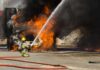

Fast-moving wildfires have wiped out entire Spokane neighborhoods, leaving hundreds of families with nothing but ashes and chimneys where their homes once stood.
Story Snapshot
- More than 600 structures in and around Spokane have been destroyed, with totals still climbing.
- Roughly 60,000–67,000 residents were under evacuation orders as flames tore into city neighborhoods.
- Three major fires now form the Spokane Complex Fire, burning thousands of acres and razing whole blocks.
- Local crews, state teams, and the National Guard are fighting to save what is left and protect survivors.
Wildfires Turn Spokane Neighborhoods Into Burned-Out Shells
Wildfires that erupted over the weekend have turned parts of Spokane, Washington, into a disaster zone. Officials report that more than 600 structures, including many single-family homes, have been destroyed or badly damaged as flames swept through neighborhoods in and near the city. Video and aerial images show streets where every house is burned, with only brick chimneys and metal frames left standing, underscoring how complete the loss is in several areas.
Firefighters say three large blazes — the Old Trails Fire, the Autumn Lane Fire, and the Fairview Fire — have merged into what they now call the Spokane Complex Fire. These fires exploded in size as dry winds pushed flames over ridges, across fields, and even over the Spokane River into city limits. Officials describe the event as among the most destructive in Washington state history, with entire blocks in northwest Spokane reported as “gone” after the firestorm passed.
Tens of Thousands Forced to Flee Under “Go Now” Orders
Authorities issued Level 3 “Go Now” evacuation orders for large sections of Spokane County as the fires jumped control lines and moved toward dense housing. State and local reports indicate that about 60,000 to 67,000 residents were under evacuation orders at the peak, meaning families had minutes to grab loved ones, pets, and essentials before leaving everything else behind. Convention centers and emergency shelters opened quickly to take in evacuees who had no idea if they would have a home to return to.
County fire officials estimate that 4,000 to 5,000 structures were at direct risk at the height of the Old Trails Fire’s advance, especially in neighborhoods such as Indian Trail and areas along the Spokane River. As flames moved into city streets, law enforcement blocked roads and urged people not to return to check on property until crews could confirm it was safe. Despite intense destruction, early updates from officials said there were no confirmed mass casualties, though search teams were still checking burned properties.
Emergency Response, Power Outages, and Long-Term Fallout
Washington’s emergency operations center reported that about 700 structures had been destroyed across the Spokane area as of Sunday morning, with the number expected to rise as assessments continue. Fire chiefs and incident management teams stress that these counts are preliminary, based on what crews can see from the street and air, and that final tallies will likely be higher once inspectors enter every burned zone. Many structures are still unsafe, slowing the process of confirming exactly how many homes, shops, and churches are lost.
Nearly 65,000 people have been evacuated from their homes in Spokane County, Washington as wildfires have consumed more than 8,000 acres since they started on Saturday. The Pacific Northwest is facing its worst fire season.
Follow live coverage: https://t.co/b7cWYwpX7U pic.twitter.com/Aw4eIKd9dO
— CNN Weather (@CNNweather) August 4, 2026
Power companies report tens of thousands of customers without electricity after poles, transformers, and lines burned in the fast-moving flames. Roads across northern Spokane remain closed as crews clear debris, check for weakened bridges, and keep sightseers from entering hazardous areas. As smoke hangs over the region, officials warn that air quality is poor and urge residents with breathing issues to stay indoors or use masks, even miles away from the fire lines.
Community Loss, Questions About Preparedness, and Conservative Concerns
Families returning to ruined neighborhoods face not only emotional shock but also practical crises: lost documents, destroyed small businesses, and the sudden need for long-term housing and income. Charities, churches, and local groups are stepping up with food, clothing, and support, reflecting the strong community ties that many conservatives value in times of disaster. Insurance adjusters and government relief programs will take months to sort out claims, leaving many homeowners worrying if they will ever rebuild in the same place.
For readers who care about limited government and local control, these fires raise serious questions about forest management, zoning, and emergency planning in and around growing cities. Officials have long warned that heavy fuel loads, high energy costs that limit home upgrades, and strained local budgets make it harder to prepare for events like this. Now Spokane families are living with the result: whole neighborhoods erased in a single windy afternoon, and a long road ahead to restore homes, schools, and normal life.
Sources:
thegatewaypundit.com, nypost.com, pnwdaily.com, youtube.com, pbs.org, okanoganhighlandsfirewatch.app, spokanepublicradio.org, fires.cornea.is, chronline.com, spokesman.com, cnn.com, npr.org, facebook.com, instagram.com, opb.org