

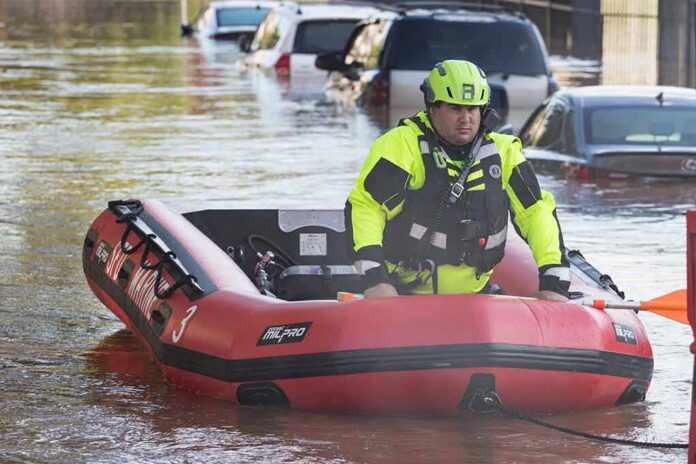
President Trump approved emergency aid for Indiana as historic floods forced mass rescues and left multiple Hoosiers dead.
Story Highlights
- State confirmed at least five storm-related deaths as floods and winds hit multiple counties.
- President Trump approved an emergency declaration, unlocking federal help for Indiana.
- Indianapolis crews conducted more than 50 water rescues and broad neighborhood evacuations.
- White River crested past a century-old mark; shelters and travel limits were activated.
Confirmed Deaths And A State On Alert
Indiana emergency officials said at least five people died during this week’s storms, which brought deadly flooding and fierce winds across several counties. Leaders tied the deaths to both high water and wind damage. Reports named fatalities in Jennings, Lake, Porter, and LaPorte counties, with two in Delaware County, reflecting how wide the danger spread. Authorities stressed that crews are still assessing impacts even as the water moves through rivers and creeks. Families are grieving while first responders keep searching flooded areas.
Governor Mike Braun declared a statewide disaster emergency and requested federal help as rivers rose and neighborhoods flooded. Braun activated the Indiana National Guard to support evacuations and logistics while local police and fire departments managed rescues and road closures. The order aimed to move generators, pumps, and high-water vehicles where they were needed most. State agencies asked drivers to stay off closed roads and keep clear of fast-moving water. That guidance saved time for rescue teams working to reach seniors and families in low-lying homes.
Federal Response Under President Trump
President Trump approved an emergency declaration for Indiana on August 15, enabling federal disaster assistance to flow to the state. The Federal Emergency Management Agency (FEMA) said this support helps state and local officials protect life, property, and public health during an active threat. The Stafford Act allows the President to quickly deploy aid to back up local responders when conditions overwhelm normal capacity. This approval speeds resources like debris removal, emergency power, and hazard measures that reduce further damage.
Federal support works best when paired with strong local command, and Indiana’s teams leaned in. City and county managers set up shelters, posted travel advisories, and coordinated rescue zones as flood stages rose. Rapid federal approval matters because families cannot wait on red tape when rivers crest at night and streets turn into channels. The Trump administration’s action placed federal muscle behind Hoosier responders who were already in the water, guiding boats, and knocking on doors.
Mass Rescues, Evacuations, And Record Water
Indianapolis crews reported more than 50 water rescues as boats moved through yard-deep water near 78th Street and Keystone Avenue, Ravenswood, and other known flood zones. The Indianapolis Fire Department said teams evacuated dozens of people and pets as flood levels rose into homes and cut off streets. Local leaders urged residents in vulnerable areas to leave early and keep out of floodwater. They warned that a single stalled vehicle can block a rescue route and put more lives at risk.
Flood severity was clear in hard numbers. Some neighborhoods saw 10 to 12 inches of rain, and the White River at Noblesville hit 23.9 feet, breaking a 1913 record. Utilities shut the White River North Water Treatment Plant to protect critical systems, while counties issued travel watches and closures to keep drivers away from sinkholes and hidden currents. Shelters opened at the Washington Township Adult Center, Broad Ripple Park Family Center, and the Hamilton County Fairgrounds to give families dry beds and medical care. These steps kept hospitals from getting swamped with preventable injuries.
Safety Lessons For Drivers And Families
Most flood deaths in the United States involve vehicles, which is why police hammered a simple rule: turn around, do not drown. Even a few inches of fast water can push a car off the road or hide a washed-out lane. Indiana officials said staying off closed roads frees up rescue crews for people who cannot self-evacuate, like seniors and children. Families should charge phones, prepare go-bags, and move to higher floors when told. These basic steps save lives when a river rises fast.
Indiana Governor Mike Braun confirms Trump will approve federal emergency assistance for the state following devastating storm floods this week. https://t.co/f7SvOS1CX5
— nwi.com (@nwi) August 16, 2026
Local counts changed as crews worked, but the core facts are clear. Floods and winds killed Hoosiers, forced evacuations, and damaged roads and infrastructure. Governor Braun’s emergency order and President Trump’s declaration put federal help in the pipeline while boats and high-water trucks did the hard, local work. As cleanup begins, residents should document damage, follow county guidance, and check on neighbors. Order, discipline, and community action will carry Indiana through the recovery.
Sources:
aljazeera.com, indystar.com, ipm.org, abcnews.com, x.com