
Florida’s highway agency says roads are not billboards, yet a chalk protest at the Pulse crosswalk drew a heavy trooper presence, arrests, and later dropped charges.
Story Highlights
- The Florida Department of Transportation said state roads cannot host social or political markings.
- Officials said the Pulse crosswalk sits on state right-of-way and must follow uniform rules.
- Troopers told protesters chalking could continue if traffic stayed clear; paint meant arrest.
- A judge found no probable cause in one arrest, and prosecutors later dropped all chalk cases.
FDOT’s Stated Rationale: Keep Roadways Uniform and Lawful
The Florida Department of Transportation said its job is to keep roadways safe and uniform, not serve any social or political cause. The agency said the Pulse crosswalk falls on state right-of-way, so it restored the surface to standard markings, the same as it has done at other sites. This policy-based framing matters. It signals the state views asphalt art as a traffic-control problem, not a culture fight, even when the symbol is high-profile and emotional.
Florida officials also linked on-site rules to state law. A trooper cited Florida’s criminal mischief statute to warn against defacing state property, while agencies stressed they would not allow painting on the crosswalk. That said, officers on scene repeatedly told people they could use chalk so long as they did not block traffic, showing a line between temporary markings and lasting alteration. Reports from the scene noted a watched but peaceful crowd during these warnings.
On-the-Ground Enforcement: Monitored Chalking, No Paint, Then Arrests
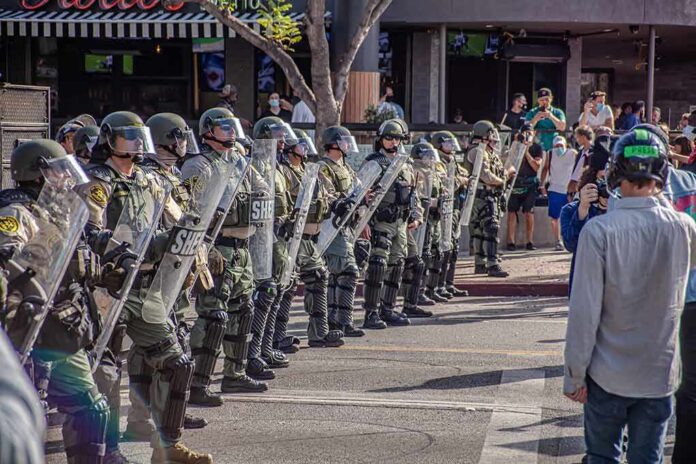
Local reports described multiple Florida Highway Patrol and Orlando Police vehicles stationed near the crosswalk as people chalked rainbow colors over the black surface. Troopers said chalking could continue if it did not obstruct traffic, but paint would prompt arrest. One protester was arrested after troopers said he chalked his shoe soles and left prints across the crosswalk. A judge later found no probable cause in that case, and he was released shortly afterward.
Retired Florida Highway Patrol leadership said troopers were following orders and enforcing the law, not acting on personal politics. That professional posture aligns with the agency’s uniformity message and efforts to keep traffic flowing near a busy site. But the size of the response became its own flashpoint. Reports highlighted a large, visible deployment around a peaceful crowd, and critics argued the show of force looked like viewpoint policing, not neutral safety work.
Court Outcomes and Constitutional Questions Shadow the Crackdown
Prosecutors later declined to file charges against the arrested chalkers. The elected state attorney said the evidence “did not even come close” to supporting the arrests and flagged a First Amendment concern. She also stressed the chalk was temporary and the site is a public forum. That ruling undercuts the certainty of the initial legal theory and leaves the state vulnerable to claims of overreach, even if the motive was roadway compliance rather than targeting a group.
And if you're concerned about Flock and other government surveillance cameras, here's one way the state of Florida is using them:
DeSantis Admin Sends TEN State Trooper Vehicles to Rainbow Crosswalk Chalk Protesthttps://t.co/raVKvLTflz
— Sarah Rumpf 🇺🇸❤️🇺🇦 (@rumpfshaker) August 24, 2026
For conservatives, two lessons stand out. First, government must draw clear, even-handed lines that protect safety without trampling speech. FDOT’s rule about uniform markings is sensible on paper. But second, process and proportion matter. Without a public, detailed operations plan, a large police posture at a peaceful chalk protest invites claims of selective enforcement, fuels distrust, and risks turning a maintenance rule into a free-speech fight the state cannot win.
What Accountability Looks Like Under President Trump’s America First Lens
Americans expect order on public roads and respect for the First Amendment. The right balance needs sunlight and standards. Florida agencies can strengthen trust by releasing the legal memo that guided enforcement, the deployment rationale, and any traffic safety analysis. If chalk posed no measurable risk and arrests could not stand, future responses should scale to the real hazard. Equal rules, clear warnings, and minimal force show backbone without feeding culture-war theater.
Sources:
mediaite.com, cfpublic.org, localnews8.com, nbcnews.com, wftv.com