

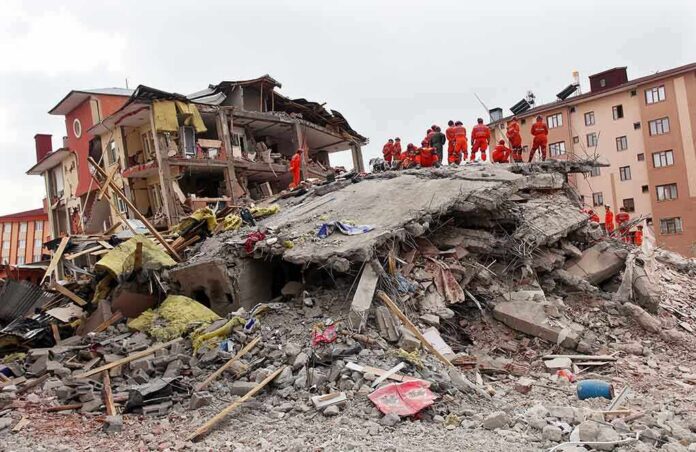
A sudden wall of mud and water killed hundreds in Nepal’s Nuwakot district, where rescuers now dig through ruined towns to find the missing.
Story Highlights
- Authorities report hundreds dead and thousands missing after flash floods near Nepal’s border with China.
- Rescue teams restored road access to hard-hit Nuwakot to deliver aid and recover victims.
- Police teams recovered dozens of bodies in Nuwakot villages as searches continued.
- Officials say a glacial collapse triggered the deadly surge down the Trishuli River corridor.
Catastrophic Floods Strike Nuwakot and Border Districts
Authorities in Nepal said a massive flash flood swept through districts along the border with China on August 26, smashing bridges, roads, and homes. Reported death tolls rose rapidly as teams reached remote valleys, with figures ranging from the low hundreds to several hundred confirmed dead, and thousands still missing across Nepal and Tibet, according to wire reports and officials. Search crews described entire neighborhoods buried in mud and rock as the surge tore down the Trishuli River corridor.
Rescue leaders said Nuwakot is among the worst-hit areas. Teams restored road access into the district, which allowed ambulances, fuel trucks, and food convoys to move again. Police and soldiers cleared landslides by hand and built temporary bridges to cross washed-out spans. Local officials reported steady body recoveries from homes crushed under debris. They warned totals may change as river levels drop and crews enter blocked side valleys.
What Triggered the Deadly Surge
Scientists and government briefings linked the event to a sudden glacial collapse high in the Himalayas. A mass of ice, rock, and soil fell into a river system, sending a fast-moving wall of water downstream into Nepal’s border districts. Analysts said this type of event can arrive with little warning and overwhelm early alerts, especially in steep terrain and remote valleys where sensors are sparse and response time is short.
Reports from the scene showed hydropower project sites, roads, and villages along the river taking direct hits from the flood wave. Crews dug through damaged facilities to free trapped workers, with wire services reporting close to 300 rescues tied to project areas across the affected zone. Helicopters ferried supplies when weather allowed, but low clouds and fresh slides often grounded flights and slowed medical evacuations.
Nuwakot’s Losses and the Ongoing Search
Police units working village by village in Nuwakot described grim recoveries and missing-person lists that kept growing as communications returned. Local reports and police statements referenced body recoveries from collapsed homes in riverside communities, including Betrabati and other settlements along feeder streams. Many families fled in the dark, leaving behind identity papers and phones. That has complicated confirmations and family notifications while morgues and field clinics operate at full stretch.
Nepal Floods #LIVE: Search, Rescue Ops Enter 7th Day As Over 4000 Still Missing; MEA Says 158 Indians Safely Evacuated#NepalFloods #NepalFlashFloods #Kathmandu #Rasuwa #Nuwakot #NepalDisaster #LiveUpdates #ETVBharathttps://t.co/GKA5mWOqX8
— ETV Bharat (@ETVBharatEng) September 1, 2026
Nepalese authorities asked neighbors for data and support to watch upstream lakes and slopes after the collapse. Cross-border cooperation and faster sensors could help give residents more minutes to move to higher ground in the next emergency, experts said. For readers at home, this is a sober reminder: strong borders, reliable infrastructure, and honest, fast information save lives. When nature hits hard, local control, clear roles, and working roads and power make the difference between rescue and ruin.
Aid Delivery, Security, and Lessons for Disaster Readiness
Relief teams prioritized food, clean water, and medical care in Nuwakot and nearby districts. Restored road links let security forces escort aid convoys to prevent theft and keep order during distributions, a frequent risk in disaster zones. The government focused on reopening key bridges to speed fuel and ambulance movement. Early numbers will shift as officials reconcile missing and recovered lists across districts and the border, but the scale of loss is already clear and severe.
Sources:
youtube.com, reuters.com, thehimalayantimes.com, theguardian.com