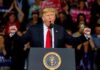

A massive security clampdown is turning a simple night of basketball into a locked-down federal zone because President Trump dared to show up in deep-blue New York.
Story Snapshot
- New York authorities shut down streets and banned watch parties around Madison Square Garden for Trump’s NBA Finals visit.
- Fans face strict no-bag rules and airport-style screening just to see a basketball game.
- Officials blame “security,” but have not released any detailed threat assessment to justify such sweeping limits.[1]
- The clash highlights how blue-state leaders treat a sitting conservative president and his supporters as the problem, not the public they serve.
Trump’s New York Homecoming Meets a Wall of Security
President Trump is leaving his Bedminster, New Jersey property and heading into Manhattan for a historic moment: the first sitting president to attend an NBA Finals game at Madison Square Garden. His trip should be a simple homecoming to his longtime hometown arena, but New York officials have built a massive security bubble around the event. Streets are closed, fans are squeezed, and normal city life is pushed aside in the name of “safety.”[1]
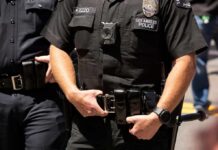
The New York Police Department (NYPD) and the United States Secret Service say they have worked “for days” on a joint security plan for Game 3. Officials describe a “large, multi-layered” law enforcement footprint with tactical teams, counterassault units, and counter sniper teams in place around the arena. Fans arriving will see not just local officers but federal agents and heavy gear that looks more like a summit or a terror drill than a basketball game.
Fans Face No-Bag Rules, Airport Screening, and Canceled Watch Parties
The New York Knicks warned fans of a strict no-bag policy and told them to bring as few personal items as possible. Guidance for Game 3 said fans should expect “enhanced security measures,” including Transportation Security Administration (TSA)-style screening procedures when entering Madison Square Garden. Team advisories urged ticket holders to arrive at least two hours early, clearly signaling that long lines and delays were not a bug but a feature of the security setup.
The NYPD confirmed there would be no watch parties outside Madison Square Garden for Game 3, tying that directly to the presidential visit. A spokesperson told reporters “there will be no watch parties outside…for Game 3 only,” and said the move came “fully in coordination with the Secret Service because of the presidential visit.” For everyday New Yorkers who cannot afford a ticket, that means one more public space where they are told to stay home, sit down, and let the government control the crowd.[1]
Streets Closed and a “Secure Perimeter” in the Heart of Manhattan
Law enforcement created a secured perimeter stretching from West 30th Street to West 35th Street between 6th and 8th Avenues, according to broadcast reports.[1] Starting around midafternoon, 7th and 8th Avenues were closed to vehicle and even pedestrian traffic inside that zone.[1] Only people cleared through screening points and deemed “authorized” were allowed to enter.[1] For a dense, transit-heavy area that sits on top of Penn Station, that meant major disruption for commuters, workers, and nearby businesses.[1]
Security planners also deployed physical barriers around the arena, including anti-scale fencing, vehicle barriers, and other crowd-control structures designed to harden the site. Officials and commentators described the plan as “multi-layered,” with visible officers, tactical teams, and rooftop coverage.[2] While such layers are common when any president moves through a big city, the scale here—no bags, no street access, no outdoor viewing—raises hard questions about how far government should go before it starts treating free movement as a privilege, not a right.
Officials Cite Safety, But Offer Little Public Justification
The Secret Service communications chief said his agency and the NYPD had been working on a “comprehensive security plan” for days and were finalizing details on game day. National Basketball Association (NBA) commissioner Adam Silver backed the posture, saying there “should be extra security for the President of the United States” and suggesting fans would understand the tradeoff. Supporters of the measures point to the basic fact that protecting a president in a crowded urban arena is a serious task with high stakes.[1]
At the same time, none of the reporting so far includes a public threat assessment that explains why this exact perimeter, this specific watch party ban, and this strict screening regime were required.[1] The underlying joint plan, operational orders, and risk scoring remain sealed.[1] News outlets repeat official quotes, but without those documents, the public cannot see whether less intrusive options were even considered, or whether leaders defaulted to the most restrictive playbook because it was easier to defend if something went wrong.
Using Crime and Chaos to Sell More Control
Authorities and broadcasters have pointed to recent disorder near the arena as context for these moves. A stabbing at nearby Penn Station left six people injured the day before the game, which commentators said heightened concern because of its close distance to Madison Square Garden.[1] Officials also cited more than a dozen arrests at an earlier outdoor Knicks watch party as a reason to cancel the Game 3 gathering and tighten crowd-control measures.[2]
Those facts matter, but they do not show that Trump or his supporters caused those incidents, or that only a sweeping security bubble could manage the risk.[1][2] Instead, they help create a picture where violence near a transit hub and rowdy fans at a watch party make it easier to sell harsh restrictions citywide.[1][2] That pattern should worry conservatives who have watched blue-state leaders use every crisis—from crime waves to protests—to justify more barriers, more checkpoints, and more power held by agencies that rarely show their work.
Sources:
[1] Web – Trump visit brings tight security for NBA Finals game
[2] YouTube – Trump NBA Finals attendance prompts security concerns