
President Trump vowed to sue media giants he says spread “fiction and lies,” signaling a hard push to hold them to account in court.
Story Highlights
- Trump accused CNN, MS NOW, and Politico of false reporting and warned more outlets could face action.
- A federal judge blocked the White House’s ban on those outlets, citing free-speech and due-process concerns.
- Trump’s separate $10 billion defamation case targets a BBC documentary he calls deceptive and malicious.
- Court filings show the outlets framed the ban as retaliation for protected reporting and won preliminary relief.
Trump’s Threat To Litigate Against Media Outlets
On September 21, 2026, President Trump posted that CNN, MS NOW, and Politico wrote “fiction and lies,” and warned other outlets could be next. He suggested lawsuits could end their practices and even their business models. The statements followed days of tension over press access and coverage of his administration. The remarks set a clear tone: challenge what he calls false reporting in court, rather than accept stories he says mislead the public.
Trump also tied the issue to accountability. He argued that some outlets publish damaging claims without care. He said legal action is the proper remedy when stories cross from opinion into false statements presented as fact. His message resonated with many conservatives who see a double standard in coverage. Still, his post did not list specific CNN, MS NOW, or Politico articles with detailed errors or corrections attached in the record we reviewed.
White House Ban Collides With First Amendment Ruling
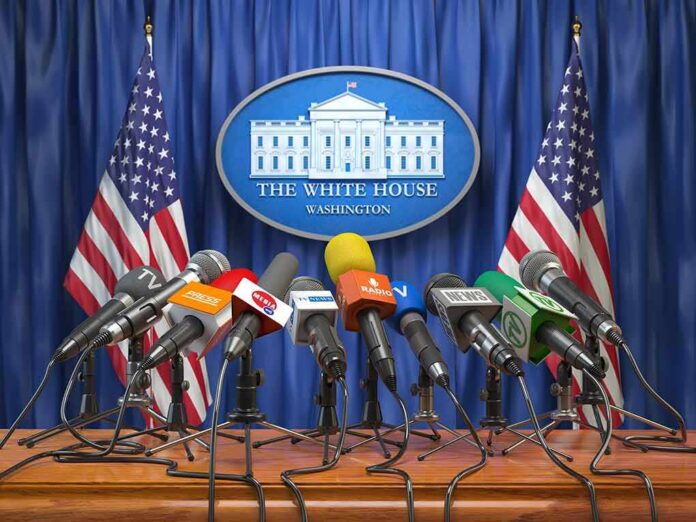
On September 18, the administration barred journalists from CNN, MS NOW, and Politico from the White House, according to a complaint filed in federal court. The filing alleged the move responded to negative coverage and aimed to deter future reporting. The outlets sued, claiming retaliation and lack of due process. A judge later ruled that the ban likely violated the First Amendment and issued a preliminary injunction restoring access while the case proceeds.
The court’s order changes the near-term landscape. The ruling means the government cannot exclude those outlets while the case continues. The decision emphasizes constitutional protections for newsgathering in spaces opened to the press. It does not decide the truth of any article, but it limits how the White House can respond to coverage it disputes. The administration must now defend its process and reasons as the case moves forward.
Trump’s Separate Defamation Fight With The BBC
Trump’s $10 billion lawsuit against the British Broadcasting Corporation targets a documentary titled “Trump: A Second Chance.” The complaint says the film portrayed him in a false and malicious way and tried to shape the 2024 election. The case is in discovery. Reporting says British Broadcasting Corporation lawyers sought to compel Trump’s deposition after a canceled date, with scheduling disputes pushing testimony into 2027. No court has found defamation at this stage.
The British Broadcasting Corporation case shows Trump pressing a detailed claim beyond general media criticism. The complaint attacks specific content in a named film. That differs from broader press complaints that do not single out exact passages. But defamation law for public officials is strict. He would need to prove not only falsity, but that the producers knew it was false or acted with reckless disregard. That is a high bar in any court.
What This Means For Conservatives Following The Story
Conservatives want fair coverage and consequences for falsehoods. Trump’s approach uses two tools. He is suing when he believes outlets cross the line, and he tried to control access inside the White House. The court pushed back on access limits for now. That means the legal battlefield will be about evidence, process, and constitutional rules, not just rhetoric. The next steps include depositions, document discovery, and court tests of each claim.
Readers should watch for specifics. Which stories or scenes are false, how were they sourced, and what records back each side? Lawsuits can force answers. Discovery can reveal notes, edits, and fact checks. If outlets erred, courts can impose damages or corrections. If not, we will see that too. Accountability goes both ways. The Constitution protects free speech. It does not shield lies stated as facts. The coming months will show where the evidence lands.
Sources:
mediaite.com, cnbc.com, nytimes.com, nbcnews.com, washingtonexaminer.com