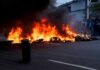


A deadly fire tore through Canada’s CFB Wainwright training area, leaving families grieving and a nation demanding answers.
Story Highlights
- Canadian Armed Forces confirmed fatalities and injuries after a fire at CFB Wainwright
- Fire began around 4:00 p.m. local time on October 17, 2026, in the training area
- Defence minister and prime minister acknowledged the severity; police are investigating
- Strong winds pushed a large fire near the base, straining local responders
Officials Confirm Deadly Incident and Ongoing Response
Canadian Armed Forces officials said the fire at Canadian Forces Base Wainwright caused both deaths and injuries, and that emergency crews continued work as the situation evolved. The blaze started about 4:00 p.m. local time on October 17 inside the training area, according to the Department of National Defence. Defence Minister David McGuinty confirmed fatalities and injuries and said the Royal Canadian Mounted Police is investigating. Leaders stated that the priority is supporting the affected and notifying families before releasing more details.
Prime Minister Mark Carney called it a serious incident that created a major fire, underscoring the gravity felt at the highest levels of Canada’s government. Local responders worked through the evening amid changing conditions. The Canadian Armed Forces said support teams were mobilized and that next of kin were being contacted with care and respect. Officials did not release a casualty count. They said those details would come after families are reached and facts are confirmed.
Winds Fuel Fire As Local Agencies Battle Perimeter Threats
Local municipal authorities reported strong winds that spread a large fire near the base and said emergency crews were managing the response. That report matched what residents saw as smoke and ash carried across parts of eastern Alberta. The wider area hosts farms, oil and gas sites, and small towns that rely on fast mutual aid. Fire managers worked to hold lines, protect structures, and maintain safe access routes for ambulances and support teams. Weather remained a key factor overnight.
Health services and nearby hospitals adjusted intake plans as responders triaged patients from the scene. The base and municipal responders coordinated with provincial agencies to route resources where needed. Such coordination helps keep roads clear for medevac vehicles and prevents emergency rooms from being overwhelmed at once. Officials said emergency work would continue while investigators document the site. That process balances life safety with scene integrity for the police investigation.
What We Know, What We Do Not, and Why It Matters
Authorities confirmed the fire, the location, the time, and that there are both fatalities and injuries. They have not released how many people died or were hurt, nor the cause of the fire. They also have not said whether explosives, fuel, or other hazards played a role. The Royal Canadian Mounted Police investigation will look at ignition sources, training activity, weather, and safety procedures. Officials will release more facts when the next-of-kin process is complete.
Training ranges are dangerous by nature, and history shows that early claims often change once investigators finish their work. Canada has faced tragic training losses before, including prior incidents at Wainwright during major exercises and other deadly training mishaps across decades. Today, the focus is on caring for the injured, supporting families, and securing the scene. One brief note from officials stressed patience as they confirm identities and sequence events for an accurate public record.
Why This Resonates South of the Border
American readers know that readiness has a cost, and the price is highest when safety breaks down. Our troops train with live hazards to defend free nations. When a partner force in Canada loses people on a range, it reminds us that standards, gear, and planning must be tight. It also reminds us that clear, timely facts matter most. Families deserve truth first. Then the public deserves a full accounting to prevent repeat failures and protect those who stand guard.
**Confirmed facts (as of early October 18, 2026):**
– A fire started in the training area of Canadian Forces Base (CFB) Wainwright, Alberta, at about 4:00 p.m. local time on October 17, 2026. It spread rapidly beyond the training area and base boundaries (south of the town of…
— Blazey Susan (@snoooozzz) October 18, 2026
President Trump’s national security team will track this closely with Canadian partners. The United States and Canada share intelligence, training spaces, and cross-border emergency support. As details emerge, the key questions are practical: what sparked the fire, how it spread so fast, and what steps will stop the next one. Those answers will guide smarter training and protect the men and women who carry the load for our freedoms every day.
Sources:
redstate.com, canada.ca, cbc.ca, publications.gc.ca