
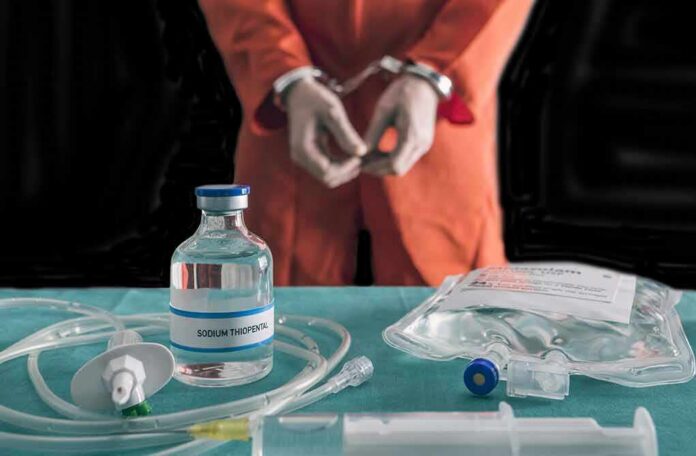
Texas executed Jamaal Howard with pentobarbital without reported complications, marking the first U.S. execution since Tennessee’s failed attempt with the same drug.
Story Highlights
- Texas pronounced Howard dead at 8:03 p.m. after a pentobarbital injection in Huntsville.
- State judges denied a last-minute stay after defense warnings tied to Tennessee’s failed execution.
- Officials cited Texas’s long lethal-injection history and a lawful protocol using pentobarbital.
- Defense raised drug-quality concerns and sought records on sourcing, storage, and testing.
Texas Completes First U.S. Execution After Tennessee Failure
Texas officials carried out the death sentence for Jamaal Howard on Wednesday evening at the state prison in Huntsville. Witness accounts and state statements reported a single dose of pentobarbital and a formal time of death at 8:03 p.m. Texas became the first state to execute an inmate after Tennessee failed to put Christa Pike to death last week using the same drug class. Reporters observed no equipment breakdowns inside the Texas chamber during the procedure.
Texas judges reviewed a late bid to stop the execution and declined to grant a stay. Defense attorneys argued that pentobarbital posed similar risks seen in Tennessee. They also argued Texas’s supply may have degraded. The Texas Court of Criminal Appeals denied relief without elaboration. That move did not decide the science of the drug. It only cleared the way for this sentence to proceed under current law and the established protocol.
What Officials Say About Protocols And Reliability
Texas relies on pentobarbital and has used lethal injection for decades. That record gave the state confidence to proceed. Officials pointed to a lawful, established protocol. In Tennessee, corrections leaders also claimed they followed each step of their approved protocol in Pike’s failed execution, which shows states defend their methods even during controversy. Texas emphasized experience and procedure while noting no reported breakdown during Howard’s execution.
Reporters in Texas described the execution as completed with the expected outcome. One outlet noted Howard took a couple of breaths and gasped before death, which witnesses sometimes observe during barbiturate onset. That description did not point to an equipment failure. It also did not provide a medical analysis of consciousness. The event still resulted in a timely pronouncement and no public report of a technical fault inside the chamber.
Defense Objections And The Push For Transparency
Howard’s lawyers pressed for a pause after Pike survived two pentobarbital doses in Tennessee. They claimed Texas drugs could be expired or degraded and asked for records on purchase dates, storage conditions, and testing. They requested a 30-day reprieve from the governor to review those records. The state did not release the details before the execution, and the courts declined to halt it. The defense’s quality claims remain allegations without public lab data.
Texas carries out nation's first execution since Christa Pike's failed lethal injection https://t.co/7IaYEJBWh8 pic.twitter.com/bWbEG3NCr0
— ABC7 News (@abc7newsbayarea) October 8, 2026
Transparency remains the flashpoint. Drug makers refuse to sell execution drugs, which pushes states toward compounded supplies. That shift invites questions about potency, storage, and chain of custody. States often shield those details under secrecy laws, while courts say inmates have no broad right to supplier identities or staff credentials. That legal stance limits public review. It also feeds doubts when another state’s attempt fails, as happened in Tennessee.
Why This Matters For Law-And-Order Voters
Texas delivered the sentence a jury and court affirmed, signaling resolve on violent crime. After years of soft-on-crime policies elsewhere, many families want accountability. A functioning death penalty also deters constant last-minute games that drag victims’ loved ones through fresh pain. At the same time, conservatives expect competence: secure sourcing, clear testing, and strict chain-of-custody records. States should meet that bar while stopping activist delays that are not backed by hard evidence.
What Comes Next In The National Debate
Tennessee’s failure will continue to shape the debate. Its governor ordered a review, and experts called the event rare but serious. Texas’s completion of an execution with the same drug will be cited by supporters of current protocols. Opponents will press for more transparency or a moratorium. The key questions now are practical: how states document drug quality, train teams on intravenous access, and maintain public trust while carrying out lawful sentences.
Sources:
youtube.com, texastribune.org, cnn.com, edition.cnn.com, tcadp.org, usatoday.com, ladbible.com