

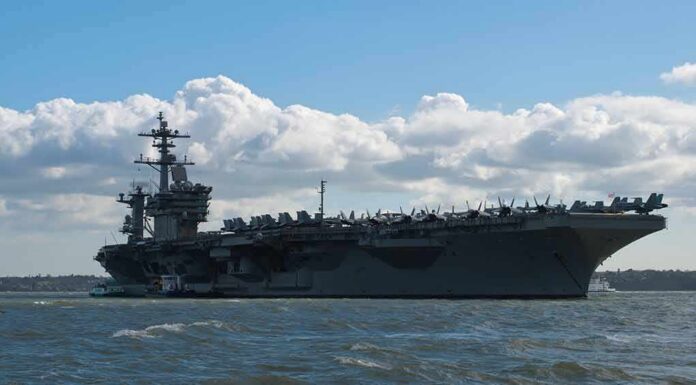
After more than eight grueling months on station, the 100,000-ton USS Abraham Lincoln is finally rotating home as a replacement carrier moves in to take her place.
Story Highlights
- The USS George Washington is relieving the USS Abraham Lincoln after an extended deployment exceeding 250 days.
- Navy leaders frame the shift as a planned rotation to keep pressure on threats in the Middle East.
- The Lincoln’s return follows a pattern of carriers staying out longer than the seven-month goal.
- Families and crew faced long stretches at sea while operations continued without a port call for months.
Carrier Relief Signals Homecoming For Lincoln
United States officials said the aircraft carrier USS George Washington is heading to the Middle East to replace the USS Abraham Lincoln, which has been deployed for more than 250 days. That relief means the Lincoln will return to home port after an unusually long stretch at sea. The Navy has used similar rotations in recent years to keep a carrier on station during tense periods, while giving the outgoing crew a long-awaited trip home to reunite with families.
Stars and Stripes reported that the move places the George Washington in the Arabian Sea as the Lincoln completes its mission and sails back to the United States. This step matches how the Navy describes routine handoffs between strike groups to sustain combat-ready air power. The goal is simple and strong: never leave a gap in deterrence against Iran-backed threats or other hostile actors in the region. That continuity protects U.S. forces and shipping lanes.
Extended Deployments Have Become Common
Independent trackers of carrier schedules show the seven-month target is now more of a goal than a rule, with multiple deployments running well past 250 days since 2021. The Lincoln itself has a history of marathon cruises, including past records set in the post–Vietnam era. Navy leaders argue long deployments are sometimes unavoidable when crises stack up and relief timing slips. That reality has stressed crews and families, even as flight operations and ship maintenance push ahead to meet mission demands.
Lawmakers recently flagged the toll of long at-sea periods on the Lincoln’s sailors, citing more than 250 days deployed and over 200 days without a port call as of mid-August 2026. Their letter pressed for answers on rest cycles, supplies, and mental health support for the crew. The Navy’s answer, in effect, is to execute the relief and bring the ship home while another carrier holds the line. That action now appears well underway with the George Washington’s movement to theater.
What This Means For Readiness And Families
Carrier aviation gives the United States a mobile airfield that can respond fast without asking anyone’s permission. That reach only works if the crews are sharp and the jets are safe. The relief plan protects both ends. It keeps combat power forward and lets a worn crew reset at home. It also shows allies and enemies that America will not blink, even as it fixes schedules and supports its people under President Trump’s defense posture of peace through strength.
The U.S. admiral overseeing the war with Iran visited the USS Abraham Lincoln on Saturday as the aircraft carrier prepares to return home following an extended wartime deployment. https://t.co/eG5kTHs6Dk
— Shelby Holliday (@shelbyholliday) August 16, 2026
The Lincoln’s expected return also fits a broader effort to balance readiness with reality. The Navy wants to hit the seven-month standard, but it must surge when threats rise. Data show this strain is real and recurring, which is why relief on time is vital for morale and retention. For families who carried the load at home, this homecoming cannot come soon enough. For the fleet, it is a needed reset as the next group takes watch and keeps the sea lanes open.
Sources:
newsnationnow.com, stripes.com, wsj.com, news.usni.org, youtube.com