
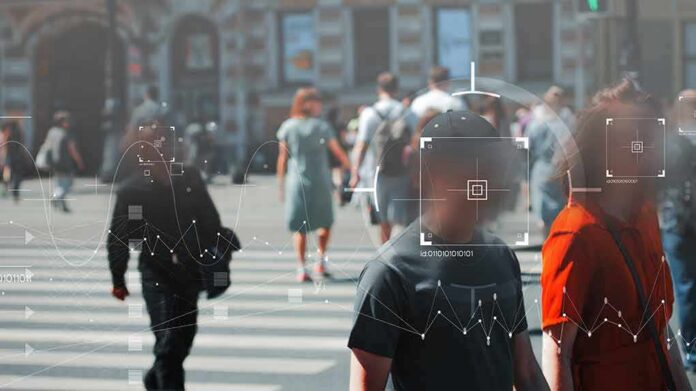
Italy’s new AI decree would let police turn every face at a protest, stadium, or busy station into biometric data and hold it for a week, even if no one has done anything wrong.
Story Snapshot
- Italy’s draft AI decree lets police collect and store biometric data from everyone entering “sensitive” locations like protests for seven days.
- The same decree allows real-time facial recognition for terrorism threats or missing-person searches, with court approval and time limits.
- Italy’s privacy watchdog backs parts of the decree but warns the mass biometric capture at protests may violate the European Union AI Act.
- Critics across Europe say the plan turns lawful gatherings into biometric dragnet zones and opens the door to broad surveillance of political dissent.
Decree Lets Police Scan Everyone at “Sensitive” Events
Italy’s government has drafted a decree that would let police collect biometric data from every person who enters locations labeled “sensitive for public order,” including political demonstrations, stadiums, major events, and some transit hubs. Cameras at these sites can automatically turn each face they film into biometric data the moment people walk in, even when they are not suspected of any crime. That biometric data can then be stored locally for up to seven days, creating a short-term archive of everyone who attended.
If a crime is reported inside that seven-day window, police can run the face of a suspect against the stored crowd data to help identify them. If no crime occurs, the decree says the biometric records must be deleted automatically once the seven days pass. Supporters argue this design gives police a powerful tool to track offenders after violent incidents without keeping long-term databases of every citizen. But the key point for protesters is clear: simply attending a lawful rally at a “sensitive” location could mean your face is scanned, turned into a biometric template, and held by the state for a week.
Real-Time Facial Recognition for Terror Threats and Missing Persons
Beyond protest data collection, the decree also opens the door to real-time facial recognition by police in public spaces under Article 8. This part allows “remote biometric identification in real time” in streets, squares, or other publicly accessible places when authorities say they are preventing a specific serious threat, such as an imminent terrorist attack, or searching for missing persons or victims of kidnapping or trafficking. Real-time use must follow a reasoned order from a judicial authority, defining why the scan is needed, the area covered, and the time period, which is capped at fifteen days but can be renewed.
The government and some legal experts say this real-time track is narrow and matches the European Union AI Act rules on emergency uses of biometric identification. They stress that it is limited to grave dangers, tied to court oversight, and supported by detailed logs that must be kept for five years to track who accessed what data and when. These defenders insist the decree is not a blanket license for live face scanning of crowds in normal conditions, but a tool for exceptional threats. Still, skeptics warn that vague language around “serious threats” and broad public-order needs could let authorities stretch the definition over time.
Italy’s Privacy Watchdog and EU Critics Raise Alarm
Italy’s data protection authority, the Garante Privacy, has issued a conditional favorable opinion on core parts of the decree, accepting real-time use for terrorism and missing-person searches and the limited seven-day storage with strong logging. However, both the Garante and outside analysts draw a hard line at the idea of routine biometric capture of everyone at protests and other sensitive gatherings. A detailed analysis notes that paragraph 3 of Article 10 enables automated biometric identification and seven-day retention for all persons accessing sensitive places, and that this provision must be strictly balanced for necessity and proportionality to remain compliant with the AI Act.
Yesterday, Brussels drew a clear line: under the AI Act, facial recognition in publicly accessible spaces is prohibited. Yet @GiorgiaMeloni ’s far-right government is pushing a decree that would allow police to scan faces in squares, stadiums and during demonstrations, with… pic.twitter.com/MASyBdydVc
— European Democrats (@democrats_eu) July 31, 2026
European critics argue that mass facial recognition in publicly accessible spaces is banned under the European Union AI Act, and social media statements from European political groups highlight that Brussels views broad public space scanning as prohibited. Reports say even a spokesperson for the European Commission has expressed doubts about whether Italy’s approach fits the union’s rules. Privacy advocates fear that once cameras at protests and crowded streets are wired for biometric capture, what starts as “seven days for investigations” could grow into function creep, with people tracked for political reasons or minor offenses. For conservative readers who value limited government and the right to speak out, Italy’s case shows how quickly public safety talk can turn into a system that logs every face in the crowd.
Sources:
reclaimthenet.org, tg24.sky.it, ictsecuritymagazine.com, instagram.com, ilpost.it, garanteprivacy.it