
Iran’s latest missile and drone blitz on U.S. forces in Kuwait and Bahrain has backfired, exposing American strength and tightening a growing coalition against Tehran’s reckless war games.
Story Snapshot
- Iran fired missiles and drones at U.S.-linked bases in Kuwait and Bahrain after earlier American strikes near the Strait of Hormuz.
- Most Iranian missiles were intercepted or failed, leaving U.S. forces largely intact while highlighting U.S. air defense power.
- Kuwait and Bahrain condemned the attacks, and at least one strike spilled into civilian areas, undercutting Iran’s “careful” retaliation claims.
- President Trump now faces a sharpened test: deter Iran’s aggression without letting the conflict spiral or invite wider regional chaos.
Iran’s Surprise Strikes Put U.S. Bases in the Crosshairs
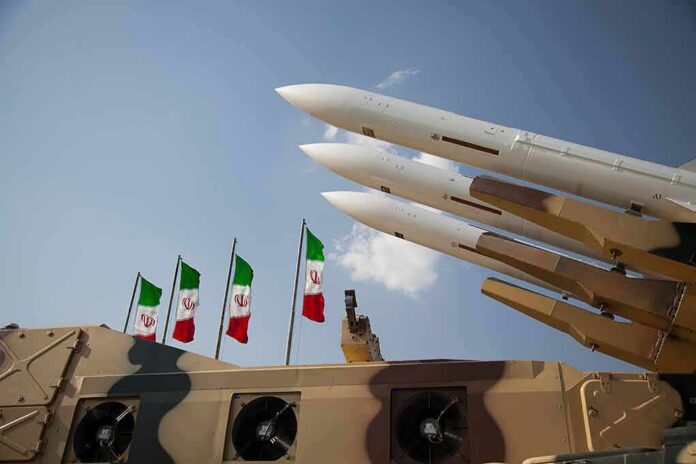
Iranian commanders ordered missiles and drones toward U.S. military sites in Kuwait and Bahrain after fresh American strikes on Iranian radar and coastal positions near the Strait of Hormuz. Iran’s Revolutionary Guard boasted that it hit air defense, radar, and command facilities tied to U.S. forces, and state media framed the operation as retaliation for what it called hostile American actions in the Gulf. The message from Tehran was clear: it wanted to show it could reach U.S. troops and allies anywhere across the region.
U.S. Central Command reported that Iranian ballistic missiles were launched in a surprise attempt to hit American forces spread across Middle East bases. Initial Pentagon briefings and allied statements said seven missiles aimed at two key locations in Kuwait and Bahrain were either intercepted or malfunctioned before impact, thanks to layered air defenses and early warning systems. A U.S. official told reporters there were no confirmed American deaths and no major damage to core U.S. sites, even as assessments continued in the hours after the attack.
Air Defenses Blunt Iran’s Blow, Allies Feel the Shock
Iran’s leaders tried to cast the strikes as clean, controlled retaliation focused on U.S. military infrastructure like radar arrays, missile batteries, and communication hubs. But the real-world effects were messier. Local officials in Kuwait reported that one Iranian drone slammed into Kuwait International Airport, killing at least one person and injuring more than sixty others, while disrupting flights and airport operations. Bahrain and Kuwait publicly condemned the attacks, signaling that Iran’s attempt to look precise and restrained instead hardened regional anger against Tehran’s tactics.
For everyday Americans, these details matter because they show how quickly a “limited” strike can hit civilians and global trade. The airport attack and missile fire near busy Gulf shipping lanes rattled energy markets and raised new worries about oil supplies and prices, problems U.S. families already feel every time they fill up their cars. Iran’s insistence that it was only targeting U.S. bases sits uneasily beside these on-the-ground casualties and disruptions, and it underscores the risk when hostile regimes throw around ballistic missiles and attack drones anywhere near crowded cities and transit routes.
Trump’s Calculus: Deterrence Without Endless War
President Trump had already warned that he would “wipe out” Iran’s leadership if it broke an interim deal meant to pause the fighting, after Iran’s earlier threats and attacks on shipping near Hormuz. U.S. forces struck Iranian radar and coastal sites to protect American troops and defend freedom of navigation, and Iran answered with this latest barrage on Kuwait and Bahrain. The clash now forces the White House to balance three hard goals at once: protect deployed Americans, shield allies, and avoid getting dragged into the kind of open-ended Middle East war that past Washington elites seemed willing to accept.
WSJ: Bahrain, Kuwait Hit Iran in Rare Retaliation
.
Bahrain and Kuwait secretly sent fighter jets into Iran earlier this month to attack drone and missile facilities, marking their first known direct military retaliation against Tehran after weeks of Iranian attacks, according…— Ric Paul (@ric4100) July 29, 2026
Conservative Americans who back strong defense but reject forever wars will see both the danger and the opportunity here. The danger is obvious when a hostile regime fires missiles at our troops and lets drones hit civilian airports. The opportunity is that U.S. defenses worked, allies are speaking out, and Iran is learning that targeting U.S. forces and partners comes with real costs and little gain. The coming days will show whether Tehran tones down its attacks or doubles down, but its “surprise” strike has already revealed one hard truth: testing American strength in the Gulf is not turning out to be a good idea.
Sources:
redstate.com, middleeasteye.net, reuters.com, aa.com.tr, theguardian.com, youtube.com, aljazeera.com