

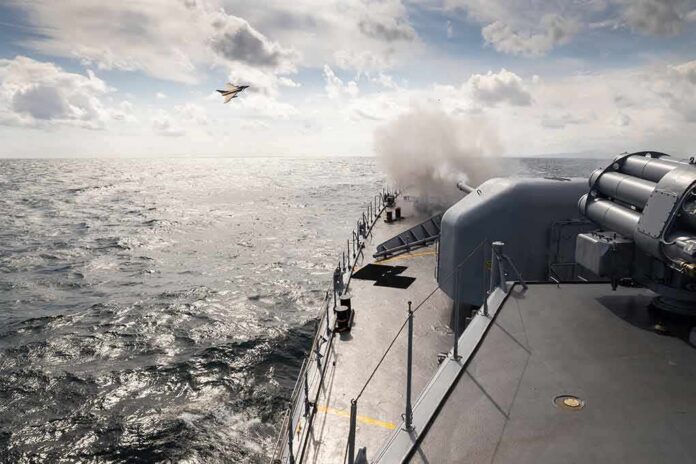
After Iran’s strike wrecked the Navy’s Bahrain hub, leaders say the fleet’s lifeline now runs 2,000-plus miles to Diego Garcia, reshaping every resupply and repair step in wartime.
Story Highlights
- Navy leaders say returning to Bahrain is not imminent after war damage.
- Diego Garcia is now the main logistics hub, lengthening supply cycles.
- Carriers increased onboard storage to ride out longer gaps between deliveries.
- Extended logistics strains crews, maintenance, and availability.
Navy Confirms Bahrain Logistics Hub Is Offline For The Long Haul
Chief of Naval Operations Admiral Daryl Caudle told sailors the service will not return to Naval Support Activity Bahrain “anytime soon,” after heavy damage from Iran early in the war. His plain answer matters for every sailor, spouse, and taxpayer following this fight. Bahrain anchored quick runs of food, fuel, mail, and repair parts to ships in the Gulf. Losing it forced a full reset of how the fleet sustains combat operations in a hostile theater.
Navy leaders and independent reporting describe a new reality: the main supply node is now Diego Garcia in the Indian Ocean. That move adds more than 2,000 miles to each supply run. Replenishment ships now steam days farther to pick up cargo, then return to task groups near Iran. Longer transit means fewer deliveries, tighter rations of time, and more strain on crews and gear working in high heat and constant alert conditions.
Distance Drives Every Decision From Food To Fixes
The shift to Diego Garcia turned a short, routine shuttle into a long-haul maritime chain. Reports cite 14-to-18 day logistics cycles replacing five-to-seven day rhythms that ships once relied on from Bahrain. That extra week or more does not just delay groceries. It delays repair parts, mail, and specialized tools that keep combat systems at peak. Longer routes also expose supply ships to more threats and weather, demanding escorts and careful timing.
Leaders applied lessons fast. The Navy increased storage space on the aircraft carrier USS Theodore Roosevelt for food, hygiene items, and other staples to hedge against gaps. More “stock on hand” buys time and flexibility when weather or attacks disrupt runs. That step reflects a classic wartime trade: carry more now to reduce risk later. It is a practical fix that helps crews stay ready while the supply train grows longer and more complex under fire.
Operational Costs: Crew Endurance, Ship Availability, And Maintenance
Extended supply lines ripple into people and platforms. Crews face longer stretches at sea, fewer port calls, and tighter timelines to repair what breaks. Articles describe carriers enduring unusually long deployments and going months without a port visit during the most contested phases. Each delay adds wear to engines, air wings, and combat systems already running hot in the region’s harsh environment, raising the bar for preventive maintenance and spare parts planning.
Wider force posture also absorbs the shock. A replenishment ship tied up in a two-week round trip is one less ship available to support other tasks. That bottleneck can slow air wing tempo and shift schedules across strike groups. It can also complicate the United States Indo-Pacific balance if logistics assets must stay locked to the Middle East to keep carriers on station. That is why leaders stress predictable cycles, redundancy, and smart loading before ships sail.
Why The Hub Moved: Threat Range And Survivability
Iran’s missiles and one-way drones put ports and forward depots in range. Bahrain absorbed a major hit that damaged facilities vital to fast resupply. Other nearby ports remain inside that threat envelope, raising risk for large supply ships that cannot hide or maneuver like destroyers. Moving the hub to Diego Garcia pushes critical inventory beyond most known threats. The price is time and fuel, but the payoff is survivability and a supply line that can take a punch.
Three years of Middle East combat rewriting how the Navy supplies itself. High-T press conferences don't fix a logistics chain worn thin by endless deployments.
— Chris Harris (@HarrisChris1005) September 24, 2026
A Pentagon watchdog report and multiple outlets describe the same pattern seen in past wars: when the enemy can hit your warehouse, you move the warehouse back. The Navy is blending that playbook with at-sea replenishment to keep combat power forward. More storage aboard, longer but safer routes, and tighter planning are now standard. The core fact remains clear and uncontested: distance now rules the day, and the fleet is adapting to win within that limit.
What It Means For Readers Who Care About Strength And Readiness
This is not bureaucracy. This is the backbone of American power. Every gallon of fuel and every box of parts delivered across that 2,000-mile gap keeps our sailors safe and our jets flying. President Trump’s team must keep driving faster procurement of spares, more robust pre-staging at Diego Garcia, and hardened afloat stocks. Congress should back expanded sealift, more oilers, and modernized supply ships so warfighters are never left waiting on a slow chain.
Sources:
realcleardefense.com, theintercept.com, defencesecurityasia.com, abcnews.com, navytimes.com, stripes.com, english.ahram.org.eg, inquirer.com