

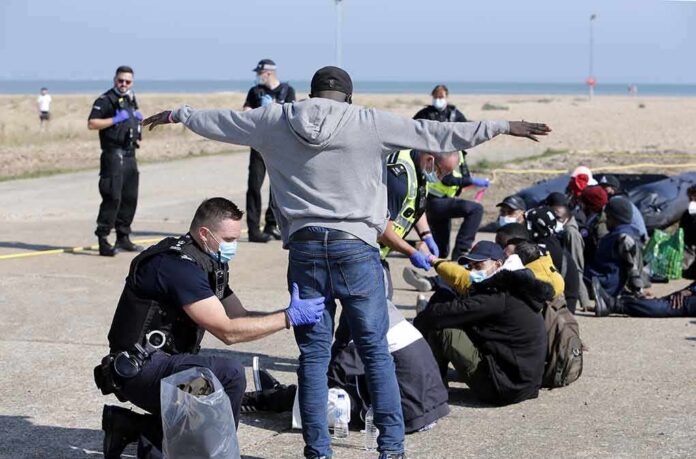
Leaked figures say the United Kingdom gave out 974 taxpayer-funded hijabs to small-boat arrivals in six months, sparking a fresh fight over border control and spending priorities.
Story Snapshot
- Reports say Home Office records show 974 hijabs issued January–June 2026 to small-boat arrivals.
- Officials say the items came in dry-clothing packs as part of standard welfare.
- Short-term Holding Facility Rules require adequate clothing and respect for religious needs.
- The cost and recipient breakdown are not disclosed, leaving key questions open.
What Was Reported And By Whom
British outlets reported that internal Home Office documents recorded 974 hijabs issued to small-boat arrivals between January and June 2026. The reports describe an average of about 162 items per month. They connect the scarves to dry-clothing packs given at intake sites, including Manston in Kent. The figure comes through secondary reporting rather than a published spreadsheet. The underlying document is not public, so categories, stock versus issue, and recipient details are unclear.
Coverage ties the provision to taxpayer funds, because the Home Office pays for intake supplies. That link has driven political anger in the United Kingdom. The reporting also notes that officials framed the practice as routine welfare for people who arrive wet, cold, and without gear. The story has ricocheted across partisan channels, but the basic claim of 974 issued items in six months is consistent across multiple summaries of the same internal data point.
What The Government Says The Rules Require
The Home Office response, as reported, says all arrivals receive a basic dry clothing pack where needed, and that the items on offer are part of standard welfare. Officials also pointed to the Short-term Holding Facility Rules. Those rules say detained people must be provided clothing adequate for warmth and health if required, and that facilities should take account of different religious and cultural backgrounds as far as practicable. That is the cited legal basis for including religious clothing when needed.
Government statistics classify small-boat arrivals within illegal entry routes. The statistics explain that this category includes people detected on arrival or shortly after arrival without prior permission. Most people who come by small boat then claim asylum. Since 2018, the government says 95 percent of small-boat arrivals filed asylum claims. Those facts shape the legal context but do not change the initial intake process where clothing is issued.
What Is Known, What Is Missing, And Why It Matters
The number 974 is clear in the press accounts, but the document behind it is not public. We do not see unit prices, vendor contracts, or the total cost. We do not see the age or sex of recipients. We do not see whether items were requested, refused, or issued by default. Without those details, the financial impact is hard to judge. What is clear is that officials count hijabs as part of welfare packs for new arrivals at short-term holding sites.
The post highlights comments from Imam Sheikh Ramzy about reports that nearly 1,000 hijabs were provided to small-boat arrivals in the UK during the first half of 2026. pic.twitter.com/hsKQBohSe7
— Rosie Damnien 🇬🇧 (@RosieDamnien) October 5, 2026
The debate is bigger than one line item. The United Kingdom faces constant small-boat crossings, rising intake costs, and pressure on housing and services. Many readers will see religious clothing at intake as a symbol of a system that feels upside down: taxpayers covering extras while borders are not secure. Others will argue the rules require basic and culturally aware care for people in custody. Both can be true, which is why precision and transparency on costs are vital.
Accountability Questions For Lawmakers And Agencies
Lawmakers can press for the actual inventory logs for January through June 2026. They can request itemized counts by site, sex, age, and day. They can demand unit prices and total cost for each category, including religious items. They can also seek the internal legal guidance that interprets the Short-term Holding Facility Rules. These steps would let the public see whether the practice is required by law or is a policy choice that could be narrowed.
Taxpayers deserve clear answers: who asked for these items, who received them, and what did it cost. If the law truly mandates religious clothing at intake, Parliament can amend the rule. If the rule only requires warmth and health, agencies can revise pack contents to focus on essentials. Border control and fiscal restraint start with clarity. Secure borders, strict intake, and full cost reporting are common-sense steps most people support across party lines.
Sources:
express.co.uk, uk.news.yahoo.com, gov.uk, assets.publishing.service.gov.uk