

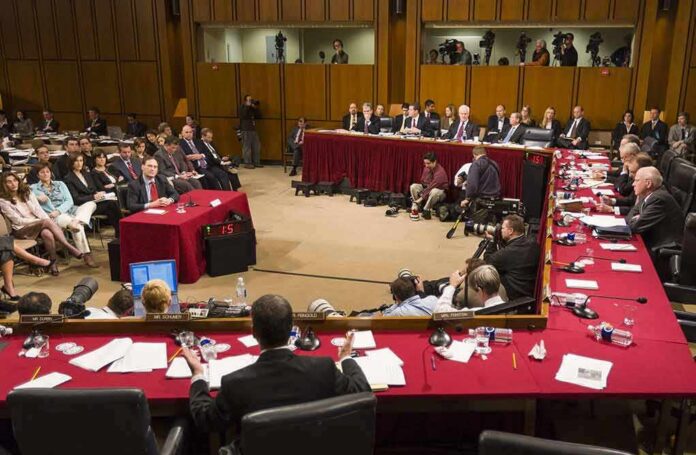
Anthony Fauci’s repeated refusal to answer senators’ questions has turned a routine hearing into a sharp fight over a presidential pardon and the Fifth Amendment.
Quick Take
- Fauci repeatedly invoked the Fifth Amendment at a Senate hearing on COVID-19 origins and the government response.
- Republicans said he was subpoenaed and should have answered because Biden’s pardon covered his earlier conduct.
- Senator Rand Paul moved the dispute toward contempt, calling Fauci’s privilege claim unsupported.
- The fight now centers on whether the pardon removed any real risk of self-incrimination.
Fauci’s refusal set off a subpoena fight
Dr. Anthony Fauci repeatedly invoked his Fifth Amendment right during a Republican-led Senate hearing on the COVID-19 pandemic. Reporting says he declined to answer more than 100 questions after a brief opening statement, and Republicans quickly framed the refusal as stonewalling rather than constitutional caution. The hearing was not a casual appearance. Senator Rand Paul had subpoenaed Fauci after Fauci declined to come voluntarily.
That detail matters because subpoenaed testimony carries a more serious political and legal edge. Paul and other Republicans said Fauci had been given a broad pardon by President Biden, so he no longer had a valid reason to fear federal self-incrimination for older conduct. PBS reported that the pardon covered actions from 2014 through January 2025, and Paul told Fauci his privilege claim was unsupported because of that pardon.
Republicans argued the pardon changed the legal calculus
The core Republican argument is simple: if the pardon erased federal exposure for the covered years, Fauci could not use the Fifth Amendment to dodge questions about those acts. That claim gained force from the public exchange at the hearing. Senator Josh Hawley said, “you have no rights under the Fifth Amendment because you’ve been pardoned,” while other Republicans suggested Fauci was trying to shield himself from perjury claims tied to his answers that day.
Fauci’s own prepared remarks gave Republicans more to work with. NBC reported that he said he would invoke the Fifth to avoid the possibility that Republicans might use his testimony to prosecute him for perjury. He also said he was acting on advice from his lawyers. That line helped him explain his silence, but it also gave critics a ready-made argument that he was protecting himself from a new legal trap rather than answering Congress straight.
The legal issue is narrower than the politics
The dispute is more technical than many cable clips suggest. The Fifth Amendment protects people from being forced to give testimony that could incriminate them in a criminal case, and legal coverage noted that a witness may still have concerns tied to state charges or to new false-statement exposure from the hearing itself. CNN and PBS both noted that some legal experts said the pardon may not erase every possible risk, which leaves the privilege question unsettled.
🚨 TRUMP JUST CALLED FOR DOJ TO PROSECUTE DR. FAUCI:
The last time a president publicly demanded prosecution of a political figure at this level, the tool being used against them was built by the administration before his.
– Senate Homeland Security Committee voted 8-5 along… pic.twitter.com/YRWxFGZTlo
— 🇺🇸 Edward T. Winslow (@EdwardTWinz) August 7, 2026
That legal wrinkle is why the story has produced two different public reactions. Supporters of the hearing say Fauci looked evasive and used the Constitution as a shield against accountability. Critics say a broad pardon does not automatically erase every realistic fear of prosecution, especially when the questioning touches later conduct or possible state matters. For readers who are tired of Washington games, the episode fits a familiar pattern: a witness, a subpoena, a Fifth Amendment claim, and a committee eager to turn silence into a headline.
Sources:
facebook.com, nbcnews.com, aljazeera.com, cnn.com, youtube.com, reuters.com