

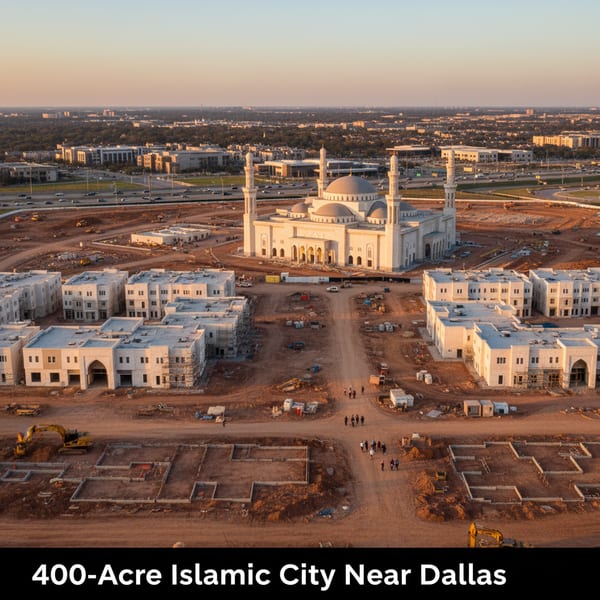
A Texas judge has ruled in favor of developers planning a 400-acre Muslim community near Dallas, delivering a significant legal victory that advances the controversial project despite local opposition and zoning disputes.
Court Hands Victory to Developers
The judicial decision removes a major legal obstacle for the planned Islamic community development outside Dallas. The ruling addresses zoning and land use challenges that had stalled the project’s progress. Local residents had raised concerns about the scope and scale of the 400-acre development, questioning whether existing infrastructure could support such a large community. The judge’s decision now clears the path for construction to move forward, though additional permitting processes remain.
The development plan encompasses residential areas, community facilities, and religious structures across the substantial acreage. Developers have outlined their vision for a self-contained community that would house families and provide amenities for residents. The project’s scope has drawn attention from both supporters who champion religious freedom and property rights, and critics who question the impact on surrounding areas and whether such developments align with regional planning goals.

Local Response and Constitutional Questions
The case raises fundamental questions about property rights, religious liberty, and local control over development decisions. Opponents argue that concerns about traffic, water resources, and community integration remain unaddressed. Supporters counter that developers have every constitutional right to build on privately owned land and that religious communities have long established their own enclaves throughout American history. The tension between these perspectives reflects broader national debates about development, religious freedom, and community standards.
What Comes Next
The legal victory does not guarantee immediate construction, as developers must still navigate additional regulatory requirements and potential appeals. The ruling sets a precedent for similar projects facing local resistance across Texas and other states. Community meetings and public comment periods will likely continue as the development moves through remaining approval stages. The case demonstrates how courts balance property rights against community concerns, with judges often siding with developers who meet technical legal requirements regardless of local sentiment or opposition.