

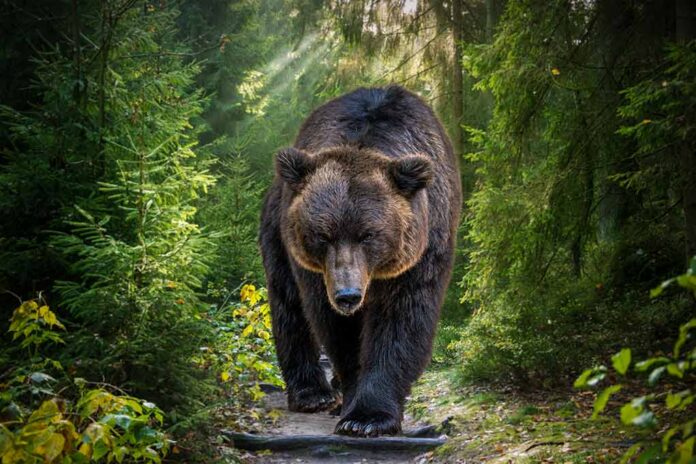
A viral trail video from Alaska shows three calm hikers and one famous grizzly, raising sharp questions about how media sells fear while federal wildlife managers quietly prove that people and bears can share the land.
Story Snapshot
- A group of hikers met a large grizzly nicknamed “Scuba Sue” on a narrow trail in Alaska and walked away unharmed.
- The encounter happened at Anan Wildlife Observatory, a tightly regulated federal bear-viewing site with strict permits and safety rules.
- Experts say calm talk, no running, and giving bears space make most close encounters safe, even with big carnivores.
- Media outlets pushed “heart‑stopping” drama, but park and wildlife guidance shows a pattern of peaceful coexistence when people follow the rules.
Alaskan Hikers, ‘Scuba Sue,’ And A Calm Close Call
Three hikers in southeast Alaska rounded a bend at Anan Creek and suddenly found themselves face to face with a large grizzly bear known locally as “Scuba Sue.” Video shared by national outlets shows the bear moving along the narrow trail as the hikers stand together, speak calmly, and let the animal pass without panic or chaos. The clip spread fast online because the hikers are only a few feet from the bear, yet there is no charge, no attack, and no injury.
Fox News later interviewed the hikers, who said they followed guidance from rangers at the observatory. They described talking to the bear in steady voices and staying grouped instead of bolting, which matches standard rules shared by the National Park Service and Alaska wildlife agencies. The bear appears focused on salmon along the creek and only briefly blocks the trail before continuing its hunt, showing classic behavior for a bear that sees people but does not treat them as prey.
A Tightly Managed Federal Bear‑Viewing Site
This encounter did not happen on a random backcountry trail. It took place at Anan Wildlife Observatory, a federal bear‑viewing site in the Tongass National Forest run by the United States Forest Service. From early July through late August, access is tightly controlled with daily permits, limited headcounts, and set visiting hours from 8 a.m. to 6 p.m. Visitors reach the site only by boat or floatplane and then walk a short half‑mile trail to raised viewing platforms and a photo blind above the falls.
Forest Service managers say their three goals at Anan are to protect bear populations, keep people and wildlife safe, and offer an “extraordinary experience” without disturbing natural behavior. To do that, they cap daily permits at around 60 visitors, ban food on the trail and platforms, and station staff on site during peak season to guide groups and enforce rules. Travel groups and cruise excursions must book ahead or use authorized guides, and private permits are released on Recreation.gov with strict limits, price schedules, and reservation windows.
What Real Bear Safety Looks Like
Alaska’s wildlife agency, the Alaska Department of Fish and Game, gives clear advice for close bear encounters: stay calm, watch what the bear is doing, and understand that “chances are good you are not in danger” if you follow basic rules. They tell people to avoid running, make human speech sounds, and give the bear room to choose its own path. National Park Service brochures for Alaska parklands repeat the same message: stop, assess, talk calmly, stand your ground, and stay together as a group.
Bear‑aware training from interagency safety programs repeats a core warning that matters for every hiker: never run from a bear. Running can trigger a chase instinct, while calm talk and slow movement signal that people are not prey and are not a threat. In the Anan trail video, the hikers’ behavior matches these official rules almost point for point. They make themselves known, avoid sudden moves, and let the large animal pass, showing that normal people can use simple steps to stay safe even when a huge predator is just feet away.
Media Fear vs. Real‑World Coexistence
Despite the calm actions on the ground, big outlets framed the story with words like “tense moment” and “heart‑stopping encounter.” That kind of language grabs clicks and feeds long‑standing public fear of grizzly and brown bears. Yet official guidance from Alaska and federal agencies stresses that most such meetings end without harm when people behave responsibly. At managed sites like Anan, staff, permits, and rules are all designed to keep bears wild and people safe, not to stage crisis scenes.
For conservative readers, there is a deeper lesson here. The same federal system that wastes money in many areas can, when held to clear goals and tight rules, run a focused wildlife program that respects both nature and human safety. At Anan, bear viewing is limited, scripted, and grounded in real science instead of panic. The video of “Scuba Sue” and three steady hikers cuts through media spin and shows something that matters for our culture: big predators and responsible citizens can share the trail without government theatrics, fear campaigns, or new calls to lock people out of public land.
Sources:
redstate.com, nypost.com, kstk.org, recreation.gov, instagram.com, outdoorguide.com, bbc.com, mirror.co.uk, stacks.cdc.gov, nps.gov