
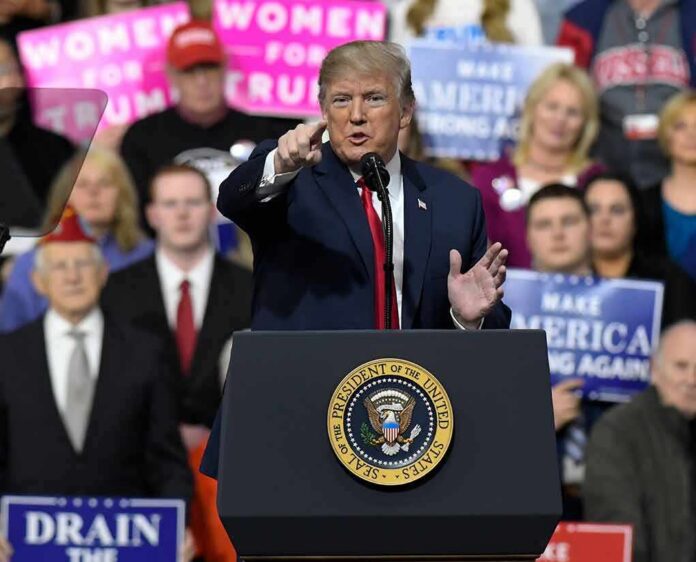
President Trump rebuked an ABC News reporter after questions about a controversial Vivek Ramaswamy ad, then later called the ad “powerful.”
Story Highlights
- Trump said he did not know about the ad when first asked, then later praised it.
- The reporter asked about a video featuring Amy Acton’s estranged mother that drew bipartisan criticism.
- Trump said the family dispute was unusual but separate from Ramaswamy’s conduct.
- Vice President JD Vance praised Ramaswamy’s “audacity,” keeping the focus on policy contrast in Ohio.
Press Clash Centers On Viral Campaign Ad
ABC News and other outlets reported that an ABC White House correspondent asked President Trump about a Ramaswamy ad that used claims from Democrat Amy Acton’s estranged mother. Trump replied that he did not know about the ad at that moment. He also said the mother-daughter conflict was unusual and separate from Ramaswamy’s conduct. The exchange turned tense as coverage focused on Trump’s sharp criticism of the reporter’s questioning during the White House press scrum.
Reporting later showed Trump defended the spot, calling it “powerful” and asking why anyone would take it down. He said, “Who wouldn’t use such an Ad?” That stance arrived as some Republicans, including Ohio Governor Mike DeWine, urged that the ad be removed. The debate showed a split on tactics even inside the right, while keeping attention on Acton’s record and leadership claims during Ohio’s fierce governor’s race.
What The President Actually Said And Why It Matters
When asked at the White House, Trump said he “didn’t know anything about it,” then added he had heard the mother “went very rogue.” He also said, “It’s a very unusual situation to have a mother hate a daughter that much, but I don’t think that has anything to do with Vivek.” Those comments framed the dispute as a private family matter and pushed attention back to policy and performance, not personal drama.
Later, Trump endorsed keeping the ad up. That position signaled support for aggressive messaging that forces a contrast with Democrats. For many conservatives, the bigger test is leadership under pressure, not media approval. The press focused on Trump’s tone toward the reporter. But voters in Ohio still must judge which candidate’s plans on jobs, safety, and schools will deliver. The ad, whatever one thinks of it, ensured that question stayed front and center.
How Ohio Politics And Media Dynamics Collided
ABC News reported the video spread online fast and featured Donna Arthur, Acton’s estranged mother. The outlet also noted early questions about the video while Ramaswamy’s team later confirmed it came from his campaign. Meanwhile, Vice President JD Vance praised Ramaswamy’s “audacity,” showing the national stakes tied to Ohio’s race. The back-and-forth underscored how media fights can overtake issues unless campaigns keep driving policy contrasts.
Trump on an ABC News reporter questioning the Ramaswamy ad: "I had one woman from ABC fake news. I recognized her immediately, not a particularly attractive person inside or out. She's a nasty person. I've had a lot of problems with her." 📺🎤👀🔥 pic.twitter.com/DV2JJpORpM
— World Matters (@world_matters1) October 23, 2026
Research on political ads shows attack spots often move few voters on average. Their power comes from shaping the news cycle, firing up the base, and defining rivals early. That is what this dispute did: it forced Acton’s team to respond, split some Republicans on tactics, and gave national outlets a fight to cover. For readers, the lesson is simple. Media noise is loud, but the ballot boils down to policy, performance, and who will protect liberty at home.
Sources:
mediaite.com, abcnews.com, abc17news.com