

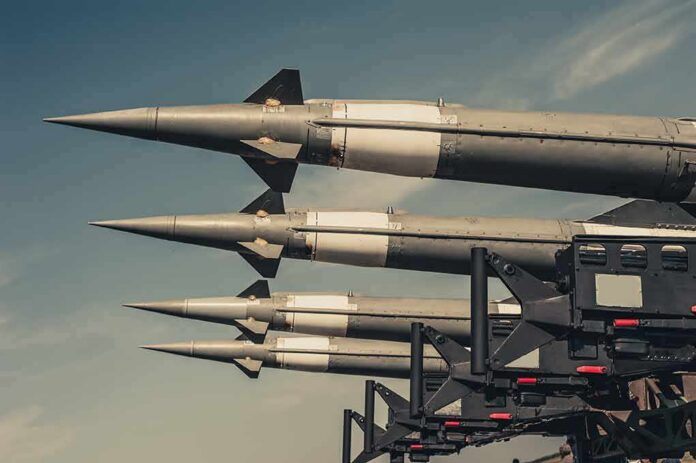
America’s Navy fired recoded “expired” munitions in the Iran war, exposing years of Pentagon planning failures while ramping up new missile output to refill the fight.
Story Snapshot
- Acting Navy Secretary Hung Cao told senators the Navy recoded and used “expired” munitions in combat.
- Codes meant the items were unserviceable but could be restored and reclassified for use.
- Cao said Tomahawk output has surged, and the Navy is expanding other missile production.
- A watchdog says the Pentagon still lacks a plan to close munitions gaps across the force.
What Cao Admitted Under Oath
Acting Navy Secretary Hung Cao told the Senate Armed Services Committee on November 17 that the Navy “recoded” some munitions used in Operation Epic Fury. He said they were listed under Echo and Foxtrot condition codes, which he described as “expired.” He explained that the Navy restored and reclassified some of those items so they could be fired in combat. Cao did not identify the exact missile types or quantities used, leaving the scale unclear.
Business Insider and other outlets reported that Echo and Foxtrot are Defense Logistics Agency codes for unserviceable materiel that may be repairable or restorable. That means the items are not trash by default. They can return to service after inspection and needed work. The public record does not include the lot numbers, test data, or reliability results for the recoded weapons used in the operation, so broader performance details remain undisclosed for now.
Why “Expired” Did Not Mean “Useless”
Reporters and defense texts state that an expiration status flags risk and the need for testing. It does not prove a weapon is unsafe or dead on arrival. Components age and need checks. After inspection and fix work, a missile can be cleared and recoded. That is what Cao described. Critics note that changing a code alone does not show every part was replaced. That is true, which is why inspection records matter—but those are not public yet.
Conservative readers should separate heat from light. The Navy’s senior civilian said recoding occurred. He also said production is climbing. He highlighted Tomahawk output now measured at more than sixty per month, up from about one hundred twenty-five per year during his prior service. He added that the Navy is moving to expand Standard Missile-6 and bring more ammunition makers online. Those steps aim to refill stocks and keep pressure on Iran’s networks.
The Readiness Picture: Progress and Gaps
A Government Accountability Office watchdog finding warned that the Pentagon does not have an “overarching plan” that links munitions production and funding to war needs. That gap makes it harder to close shortfalls made worse by combat and allied support. This does not contradict Cao’s account of restoring certain weapons. It does show why inventories got tight and why sustained, clear planning is needed to build depth fast and keep it there.
Analysts tracking the Iran war reported heavy use of long-range missiles. They said the United States burned through key stocks and might need to lean on shorter-range options in some cases. That reporting frames the stress our forces faced and why the administration is pushing new output. The Navy’s recoding step fit inside that larger picture of wartime demand, aging stock, and a defense industry that must sprint, not jog, in a crisis.
What We Still Do Not Know
Cao did not list which missile models were recoded, how many were fired, or how they performed, beyond being launched. Public sources do not show test results, acceptance paperwork, or post-strike reliability data for those lots. That missing detail limits how far any claim—positive or negative—can go today. The core, on-the-record facts are clear: recoding happened; some “expired” items were restored and used; production is rising; and Pentagon-wide planning still needs work.
What Matters For U.S. Strength
President Trump’s team is moving to rebuild stockpiles while fighting a war and deterring other threats. That requires three things at once. First, restore what can be restored safely to meet near-term needs. Second, surge production for Tomahawk, Standard Missile-6, and other key rounds. Third, force a true department-wide plan that locks funding, factories, and delivery to real requirements. Congress and the Pentagon should deliver that plan now and keep it public enough to build trust.
Bottom Line For Readers
Here is the straight take. The Navy used restored, once-unserviceable munitions in combat, under lawful processes, to keep pressure on Iran. Missile output is rising to refill the magazines. A federal watchdog says the Pentagon still lacks the unified plan needed to stay ahead. That gap must close, fast. America wins wars by being ready before the first shot, not after. Build depth, keep standards tight, and never let our sailors go to sea short on what they need.
Sources:
zerohedge.com, pbs.org, thedailybeast.com, embed.businessinsider.com, militarytimes.com