

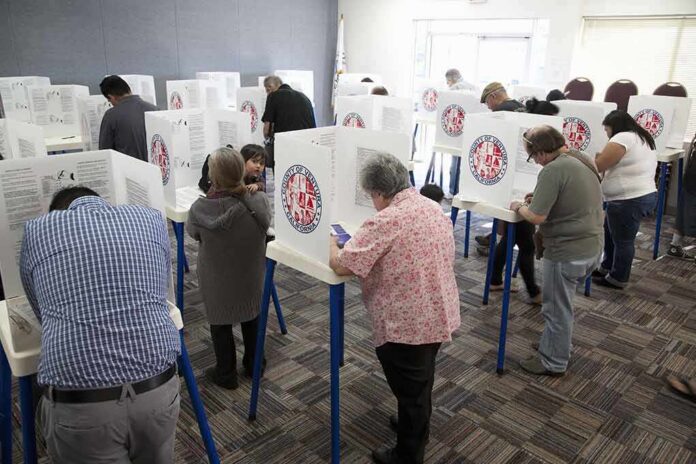
North Carolina shattered its in-person early voting record with more than 4.2 million ballots cast, signaling intense voter engagement in a key battleground state.
Story Highlights
- State officials reported over 4.2 million in-person early votes, topping the 2020 record.
- First-day early voting set a new high with more than 353,000 ballots cast.
- Midway updates showed the state clearing one and two million total ballots in quick succession.
- Record early voting shows strong interest ahead of high-stakes statewide races.
Record Early Voting Volume Confirmed by State Election Officials
North Carolina’s State Board of Elections said more than 4.2 million voters used in-person early voting in 2024. The board said this total beat the prior mark of more than 3.6 million set in 2020, reflecting strong interest across the state. Local and national outlets echoed the milestone, citing official data. The spike capped a two-week period where voters lined up at thousands of sites. Heavy use of early voting continued through the final Saturday before Election Day, when sites closed statewide.
Election officials also documented multiple interim highs as the period unfolded. On the first day alone, more than 353,000 North Carolinians voted in person, a record for an opening day of early voting. Within days, total ballots cast across all methods crossed one million, then two million, based on the state’s daily updates. Local newsrooms tracking the board’s feed reported similar thresholds and emphasized the dominance of in-person early voting among returned ballots at that stage.
What the Numbers Mean—and What They Do Not
High turnout signals public energy, but it does not tell us which side is ahead. Researchers who follow North Carolina caution that early vote volume and election outcomes are separate facts. Early voting has grown over decades and often makes up most ballots in presidential years. Analysts at the Massachusetts Institute of Technology tracked these patterns and noted how usage ebbs and flows by year and context. The 2024 total reflects that long rise and a well-used convenience option, not a built-in edge for either party.
Some scholarship even suggests that early voting can help Republicans by locking in frequent voters, while same-day registration may aid Democrats by drawing in late deciders. Political science reviews have discussed these cross-currents for years. These findings are not guarantees. They do remind readers to separate process from results and to wait for complete tallies. The bottom line is simple: more people voting early means more voices banked before Election Day, not a final scoreboard.
Context for Voters Focused on Security, Access, and Fair Play
State officials ran a predictable calendar: open sites, daily reporting, and a hard stop before Election Day. The State Board directed voters who still had not cast ballots to show up on Tuesday, when precinct sites open across the state. The board’s data page breaks out totals by method, so citizens can see how many ballots came from early in-person, mail, and Election Day voting. These basics help voters judge the process on facts, not rumors or spin.
In North Carolina during early voting, Black voters have had the highest percentage of turnout.
So far close to 40% of registered Black voters in NC have already voted before Tuesday in comparison to 27% in 2022. pic.twitter.com/cvmyeIahAu
— Popitics (@Popitics1) November 3, 2026
For conservatives, two points matter. First, strong turnout means citizens are engaged and ready to be heard. That is healthy for self-government. Second, clear rules and transparent reporting build trust. North Carolina’s updates, press notices, and method breakdowns make it easier to watch the system work. Voters who value election integrity should keep using official channels, bring valid identification, and encourage neighbors to vote on time and in person.
Sources:
youtube.com, ncsbe.gov, wfdd.org, wcti12.com, wcnc.com, ncpoliticscenter.substack.com, papers.ssrn.com, academic.oup.com