

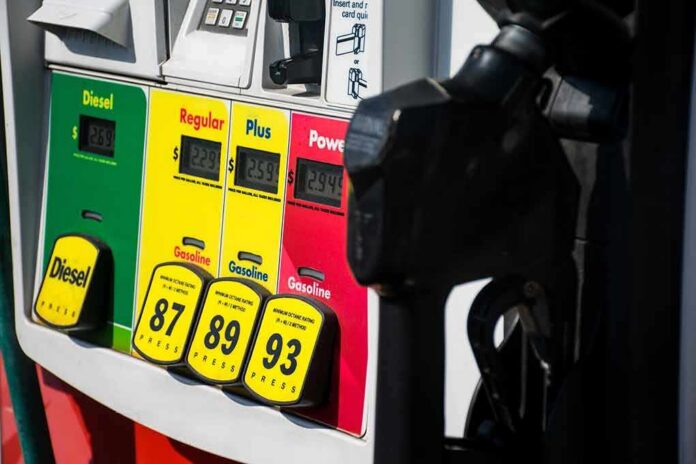
Texas declared a statewide disaster over diesel shortages and soaring prices, unlocking quick relief for truckers and farmers.
Story Highlights
- Governor Greg Abbott’s proclamation covers all 254 Texas counties and targets a diesel shortage and high costs.
- The order allows dyed diesel on public roads and lifts penalties tied to off-road-only fuel.
- Heavier loads up to 95,000 pounds are permitted for fuel, farm, and timber shipments to speed deliveries.
- Texas asked the Environmental Protection Agency (EPA) to grant federal fuel-rule waivers to boost supply.
Statewide Disaster Targets Diesel Shortage And Prices
Governor Greg Abbott issued a disaster proclamation for all 254 counties, citing a diesel shortage and record prices that threaten public health and safety. The action frames the fuel crunch as a direct risk to transport and food supply. The proclamation is designed to keep freight moving and protect harvest season. State leaders moved quickly because truckers, farmers, and small businesses face higher costs that push up prices at the store. The focus is near-term relief while supply catches up.
The proclamation explicitly recognizes that freight and farm work cannot stop. Diesel powers trucks, tractors, and generators across Texas. High prices and tight supply hit rural families first, then cities. By activating emergency powers, Texas can clear red tape that slows deliveries. The state plan aims to help move more gallons, faster, at lower cost where possible. Officials tied the action to safety and economic stability for communities that keep shelves stocked and crops moving.
Dyed Diesel Allowed On Roads To Expand Fuel Options
Texas temporarily allows dyed diesel, normally limited to off-road use, to run on public highways. This expands usable supply without changing the underlying fuel tax rules. The order suspends state restrictions and penalties that kept dyed diesel off the roads, but it does not erase the legal difference between off-road and taxed highway fuel. The goal is simple: widen access to diesel so truckers can keep hauling. Officials say this reduces costs on the farm, on the road, and at the store.
Past emergencies show this tool works within a known playbook. During major disruptions, states often relax distribution limits to keep freight moving. Texas used similar steps during wildfires and in the wake of Hurricane Harvey, when federal agencies also issued targeted diesel waivers to help the market adjust. This action fits that pattern. It broadens what can be used today, so deliveries do not stall while refiners and distributors rebalance supply.
Heavier Loads And Regulatory Relief To Speed Deliveries
The proclamation raises allowable vehicle weights, up to 95,000 pounds for certain fuel, agricultural, and timber loads, so fewer trips can move more product. Texas also suspended oversize and overweight permitting rules tied to these shipments. That change helps shippers cover long distances faster across a large state. Fewer trips mean lower per-gallon transport costs, which can help ease price pressure. The policy centers on efficiency and access so families and businesses see relief sooner.
America's Diesel Crisis: The Supply Problem Behind the Record Prices
America Has a Fuel Problem, But It Is Not One Single Emergency
The most recent major state action came from Texas on September 28, 2026, when Governor Greg Abbott declared a statewide disaster over soaring… pic.twitter.com/jvbdS9Ht1C
— TheBrutalTruth (@denise_gradin) September 29, 2026
Texas also requested that the Environmental Protection Agency temporarily relax federal diesel standards to the extent allowed by law. The state asked for a waiver of ultra-low sulfur diesel and related Texas Low Emission Diesel requirements, which can unlock additional barrels for the highway market. Federal action has mattered in past Texas fuel crises, including waivers during Hurricane Harvey that expanded available diesel supply for on-road use. The request underscores the need for coordinated state and federal steps.
What Texans Should Watch Next
Texans should watch two things now: whether federal regulators grant the requested waivers, and how quickly shippers report smoother deliveries. The order clears the state-level bottlenecks, but federal relief could add more fuel options. Early beneficiaries are likely truckers, farmers, and timber operators who run on tight margins. If deliveries speed up and inventory stabilizes, stores and consumers should see some cost relief. Officials framed the emergency around those kitchen-table stakes for families across Texas.
Limits And Next Steps
The public reporting does not include statewide inventory data or federal waiver outcomes yet, so the exact supply boost is not quantified at this time. Still, the legal action is clear: Texas expanded on-road fuel options, lifted weight limits for key loads, and asked Washington to help widen supply. Those steps match prior emergency responses that aim to protect critical services. The priority is to keep rigs rolling, crops moving, and grocery prices from climbing higher as markets rebalance.
Sources:
dallasexpress.com, kxan.com, thecentersquare.com, tdem.texas.gov