

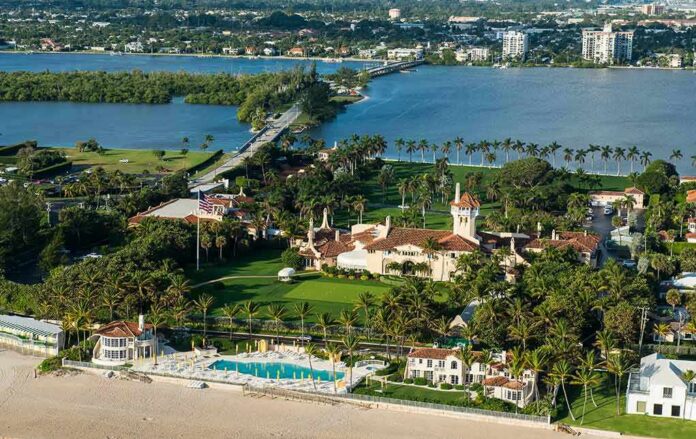
Heavily redacted court filings still shield the full reasons behind the Mar-a-Lago raid, keeping Americans in the dark about how such a sweeping search was justified.
Story Snapshot
- Justice Department records show a judge approved the Mar-a-Lago warrant based on a probable-cause affidavit.
- Officials said the affidavit had sensitive witness and grand jury details, which drove the redactions.
- The released affidavit confirms agents believed more presidential and defense records were at the property.
- Large blackouts prevent the public from testing the government’s full claims or motives.
What The Records Confirm About The Raid
Justice Department documents and court filings show a federal magistrate judge approved the Mar-a-Lago search under the Fourth Amendment’s warrant process. The warrant cited possible violations of federal records and obstruction laws and rested on a sworn affidavit claiming probable cause. The affidavit itself states agents believed additional presidential and national defense records stayed at the property, which officials said justified a search of specific areas at the estate. These points establish that the raid was warrant-based, not a solo executive action.
Federal prosecutors argued against broad public release of the affidavit because it included sensitive witness details and grand jury information. A judge later unsealed a version, but many pages were blacked out. That left only a narrow window into the government’s reasoning. The released text showed the theory of the case in broad terms, yet removed many facts that would let outside readers assess the strength of each claim. The warrant inventory and attachments remain central to any accountability review.
Why The Redactions Still Matter
The heavy redactions block the public from weighing key questions. Who said what. What was checked. What choices were made before the raid. The blackouts prevent a clear test of whether less intrusive steps could have worked or whether claims of obstruction rested on solid proof. A media summary described the affidavit as “38 pages” and “heavily redacted,” underscoring how little the public can evaluate about the case file that drove the search. That opacity keeps doubts alive, on both sides.
Officials have said the Federal Bureau of Investigation spoke with many witnesses before the search, which implies some factual groundwork beyond simple record disputes. Yet the exact statements, timelines, and corroboration remain hidden in sealed or redacted parts of the file. The result is a trust gap. Supporters of strong executive power for records handling cite the presidency’s unique role. Critics of government overreach point to the secrecy as a cover for selective enforcement. Without fuller disclosure, neither camp can close the debate with proof.
What Accountability Could Look Like Now
Clear next steps exist. Courts can consider further unsealing where security allows. Congress can seek segregable portions that do not expose sources or tactics. Focused requests could target specific items: the unredacted affidavit, attachments, and property receipts. The government has already confirmed the core theory of probable cause in public filings, including the claim that more records likely remained at the site. The question is whether withheld details confirm that belief or expose weak links.
For many readers, this is about equal justice. Americans watched years of double standards on leaks, records, and political probes. They want the same rules for everyone, not one set for conservatives and another for the ruling class. President Trump’s administration now runs the Justice Department. That places a duty to clean up secrecy where possible, protect real national security, and show the country that rights under the Fourth Amendment still stand between citizens and the state. Sunlight, not spin, will settle this.
Sources:
efile.fara.gov, congress.gov, int.nyt.com, justice.gov, cbsnews.com