
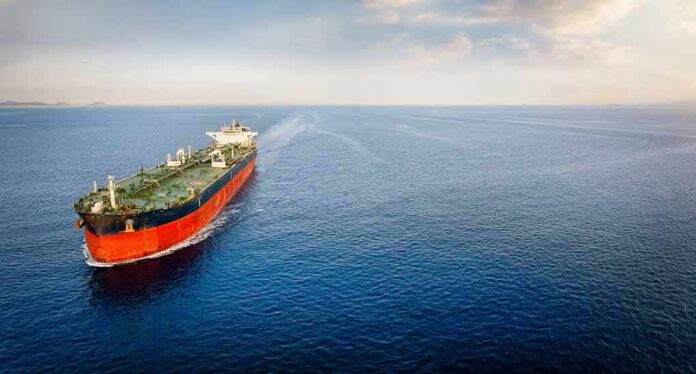
U.S. Central Command says an American aircraft disabled the Curaçao-flagged tanker Belma with a Hellfire strike after it ignored repeated warnings while heading toward Iran’s Kharg Island.
Story Snapshot
- CENTCOM says Belma ignored warnings and was disabled with a Hellfire missile.
- Reports say the tanker was unladen and allegedly tried to breach the blockade.
- Iran-linked outlets claim the tanker was struck again near or at Kharg Island.
- Conflicting accounts remain on exact location and sequence; verification is limited.
CENTCOM Describes a Blockade Enforcement Strike
United States Central Command said its forces observed the Curaçao-flagged tanker Belma sailing in international waters toward Kharg Island. Command officials said the ship ignored multiple warnings to divert. A U.S. aircraft then disabled the vessel by firing a Hellfire missile into the smokestack or engine area, halting its progress. Bloomberg reported the tanker was unladen and under U.S. sanctions, which supports the claim this was a targeted enforcement of the renewed maritime blockade on Iran.
People’s Daily’s English edition carried the same core account from the United States Central Command. It said the commercial vessel was heading toward Kharg Island and failed to comply with calls to stop. The report also framed the action as disabling, not sinking, which fits rules meant to reduce collateral harm at sea. The consistency across major outlets suggests the event occurred broadly as the command described it, even as some details remain under review.
Iran-Linked Sources Claim a Second Strike Near Kharg
Iran International cited Bushehr deputy governor Ehsan Jahanian saying an empty tanker at or near Kharg Island was struck by United States missiles and identified the vessel as Belma. That account also claimed a second strike occurred two days after the first, implying a repeat hit on the same ship. Middle East Eye, quoting the Fars outlet, carried a similar claim that “Belma N.I.22” was attacked again by two missiles, which complicates the timeline and the ship’s exact location.
These Iranian-aligned reports differ from the United States Central Command’s narrative on place and sequence. The United States says the disabling occurred as the tanker moved toward Kharg Island, not while it was docked there. The sources at odds on location do not supply ship registry numbers, tow records, insurer filings, or photos that a neutral party has verified. That gap makes it hard to confirm whether the “second strike” claim reflects a separate event or a reframing of the same action.
Why This Matters for U.S. Security and Energy Stability
Reuters, BBC, and Bloomberg coverage places the episode inside a larger U.S.–Iran maritime contest. Tanker incidents have increased, and shipping through the Strait of Hormuz has slowed when clashes rise. The United States frame is blockade enforcement to deny Iran oil cash that funds hostile forces. Disabling an unladen, non-compliant tanker limits escalation while warning others not to run the line. That approach aims to deter attacks on U.S. forces and keep global energy lanes open.
🔹 ~1400Z–1500Z | CENTCOM Retaliatory Strikes (NITC Logistics Interdiction)
U.S. forces execute direct kinetic strikes targeting three Iranian shadow-fleet crude tankers funding the IRGC:
M/T DOWNY (VLCC): Struck at anchor off Kharg Island; permanently disabled.
M/T STARK 1…— Thomas Huffman (@ThomasHuffman79) September 5, 2026
For American readers, two points stand out. First, the United States Central Command described clear warnings before the strike, which matches a lawful interdiction model. Second, the choice to disable rather than destroy reduces risk to crews and nearby ships. Those steps show a rules-based approach to a dangerous standoff. At the same time, the lack of neutral maritime forensics leaves room for Iran-linked outlets to cast doubt or claim added hits without presenting hard evidence.
What We Know, What We Do Not
What we know: multiple major outlets report the United States disabled the Belma as it headed toward Kharg Island after repeated warnings. The reported munition was a Hellfire missile fired by a U.S. aircraft. The tanker was unladen, and reportedly sanctioned, which aligns with blockade targeting logic. What we do not know: exact damage points verified by third-party survey, an International Maritime Organization number matching all variants of the ship’s name, and towage or port logs proving a second strike.
Bottom line for conservatives watching U.S. strength abroad: the Trump administration’s military arm acted to enforce the blockade and protect sea lanes. The strike was limited and precise, and it followed warnings. Iran-linked claims about added hits lack neutral proof so far. Until verified records surface, the established public fact pattern remains a single disabling action that signaled consequences for running the line, while seeking to avoid civilian loss and broader war at sea.
Sources:
npr.org, bbc.com, reuters.com, theguardian.com, nytimes.com, azernews.az