
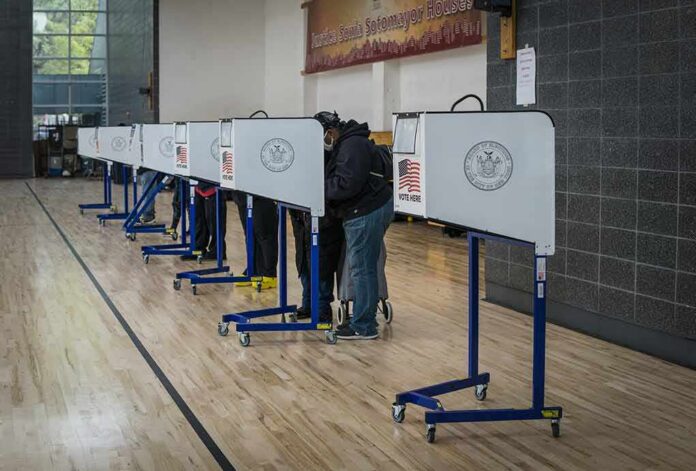
The Justice Department’s warning that election officials can face criminal charges for leaving noncitizens on voter rolls puts election integrity back on the front burner.
Story Highlights
- The Department of Justice warned all states that officials could be prosecuted if noncitizens remain on voter rolls or ballots are counted from them.
- Federal prosecutors in New Jersey charged two men with illegally voting in a federal election and making false statements on citizenship applications.
- Michigan officials announced charges against a noncitizen for allegedly registering and casting a ballot in 2024, showing cases do occur.
- Expert reviews say noncitizen voting is rare, but not zero, fueling debate on how far reforms should go.
Justice Department Puts States On Notice
Reuters reported that on July 8, the United States Department of Justice sent letters to all 50 states. The letters warned that election officials could face criminal charges if noncitizens remain on eligible voter lists or if ballots from noncitizens are counted. The head of the Civil Rights Division, Harmeet Dhillon, signed the warning. The notice signals a tougher federal stance on list maintenance and ballot integrity ahead of the fall contests.
The Justice Department also pushed states to share voter roll data to verify citizenship. News outlets in Washington and Georgia described the letters as both a warning and a demand for cooperation with federal reviews. The message was clear: follow federal law on eligibility or face possible prosecution. That approach lines up with President Trump’s pledge to secure elections and restore trust by closing loopholes that erode confidence.
Recent Criminal Cases Show The Risk Is Real
Federal prosecutors in New Jersey announced indictments against two Bergen County residents. The charges include illegally voting in a federal election and making false statements while applying for United States citizenship. The case outlines how false claims can slip into the system and reach the ballot box. The charging documents describe how registration and voting rules were allegedly broken, backing calls for tighter checks at the point of registration and before ballots are counted.
Michigan officials detailed another case after the 2024 election. Secretary of State Jocelyn Benson and the Washtenaw County prosecutor said a noncitizen was charged with trying to vote and with perjury tied to voter registration. The statement confirms that noncitizen voting attempts do occur, even if they are not widespread. Each case shows why simple, uniform checks can help stop harm before it spreads. It also shows why better data sharing matters across agencies.
Courts And Congress Are Shaping The Guardrails
A federal court paused an Alabama program that aimed to clear ineligible voters close to Election Day. The order said the effort risked removing eligible voters and came too late in the cycle. The pause did not ban the state from keeping rolls accurate, but it blocked that specific program while litigation continues. This fight highlights a core tension: clean rolls protect trust, but rushed purges can cause new problems if not carefully built and timed.
Congressional materials reinforce the baseline rule. Federal law makes it a crime for a noncitizen to vote in a federal election. That standard is not new, and officials have long had tools to enforce it. The renewed push under President Trump focuses on making sure those tools actually work in practice. Supporters argue that firm enforcement deters fraud and mistakes. Critics warn against overreach that could snag lawful voters if systems are sloppy.
Rarity Does Not Mean Irrelevance
NPR reported that a broad review found noncitizen voting remains exceedingly rare. Experts said the numbers are very small and not coordinated. That picture matches several past studies from policy groups. Still, even rare illegal votes can matter in close races. For many voters, the point is not only scale, but trust. Clear rules, proof of citizenship at registration, and timely list checks can prevent doubt before it starts.
Just In:- Noncitizen voting is vanishingly rare yet it's the centerpiece of a push to overhaul how America votes.
A recent Census Bureau analysis Trump is citing found ~24,000 apparent noncitizen votes out of 128M checked (~0.02%), with experts calling the methodology shaky and…
— GlobePulses (@GlobePulses) August 29, 2026
House Republicans opened a probe after New Jersey’s governor said about 6,600 noncitizens were added to state rolls in a recent period and that hundreds voted. The Justice Department cited those public claims while seeking unredacted rolls to verify the scope. Officials later stressed that verification can reduce big early estimates. That is why accurate data and careful audits matter. Sunlight and strong, even-handed enforcement help protect every lawful vote.
Sources:
twitchy.com, michigan.gov, reuters.com, news.bloomberglaw.com, bipartisanpolicy.org, justice.gov, washingtonpost.com, civilrights.justice.gov, supremecourt.gov, fox5dc.com, ajc.com, npr.org