
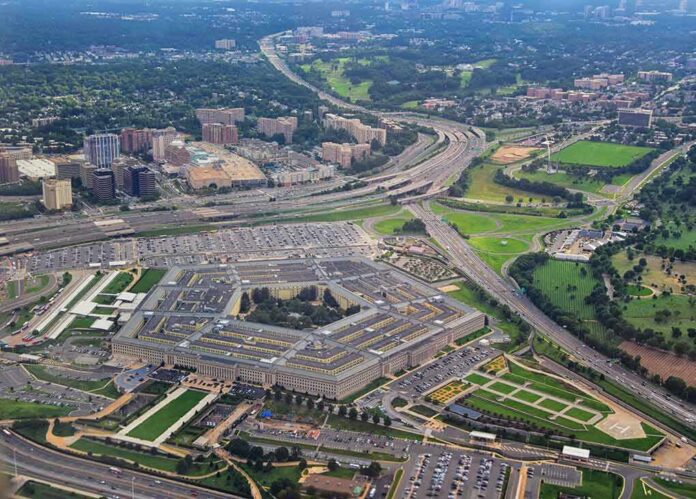
A senior Navy advisor caught on hidden camera trashing President Trump was removed from duty within hours, signaling zero tolerance for political sabotage inside the ranks.
Story Highlights
- Hidden-camera video showed a senior Pentagon advisor criticizing Trump and hinting at undermining policy.
- The Department of the Navy placed the advisor on immediate administrative leave, citing standards violations.
- Officials have not released the full footage or named the exact rule allegedly violated, limiting outside review.
- The action mirrors a broader Pentagon pattern of swift leave in politically charged cases.
Navy Move Signals Consequences for Undermining Elected Leadership
Acting Secretary of the Navy Hung Cao said the conduct shown in the video was taken “extremely seriously” and called the remarks “inappropriate and incompatible” with department standards, then placed the official on leave effective immediately. The clip, released by James O’Keefe’s media group, showed the advisor criticizing President Trump’s agenda. The Department’s fast action tells uniformed and civilian staff that politics cannot override the chain of command while a review proceeds.
The case taps a core principle: civilian control of the military. Voters choose the President, and the Pentagon follows lawful orders. Leaders moved to protect that principle when public comments suggested using an official post to counter White House policy. This standard protects mission focus and keeps personal agendas out. The swift leave decision also protects the review. It removes the official from duty while facts, policies, and context are checked.
What the Public Record Shows—and What It Does Not
Reporters and the public have not seen a full unedited video or a full transcript. The available reports describe the clip and the reaction, but do not include raw files or chain-of-custody records. The Navy’s statement did not cite a specific regulation or ethics rule by number. That keeps some details out of view for now. Based on what is public, the trigger was the content and intent shown on camera, not any proven release of classified material.
This limited record creates boundaries for what we can conclude. The facts support the leave decision as a standards issue. They do not show operational harm or a security breach tied to the remarks. That leaves two tracks. First, the conduct review asks whether the comments broke policy or abused a public office. Second, any wider probe would look at related communications if needed. Until the Navy releases more, outside analysts cannot verify edits or full context.
A Pattern of Swift Administrative Leave in Sensitive Cases
The quick response fits a common pattern at the Pentagon. When sensitive leaks or politically charged conduct surface, leaders often use immediate administrative leave to stabilize operations during an inquiry. This is not a final punishment. It is a risk-control step. It protects the mission and the integrity of the review. Recent cases show similar steps during high-pressure probes, especially where trust and discipline are on the line.
That broader history helps explain the Navy’s posture here. The stakes are not only about one official or one video. They are about confidence that national defense is led by elected leaders and carried out by professionals, not political operatives. Quick action reassures service members and taxpayers that personal crusades will not steer Defense Department work. It also signals that the Trump administration expects loyalty to lawful policy, not resistance from within.
Why This Matters for Readers Who Value Order and Accountability
Every parent with a child in uniform expects leaders to put mission first. Every taxpayer expects duty over politics. The Navy’s move defended those expectations while facts are checked. The next steps should add clarity. Officials should identify the precise standard at issue and decide final action based on the full record. If the video fairly reflected intent to undermine policy, stronger discipline will be on firm ground. If context weakens the claim, the record should show that too.
Pentagon Advisor Caught on Hidden Camera Saying He Can 'Undo' Trump's Agenda — Placed on Leave Within Hours https://t.co/lIdM8DS4Bg
— Stanley E Cook (@StanleyECook) July 24, 2026
Either way, the message is clear. Government power is not a personal tool. The Constitution sets who leads, and the military follows that voice. President Trump sets defense policy. Advisors advise. They do not run shadow agendas. Swift leave in this case protects that line. Transparency on the rule applied and the evidence will complete the job—fair to the individual, firm for the mission, and faithful to the voters who put this team in charge.
Sources:
reuters.com, globalnation.inquirer.net