

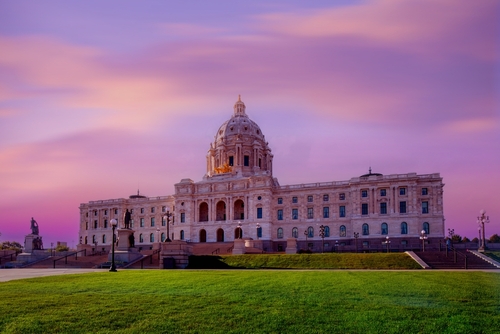
Minnesota’s State Capitol has transformed into a fortress with only four entry points and metal detectors at every door following the assassinations of elected officials, raising urgent questions about whether our people’s house is becoming inaccessible to the very citizens it’s meant to serve.
From Open House to Locked Fortress
The Minnesota State Capitol operated for decades as a genuinely public building, with 14 different doors welcoming citizens during business hours. That accessibility reflected a foundational American principle: government belongs to the people, not the other way around. Following the summer 2025 shootings of House DFL leader Melissa Hortman and other lawmakers, plus attempted assassinations targeting Senator John Hoffmann and his family, state officials have reduced entry points by 71 percent. Citizens now funnel through three tunnels from office buildings and one ground-level public entrance, all equipped with metal detection scanners previously reserved only for Supreme Court proceedings.
Security Theater or Necessary Protection
State Patrol Colonel Christina Bogojevic justified the measures by emphasizing detection of prohibited items before Capitol entry. The new scanners process approximately 2,000 people per hour, though visitors face longer wait times and mandatory bag screening. Sixteen additional Capitol security officers now staff the checkpoints, representing a significant taxpayer expense. While officials frame these changes as essential protection, the measures raise fundamental questions about whether elected representatives are distancing themselves from constituents. The surveillance camera expansion and keycard-restricted tunnels suggest a permanent shift toward viewing citizens as potential threats rather than the employers of government officials.
Constitutional Concerns and Privacy Issues
Gun rights advocates have raised red flags about how concealed carry license holders will be processed through the new screening system. The State Patrol has not provided clear answers on whether license information remains confidential during checkpoint interactions, creating legitimate concerns about Second Amendment privacy protections. Notably, legislators may still carry firearms in the Senate chamber under proposed rules while citizens face prohibition, highlighting a troubling double standard. This creates a governing class with privileges denied to ordinary Minnesotans, precisely the kind of elitist distinction that erodes public trust in government institutions and fuels resentment across the political spectrum.
National Trend Toward Government Inaccessibility
Minnesota’s Capitol lockdown is spreading. Wisconsin and Arizona have implemented enhanced security measures at their state capitols following the Minnesota incidents, though some officials urge restraint. Wisconsin Republican Assembly Speaker Robin Vos warned against “trying to make the Capitol into a fortress,” arguing for balanced security that maintains public accessibility. His concerns reflect a broader anxiety: when government buildings become fortresses, the distance between elected officials and citizens grows dangerously wide. The pattern suggests a nationwide movement toward restricted access to democratic institutions, fundamentally altering the relationship between Americans and their representatives in ways that may serve bureaucratic security interests over democratic accountability.
The Minnesota Capitol’s transformation from public building to secured facility represents more than response to tragedy. It signals a shift in how government views citizens and reflects growing separation between the governing class and the governed. Whether these measures effectively prevent future violence remains unproven, but they certainly make spontaneous constituent access to representatives far more difficult. The challenge for Americans across the political spectrum is demanding security solutions that protect elected officials without creating a permanent barrier between government and the people it serves, preserving the foundational principle that public servants remain accessible to those who employ them through their votes and taxes.
Sources:
Stricter security at Minnesota Capitol after leader’s assassination – FOX 9 News
Lawmakers on edge as statehouse security tightens after Minnesota shootings – FIPA
Minnesota board to recommend security changes at the Capitol – MPR News