
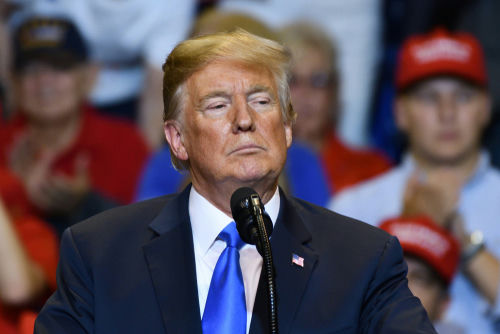
Donald Trump faced a deceptively simple prompt from a Newsmax reporter: would he be the same man if he had never met Melania Trump?
Trump laughed, then warned, “That’s a very dangerous question,” before complimenting her impact and performance. The line landed because it’s true in a practical sense: answer “yes” and you insult your spouse; answer “no” and you invite endless speculation about dependence, regret, or motive.
That squeeze play is why hypothetical “alternate timeline” questions show up on red carpets, at book tours, and now at presidential appearances. They feel intimate and human, but they’re also engineered for a headline. Trump treated it exactly like that—an attempt to box him in—so he defused it with humor and a warning label. He didn’t scold the reporter; he flagged the trap, then took the safer exit: gratitude.
The documentary backdrop and the modern art of access control
The exchange didn’t happen in a vacuum. News coverage tied it to promotion around a documentary about Melania Trump, including a screening where Amazon reportedly blocked press access. That matters because controlled access changes the incentives for everyone in the room. If most cameras are kept out, the few clips that escape become more valuable, and the questions tend to drift toward the personal—exactly the terrain where a single sentence can carry the whole story.
For audiences, access control can feel like a nuisance; for political brands, it’s a strategy. Limit the room, reduce the risk, then pick the moments that travel. The irony is that the tighter the gatekeeping, the more the public focuses on whatever slips through. A throwaway joke becomes a national read on marriage and authenticity. That’s not an accident of the media cycle; it’s how the cycle works when “content” beats context.
Trump’s press style: boundary setting, not randomness
Trump’s critics often call his reporter exchanges erratic. The pattern looks more like boundary enforcement. He tends to label certain lines of inquiry as illegitimate—too speculative, too accusatory, too macabre, or too hostile—and he does it in plain English. Previous moments show sharper language when the topic is death tolls, national security vetting, or foreign policy hypotheticals. This time, the stakes were domestic and personal, so the delivery softened into comedy.
From a conservative, common-sense perspective, that boundary setting can read as healthy skepticism toward a press culture that rewards gotcha framing over useful information. Voters don’t benefit when every question turns into a psychological exam or a “choose your own scandal” scenario. The counterargument also deserves airtime: leaders should handle uncomfortable questions without contempt. Trump’s “dangerous question” quip sits in the middle—pushback without a blowup.
Why a friendly outlet still asked it, and why it worked
Newsmax isn’t typically framed as adversarial to Trump, so the question stands out. Friendly outlets still compete for the same scarce commodity: a clip that travels. Personal questions do that better than procedural ones. The reporter didn’t ask about tariffs or border numbers; he asked for a story audiences could repeat at dinner. Trump’s response provided the soundbite, protected his family image, and kept the mood light—three wins in under ten seconds.
The exchange also reveals something about modern political communication: “humanizing” can be just another form of pressure. A president who refuses a hypothetical about his marriage risks seeming cold; a president who indulges it risks saying something that will be replayed forever. Trump threaded that needle by treating the question itself as the joke, then finishing with praise. That approach doesn’t answer the hypothetical, but it answers the underlying demand for warmth.
The bigger lesson: privacy narratives are now political infrastructure
Presidential families used to appear mainly at ceremonies and holiday photos. Now they’re the subject of documentaries, curated screenings, and promotional language about emotional storytelling. That shift turns family life into a parallel track of political branding—less about governing, more about meaning. Trump praising Melania in public, during a moment linked to her documentary coverage, reinforces a simple message: stability at home, loyalty, and gratitude.
Some observers will call that image management, and they’re not wrong. Image management is also what every major figure does in 2026, from corporate CEOs to governors. The practical question is whether the media ecosystem rewards substance or theater. A marriage hypothetical dominated attention because it’s easier to consume than policy detail. That’s not a compliment to the culture; it’s a diagnosis. People read what’s memorable, not what’s measurable.
What readers should take from “very dangerous question”
The line endures because it admits the truth politicians rarely state out loud: some questions are designed so the asker wins no matter what you say. Trump didn’t claim the reporter acted in bad faith; he simply labeled the trap and stepped around it. For viewers who want leaders to keep their footing under pressure, that’s competence. For viewers who want full transparency on personal life, it’s evasion. Both reactions are predictable.
The quiet punchline is that the “danger” wasn’t to Trump’s marriage so much as to his message discipline. He kept control, praised his wife, and gave the clip-hungry world exactly one quotable line—on his terms. The documentary promotion got an extra jolt of attention, the press got a headline, and the public got another reminder that in modern politics, the smallest questions can carry the sharpest hooks.
Sources:
Trump Calls CBS Reporter ‘Stupid’ Over Afghan Vetting Amid Shooting
News Media Quickly Forced to Revisit Thorny Question: How Should a President’s Health Be Covered?
Melania Trump Documentary: Donald Trump Calls Reporter’s Question ‘Very Dangerous’