
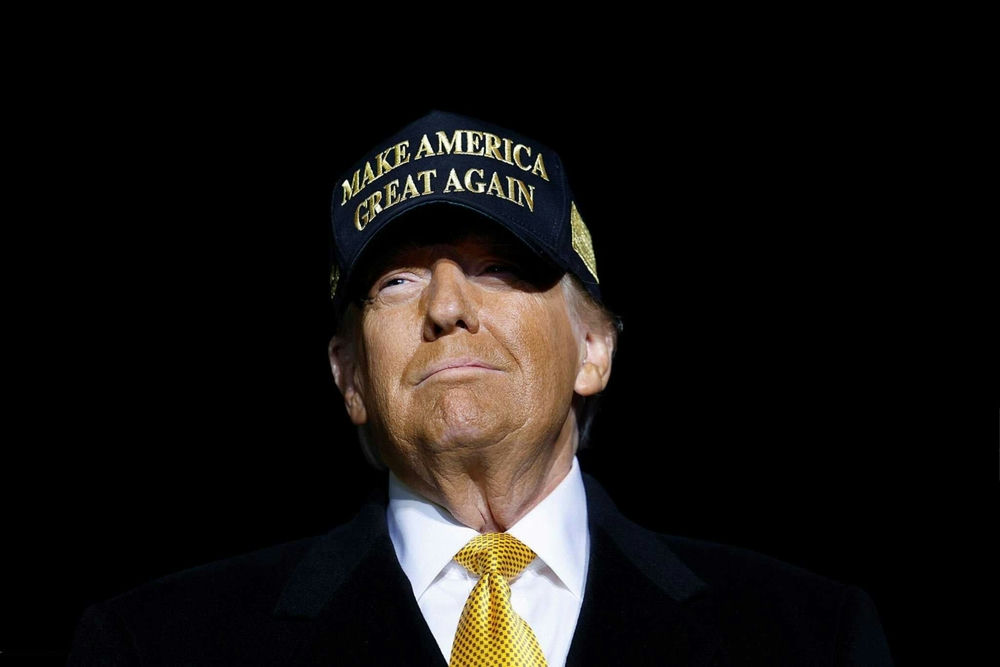
President Trump’s off-the-cuff call to “nationalize” voting is colliding head-on with the Constitution’s state-run election system—and Democrats are seizing the opening to paint every election-integrity push as “dictator-like.”
What Trump Said—and What’s Still Unclear
President Donald Trump made the comments during a Feb. 2 interview on “The Dan Bongino Show,” urging Republicans to “nationalize” voting and “take over” in at least 15 places he did not identify. Reports say Trump again raised allegations of illegal voting and problems in jurisdictions such as Georgia’s Fulton County. As of Feb. 3, coverage emphasized that no implementation details have been offered, leaving the remarks politically explosive but operationally undefined.
That lack of specificity matters because election administration is a maze of state statutes, county procedures, voting-system contracts, and local staffing decisions. Without named jurisdictions, a legal theory, or a formal directive, Trump’s statement reads more like a pressure campaign aimed at Republican officials going into the 2026 midterms than a finished policy. At the same time, the quote is now a headline weapon for opponents who want to frame tighter election rules as federal power grabs.
The Constitutional Tripwire: States Run Elections
The central tension is constitutional. Under Article I, Section 4, states set the “Times, Places and Manner” of congressional elections, while Congress can regulate certain aspects by law. News coverage of the interview highlighted that states and localities normally conduct elections, with federal involvement generally flowing through specific statutes and court-reviewed guardrails. If any administration attempted a direct federal “takeover,” it would almost certainly trigger immediate lawsuits and injunction requests.
Trump: "These people were brought to our country to vote, and they vote illegally. The Republicans should say, we should take over the voting in at least 15 places. The Republicans ought to nationalize the voting. We have states that I won that show I didn't win. You're gonna see… pic.twitter.com/H5hT3OvtLE
— Aaron Rupar (@atrupar) February 2, 2026
That legal reality helps explain why prior efforts described in reporting ran into trouble. A past executive order focused on proof of citizenship and mail-in voting changes was largely blocked in court, according to Politico’s recap of earlier actions. The research also notes the Justice Department sued nearly two dozen states for voter-roll information, a more traditional approach that still meets resistance but fits within existing federal-state disputes. A full “nationalization” effort would be a far steeper climb.
Fulton County Raid Raises Stakes but Not Proof
The comments also landed in the shadow of a late-January FBI raid on Fulton County’s election office tied to 2020 records, a major development because Georgia was a focal point of post-2020 controversy. ABC reported that Trump spoke directly with FBI agents by cellphone after the raid while meeting with Director of National Intelligence Tulsi Gabbard. That kind of proximity between the president and investigative activity is politically combustible, even when details are limited.
What the public still does not have, based on the research provided, is any new fraud finding stemming from the raid. The background context cited by multiple outlets points back to audits, recounts, and court rulings that did not substantiate claims of widespread fraud in 2020, including in Georgia. With the raid’s results not publicly described, critics are arguing the “nationalize” line is premature, while supporters see federal scrutiny as long overdue after years of distrust.
Midterms, Messaging, and the Risk of Federal Overreach
The political backdrop is the 2026 midterms, when control of Congress is at stake. Trump’s remarks are being interpreted in two competing ways in the coverage: as a demand for stricter enforcement to prevent illegal voting, and as a challenge to long-standing norms of state control. Democrats have already labeled the idea unconstitutional and authoritarian in tone, which signals their broader strategy—turn any election-integrity action into a referendum on “democracy” rather than on process.
.@SenSchumer: "Just a few hours ago, Donald Trump said he wants to nationalize elections around the country. That's what Trump said. You think he believes in democracy? He said we want to take over…does Donald Trump need a copy of the Constitution." pic.twitter.com/mt8fMM05Qe
— CSPAN (@cspan) February 2, 2026
For conservative voters who want cleaner voter rolls, secure balloting, and confidence in outcomes, the practical question is how to pursue integrity without handing Washington a blank check. States running elections is not a bug in the system; it is a decentralization feature that limits federal control. The strongest reform path described in the reporting remains lawful and specific: state legislation, transparent audits, voter-roll maintenance within legal bounds, and congressional action only where the Constitution clearly allows it.
Until the administration clarifies whether “nationalize” was rhetoric, a legislative ask, or a signal to federal agencies, the story will keep feeding two fires at once: grassroots anger about past election chaos, and an institutional warning that federal power can be abused by any party. The next concrete action—an executive order, a DOJ filing, or a congressional bill—will determine whether this becomes a genuine constitutional showdown or a messaging battle that fades into the midterm noise.
Sources:
Trump says Republicans should ‘nationalize’ elections.
Trump says Republicans should ‘nationalize’ voting in at least 15 places
Trump urges Republicans to ‘take over’ and ‘nationalize’ voting